
Last updated November 16, 2026
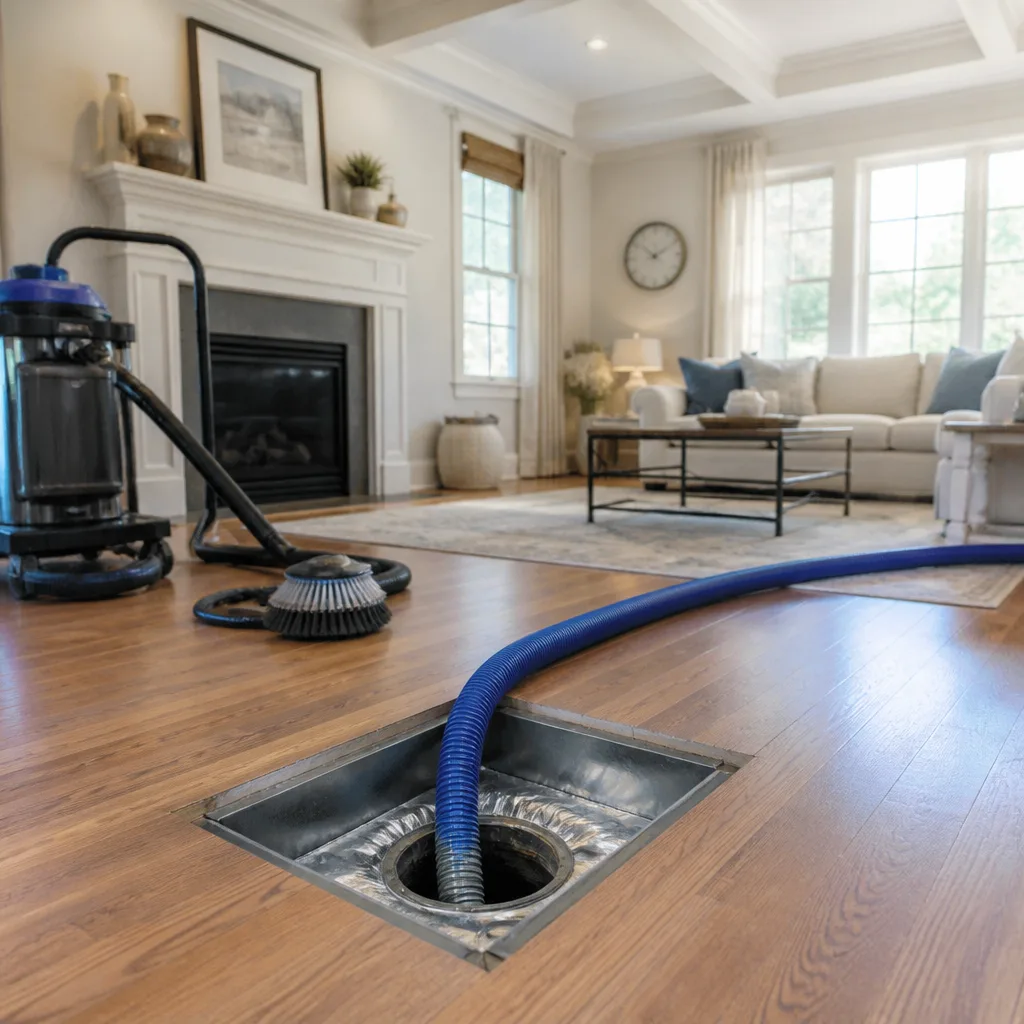 Whole-home duct cleaning
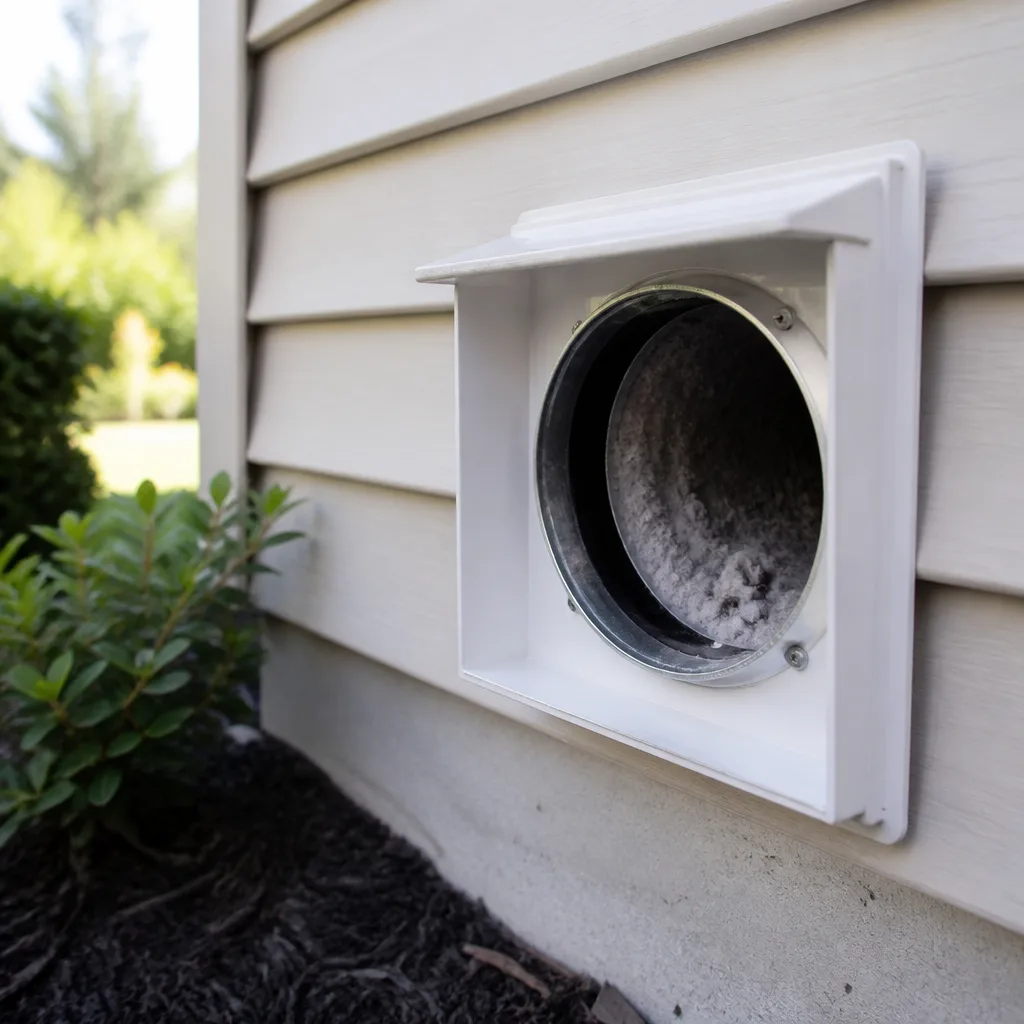 Dryer vent cleaning
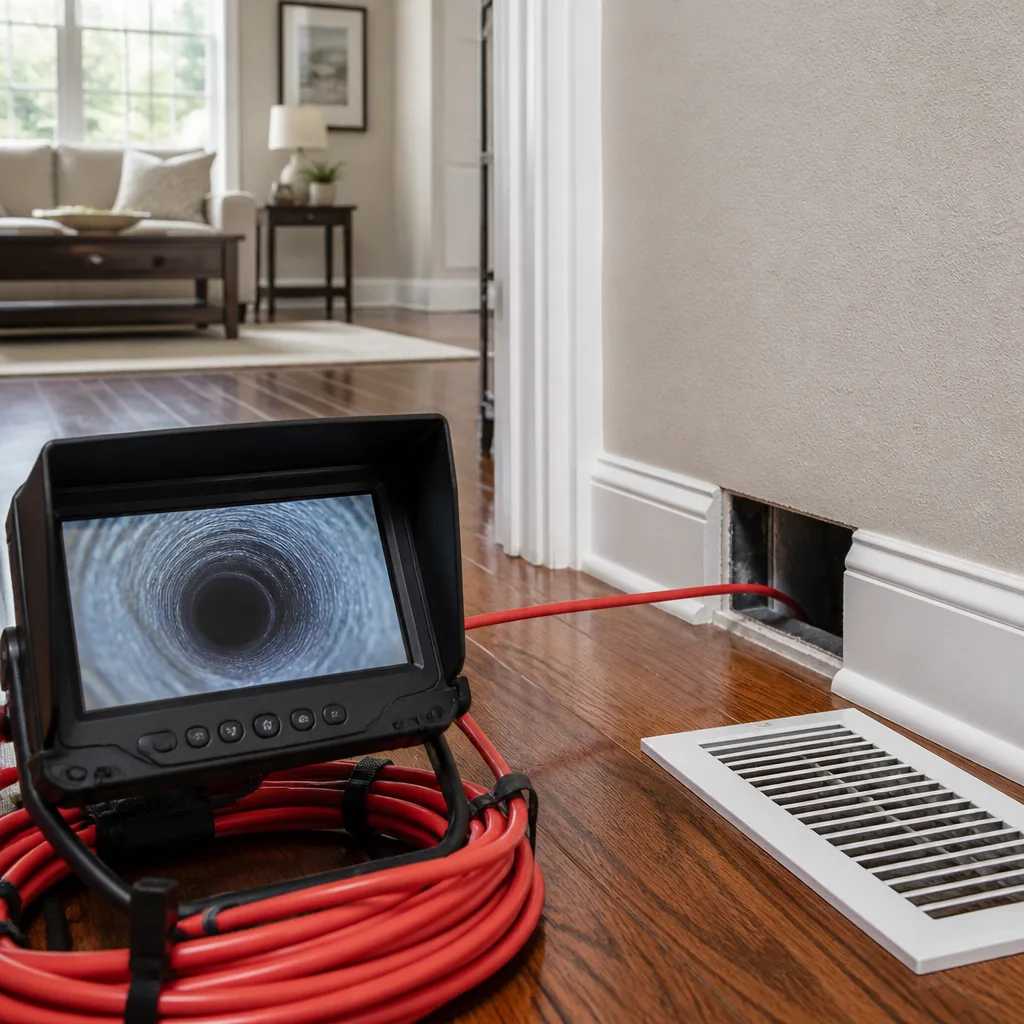 Camera inspection
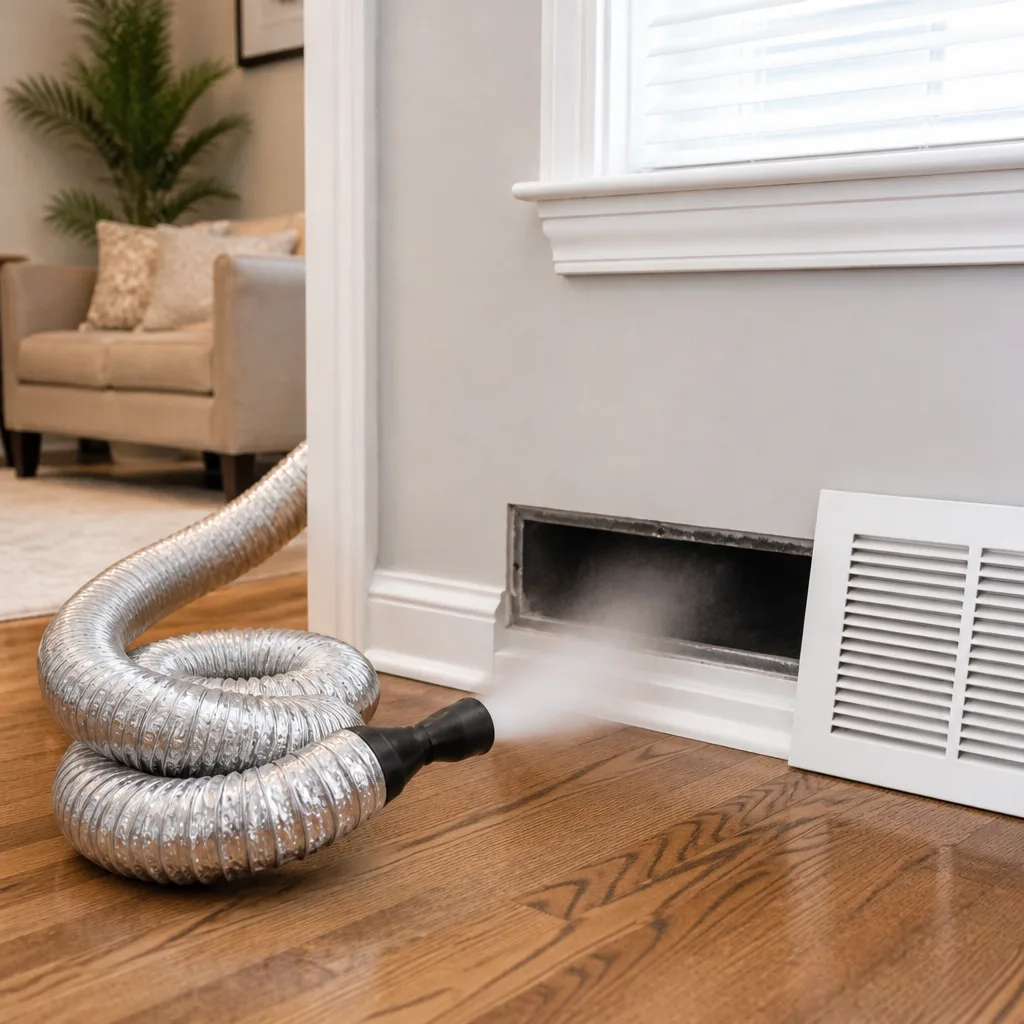 Sanitizing & deodorizing
Whole-system duct and dryer vent check with before-and-after photos - you see exactly what came out of your vents
That "$99 whole-house special" is a bait ad - the real number appears once they are in your hallway, or the "clean" is a shop-vac at the register. We photograph the inside of your ducts before and after instead.
Air Duct Cleaning Maintenance Schedule: What to Do and When
The advice you’ll find almost everywhere is to clean your ducts every three to five years. In Enterprise, that number is close to useless on its own. Desert particulate doesn’t arrive on a calendar, and a home near active construction with two shedding dogs loads its ductwork far faster than a child-free house behind a good filter. The interval should come from your household, not a default. This guide gives you a decision framework, the homeowner tasks that sit between professional cleanings, and a simple record an HVAC technician can actually read at tune-up time.
Quick Answer
Most Enterprise homes need a full duct cleaning every two to four years, but the right interval shifts based on four variables: pets indoors, nearby construction, occupant allergies or asthma, and your filter’s MERV rating. Households with several of those factors at once often sit closer to two years; homes with none can stretch toward five. Filter changes, register vacuuming, and visual boot inspections happen between those visits on a much shorter cadence.
Styles & brands we work with
- Whole-home duct cleaning
- Dryer vent cleaning
- Camera inspection
- Sanitizing & deodorizing
Table of Contents
- Why the National 3-to-5-Year Rule Fails in Enterprise
- The Four Variables That Set Your Interval
- Variable Interval Table: Finding Your Number
- Homeowner Maintenance Between Professional Cleanings
- How a Rotobrush Cleaning Resets the Baseline
- Post-Renovation Cleaning as a Standalone Trigger
- How to Keep a Duct Maintenance Record an HVAC Tech Can Use
- Common Mistakes to Avoid
Why the National 3-to-5-Year Rule Fails in Enterprise
The three-to-five-year guideline comes from a national average that assumes a fairly clean outdoor air supply. Enterprise doesn’t offer that. Particulate levels here regularly climb during wind events as desert dust lifts and settles across the valley, and a standard one-inch filter catches only a fraction of it before the rest finds its way into the return and settles in the duct runs. That makes the national default a starting point at best.
What matters is the loading rate, not the calendar. Dust that settles on the interior of galvanized ductwork compacts over time and binds to the metal, especially at joints, transitions, and the horizontal runs in a typical single-story Enterprise home where airflow is slowest. Once that layer forms, a vacuum through the floor registers won’t move it. A brush has to break the bond first.
In our experience cleaning ductwork across Henderson, we see homes with light contamination at five years and homes with heavy, caked sediment at two. Same climate, same city, different variables. That spread is why we treat scheduling as a per-home question rather than a rule.
There’s a second reason the calendar approach misleads. Visibility doesn’t equal cleanliness. A return grille can look dusty while the main trunk behind it stays clear, or look acceptable while a flexible run feeding a bedroom has collected a thick liner of debris. You can’t judge loading from the room side. A camera or a physical inspection of the duct interior is the only honest read.
Finally, the system layout matters. Homes with a long trunk line and many branch runs collect sediment unevenly. The branch closest to the air handler sees high velocity and stays cleaner; the far end runs collect. A schedule built only on total years ignores that some runs need attention sooner than others, and a proper cleaning addresses each run individually rather than treating the system as one tube.
If your last cleaning came from a company that vacuumed only at the registers, your true interval has likely been much shorter than you assumed, because the ducts were never fully reset in the first place. That’s a common pattern in Enterprise, and it’s worth knowing before you extend your next interval based on the last visit’s date.
The Four Variables That Set Your Interval
Four household factors drive how fast your ductwork loads. Each one compresses or extends the interval, and they compound. A home with two of them moves faster than a home with one.
Indoor Pets
Pets shed dander, hair, and tracked-in soil into the return air stream continuously. A household with two or more animals, especially double-coated breeds, loads its filter and ducts noticeably faster than a pet-free home. Expect the interval to compress by roughly a year for each significant shedder in the house. This is one of the strongest single variables we see.
Nearby Construction
New builds, remodels, and roadwork within a few blocks raise airborne particulate dramatically. Drywall dust and concrete fines are fine and abrasive, and they travel into returns quickly. If construction is active within your immediate area, treat the interval as shortened for the duration and consider a cleaning after the work wraps.
Occupant Allergies or Asthma
When someone in the home has respiratory sensitivity, the acceptable contamination level drops. The ducts don’t need to be dirtier, they need to be cleaner. Households managing allergies or asthma typically schedule at the short end of the range and rely on a higher-MERV filter to carry more of the load between visits.
Filter MERV Rating
A higher-MERV filter captures more particulate before it reaches the ducts, which extends the interval. A standard one-inch filter is the weakest link in the chain. If you’ve upgraded to a media cabinet or a whole-home air cleaner paired with a Honeywell or Aprilaire control, your ducts stay cleaner longer, but the filter itself has to be changed on schedule or the benefit disappears and the system strains instead.
Two smaller factors add nuance. Occupancy and airflow balance matter: a home with many registers and a poorly balanced system pushes dust into low-flow runs. And recent renovation, even completed work, leaves residual particulate that can take several air-change cycles to settle out. Neither outweighs the four main variables, but both nudge the number.
Variable Interval Table: Finding Your Number
Use this as a starting point, then adjust for what an inspection actually finds. The numbers are ranges, not promises, and the written estimate after an on-site look sets the real scope.
- No pets, no nearby construction, no allergies, high-MERV media filter: clean every 4 to 5 years.
- One variable present (e.g., one pet OR a standard 1-inch filter): clean every 3 to 4 years.
- Two variables (e.g., pets plus a standard filter, or allergies plus nearby construction): clean every 2 to 3 years.
- Three or more variables (pets, construction, allergies, and a basic filter): clean every 2 years, sometimes annually during active construction.
- Post-renovation, regardless of last cleaning: schedule a cleaning once the work is complete, then return to your normal interval.
- New-to-you home with unknown history: inspect first, clean if loading is heavy, then set the interval from a known baseline.
Notice that the table never asks how long it’s been. It asks what’s in the house. A family with two dogs, a school-age remodel next door, and a one-inch filter is on a two-year clock from the day the ducts are cleaned, and no calendar default will tell them that.
One practical note on the high end: extending toward five years is only safe when the system genuinely stays clean. If you run a media filter but never change it, or if you vacuum registers only when they look bad, the high end doesn’t apply. The interval is a ceiling, not a guarantee.
Homeowner Maintenance Between Professional Cleanings
Professional cleaning resets the system, but what you do between visits determines how long that reset holds. These are the tasks that belong to the homeowner, and they run on a much shorter cycle than the cleaning itself.
- Replace the filter on cadence, not on appearance. A one-inch filter in a dusty Enterprise home typically needs changing every one to three months. A media cabinet filter runs longer, often six to twelve months. Write the change date on the filter frame so you stop guessing.
- Vacuum the supply registers and return grille monthly. Use a brush attachment. This removes surface loading before it migrates into the duct run behind the grille.
- Inspect each boot and register opening visually each season. Shine a light into the opening and look for debris accumulation, separated liner, or gaps at the boot. You’re checking condition, not cleaning the duct interior, which is a job for a brush and professional vacuum.
- Keep the return path clear. Furniture and rugs blocking return grilles raise static pressure and change how debris settles through the system.
- Note any new dust patterns, musty odors, or uneven airflow. These are the early signals that the interval may need to shorten, and they’re worth logging.
What you should not do is reach into the ductwork with a shop vacuum or a homemade brush. Consumer vacuums don’t have the airflow to move settled debris, and improvised tools can dislodge flexible liner or damage the seal at a boot. That damage costs more to fix than the cleaning would have.
If you have a whole-home air cleaner, its own filter or cell needs attention on the manufacturer’s schedule, and the control settings should match your household. Understanding how the air cleaner, the filter, and the ducts work as one chain is where a technician familiar with Aprilaire and Honeywell systems earns their keep. It’s also why we spend time on the whole air-quality path rather than just the duct interiors.
How a Rotobrush Cleaning Resets the Baseline
There’s a real difference between a cleaning that resets your contamination baseline and one that only skims the surface. A contact-vacuum-only service pulls loose dust from what the wand can reach. It does not break the compacted layer bonded to the duct walls. That matters because the next interval is measured from whatever baseline the cleaning leaves behind.
A full-system cleaning with a professional rotary brush system, which is what we run on every job, contacts the duct interior mechanically. The brush scrubs the walls and joints, lifting the bonded layer, while a HEPA-rated vacuum captures the loosened material at the source. The result is a duct interior returned closer to bare metal, which is a genuinely different starting line than a wand pass.
We pair the brush work with containment. Abatement Technologies air scrubbers run in the work area to control particulate so loosened debris doesn’t escape into living space. Most discount operators skip this step entirely. It’s the difference between cleaning the ducts and keeping the house clean while you do it.
Why does the baseline matter so much? Because the interval is a function of how fast the ducts load from clean. If a cleaning leaves a residual layer behind, that layer accelerates the next accumulation, and your real interval shrinks. A reset to a cleaner baseline lets the full interval apply. This is why we don’t quote the same schedule to every home. It’s also why we’d rather clean thoroughly once than come back cheaply every year.
And when the inspection turns up damage – crushed flex runs, separated joints, torn liner – we can address it as part of the same visit. We clean it, and if it’s broken, we fix it. That continuity keeps you from coordinating a second contractor and keeps the baseline intact.
Post-Renovation Cleaning as a Standalone Trigger
Renovation is the one event that overrides your calendar entirely. A remodel generates a specific kind of debris that loads ductwork faster than ordinary house dust, and it doesn’t care when you last had the system cleaned.
Drywall dust is the main offender. It’s extremely fine, it stays airborne for a long time, and it settles into every return and supply run as the HVAC system cycles during the project. Insulation fibers are the second. Both materials accumulate on duct surfaces and, in flexible runs, can bind to the liner quickly. A duct system that was clean before a kitchen remodel can be meaningfully loaded by the time the drywall is sanded.
The practical rule: schedule a cleaning after the renovation is complete and the dust has settled, not during. Cleaning mid-project means the ducts simply reload before the work is finished. Once the project wraps and the space is cleaned, a professional duct cleaning removes what migrated into the system during the build.
This is also the moment to inspect for damage. Remodels often involve moving or reconnecting ductwork, and a run that was rerouted can end up kinked or poorly sealed. Catching that during the post-renovation visit saves you from chasing airflow problems later. If we find a problem, air duct repair is on the same call.
New construction has the same trigger. A newly built home often carries construction debris in the runs from the build itself. First-year cleaning, then set the regular interval, is the sane sequence.
How to Keep a Duct Maintenance Record an HVAC Tech Can Use
A duct maintenance log is only useful if it answers the questions a technician actually asks during a tune-up: when was the system cleaned, by what method, with what equipment, and what did the filter and airflow look like since. A shoebox of invoices doesn’t do that. A short, structured record does.
Here’s a simple format to keep, either on paper or in a note on your phone.
- Date of each cleaning, plus the method used: full rotary-brush cleaning versus a register-only vacuum pass. Note the equipment brand if the invoice lists it.
- Filter type and MERV rating, plus the date of each replacement. A running filter log tells a technician how much particulate your system has been exposed to.
- Any repair performed and where on the system it was, so the next technician knows what to leave alone and what to recheck.
- Airflow observations between visits: rooms that feel weak, registers that whistle, or a return that seems noisy.
- Renovation or construction events and whether a post-project cleaning was done.
At a tune-up, a technician can read that log and cross-check it against what they see at the air handler. An accurate record makes the difference between guessing at cleanliness and verifying it. It also protects you from being sold a cleaning you don’t need, because the log shows the last one and the method.
If you’ve moved into a home with no history, the first entry is an inspection. Set the baseline from what that inspection finds, then log forward from there.
Common Mistakes to Avoid
- Following the 3-to-5-year rule blindly in Enterprise. The national default assumes cleaner outdoor air than this valley delivers during windy periods. Build your interval around your household, not a magazine number.
- Judging duct condition by the register grille. Visible dust at the grille tells you almost nothing about the interior of the runs. Only an inspection of the duct interior gives a real read.
- Skipping containment. A cleaning without air scrubbing in the work area lets loosened debris into your living space. Ask whether Abatement Technologies or equivalent containment is part of the process.
- Assuming a cheap vacuum pass counts as a cleaning. A wand-only service leaves the bonded layer intact, which shortens your next interval. The method matters more than the price.
- Forgetting the filter between cleanings. A high-MERV filter only extends your interval if it’s changed on schedule. A clogged filter strains the system and pushes debris past it.
- Cleaning mid-renovation. Schedule the cleaning after the project is finished, or the ducts simply reload before you’re done.
- Ignoring the dryer vent. It’s a separate maintenance item with a real fire-safety edge, and it needs attention on its own cadence, not only when the ducts are cleaned.
See the difference
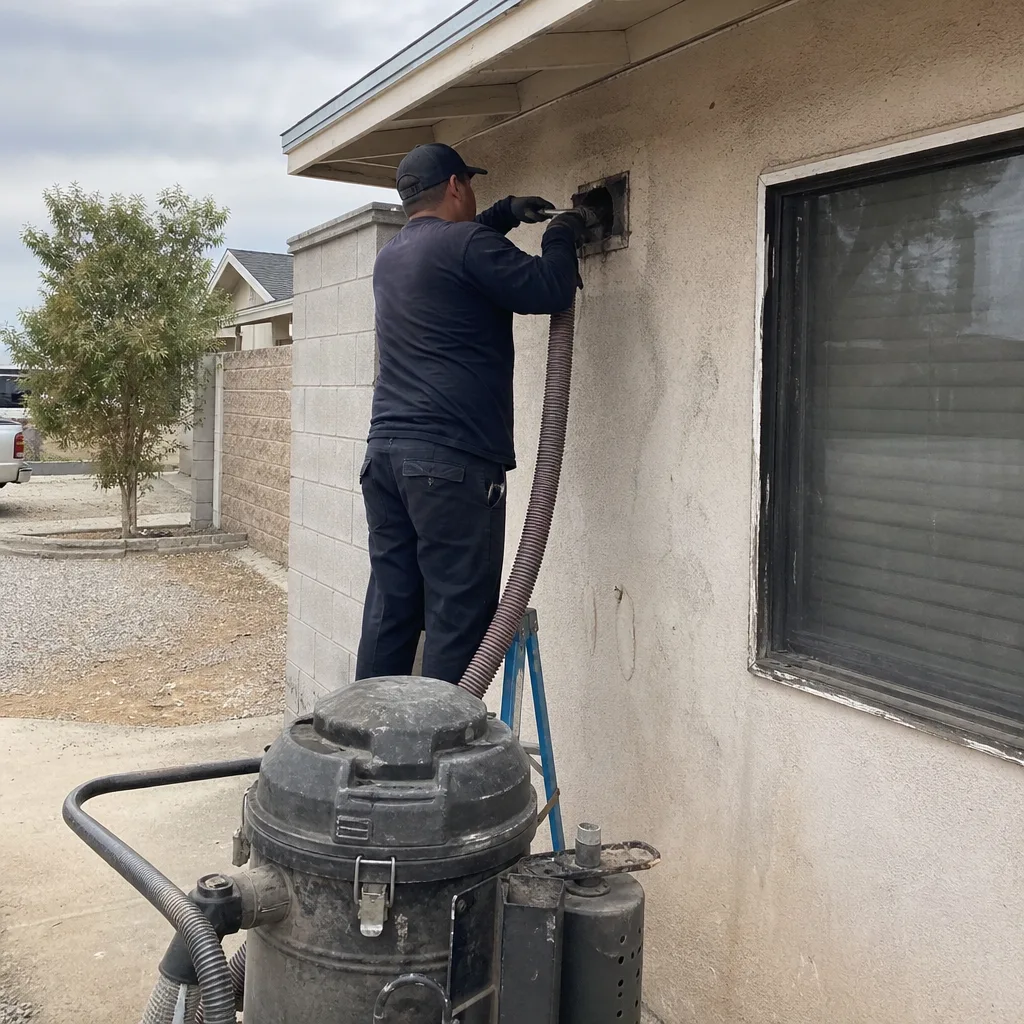 Before
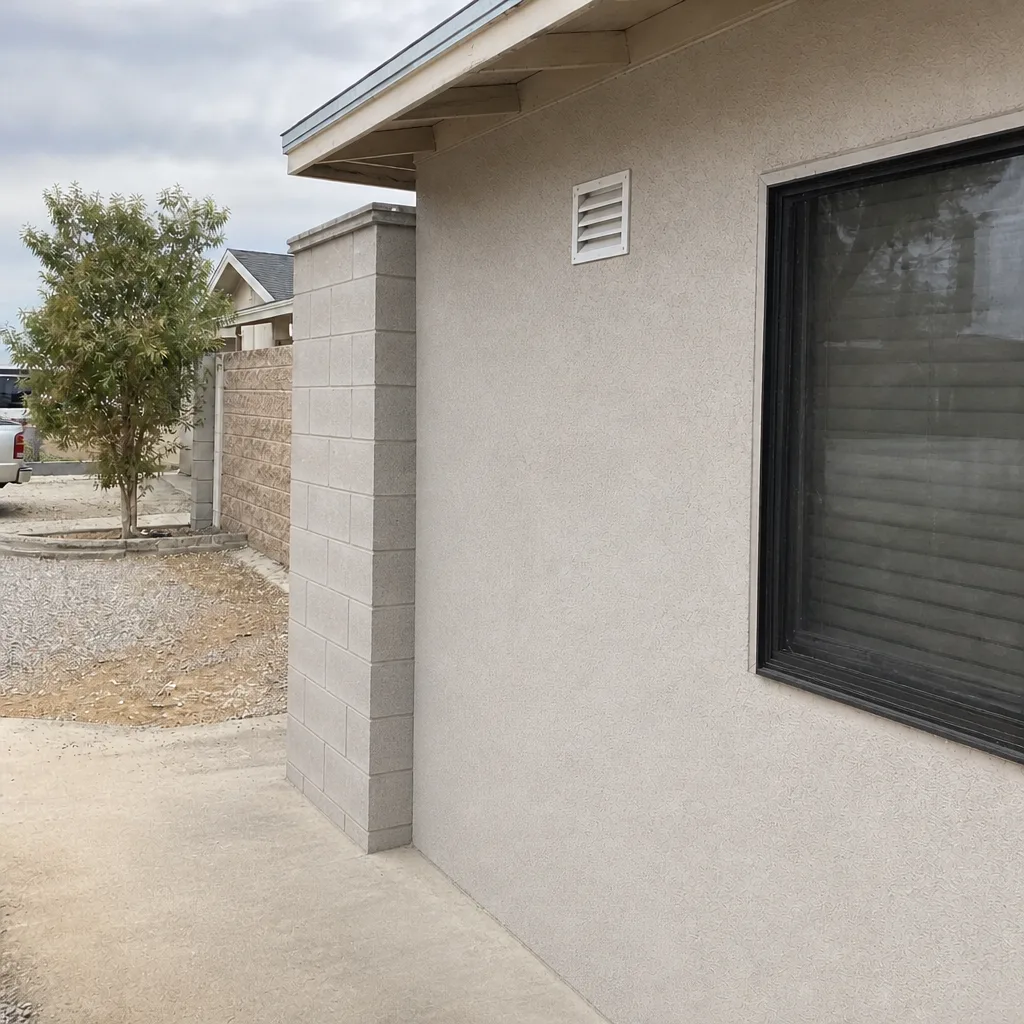 After
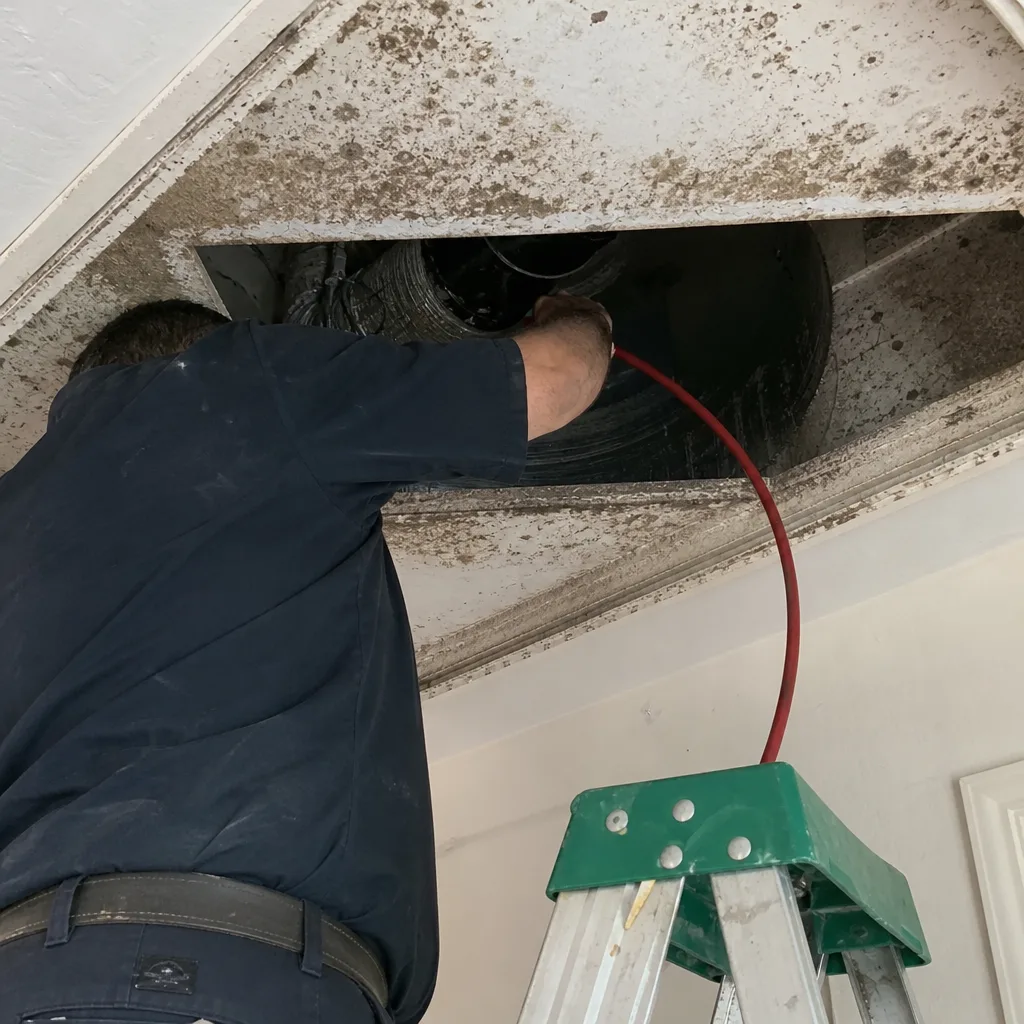 Before
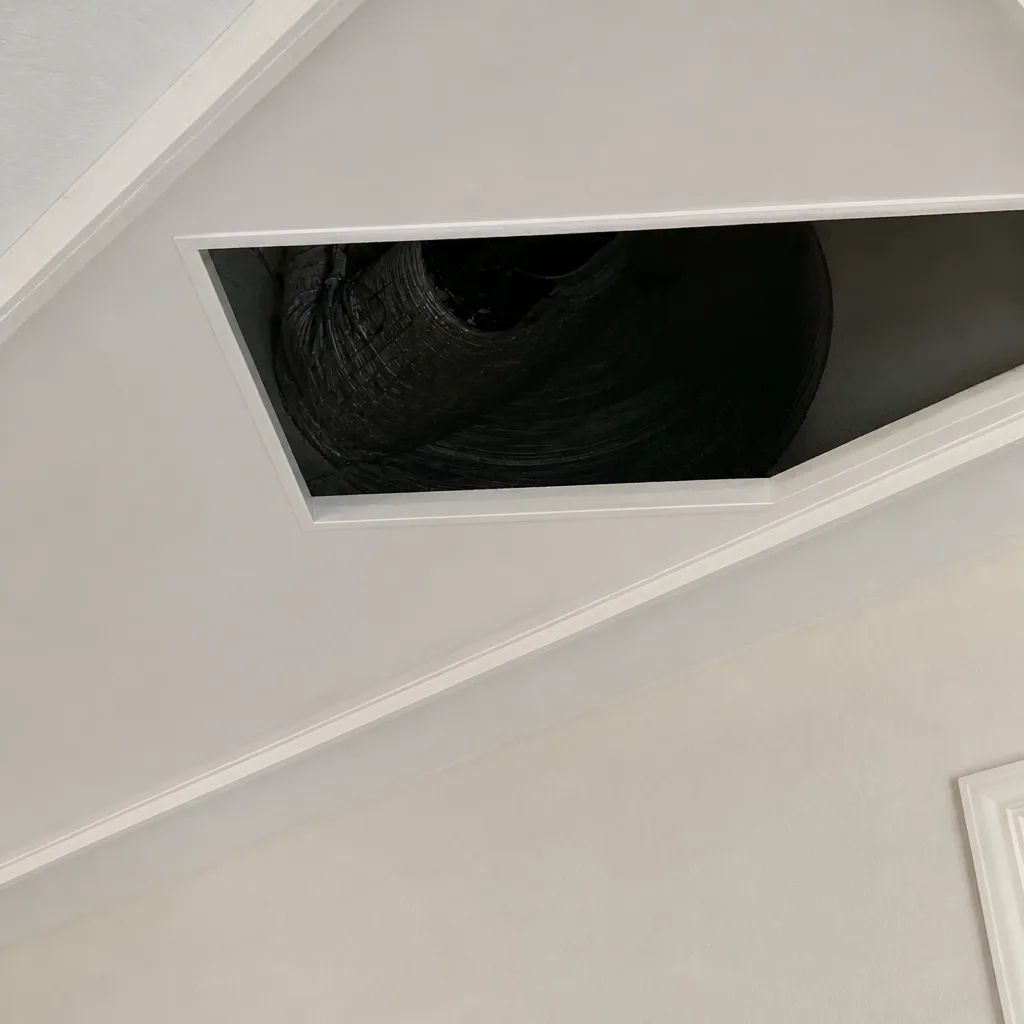 After
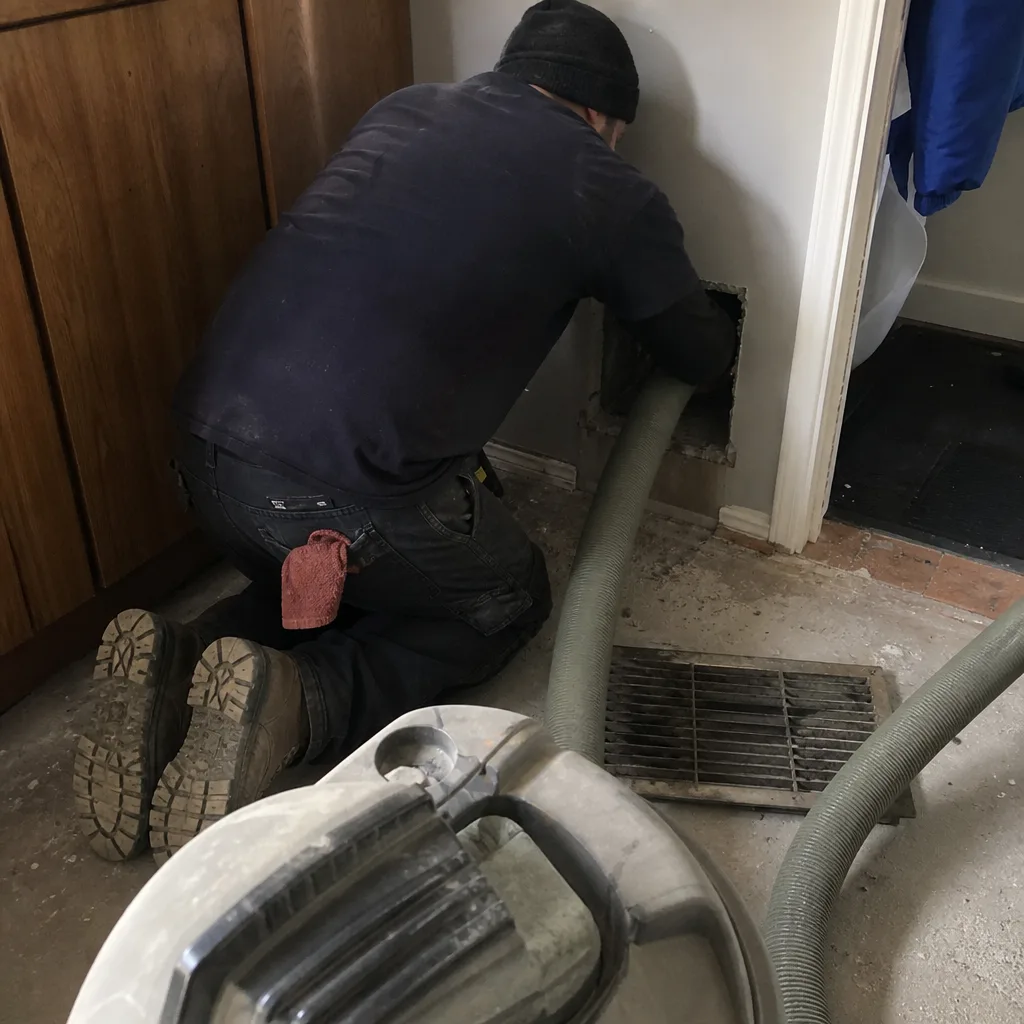 Before
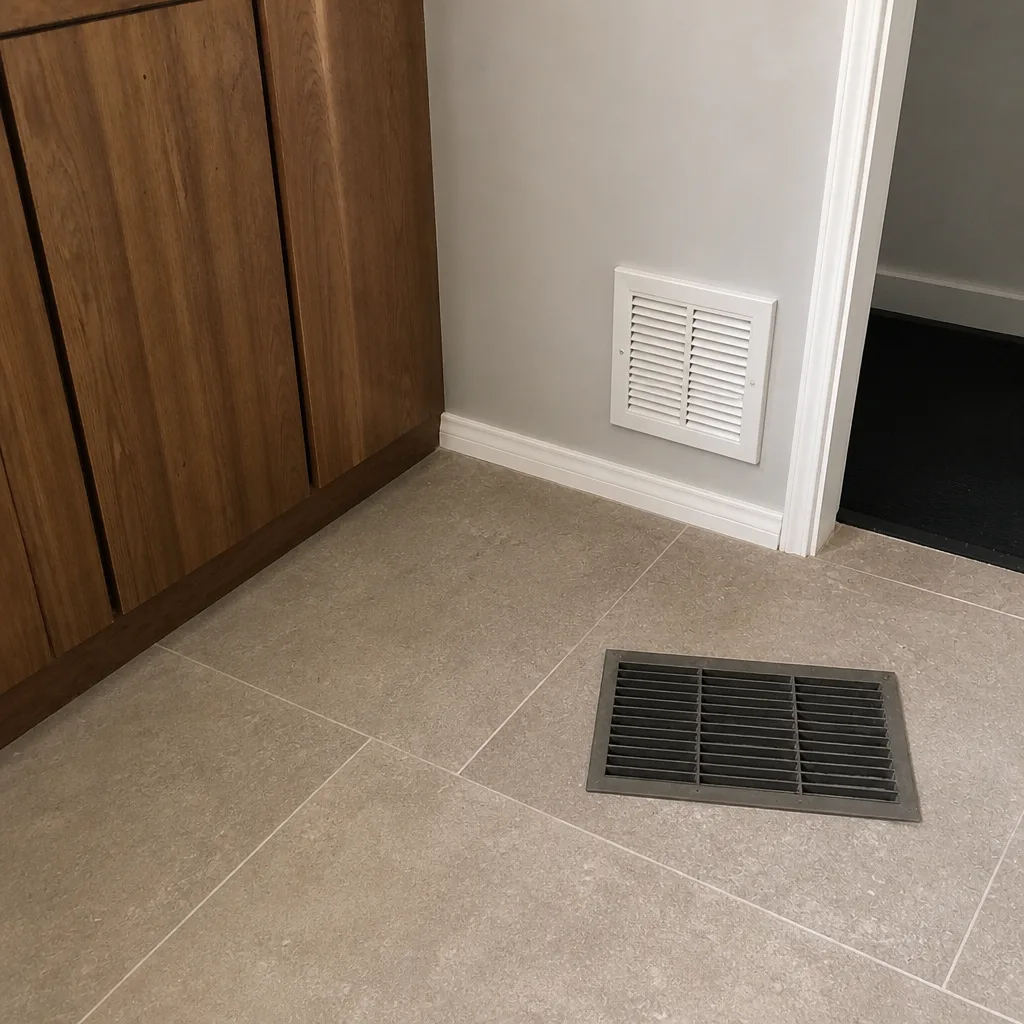 After
When to Call a Professional
Some situations call for a professional look regardless of where you sit on the interval. If you’ve just finished a renovation, moved into a home with unknown cleaning history, or noticed a persistent musty odor or uneven airflow, an inspection should come first. The same applies after a major wind event in Enterprise that visibly coated outdoor surfaces with dust. If someone in the home has developed new respiratory symptoms, that’s a reason to check the system rather than wait for the calendar.
We answer 24/7, with fast dispatch from 7am to 7pm, Sunday through Friday. Estimates are free, and we set one flat price per system agreed before any work starts, so there’s no surprise invoice once the equipment is running. You’ll see before-and-after photos of your own ducts, not stock images. If you’re ready for a maintenance plan built around your home rather than a default, call (855) 684-4882.
Frequently Asked Questions
Most Enterprise homes land between every two and four years, with households carrying several loading factors at the short end and cleaner setups stretching toward five. The national three-to-five-year rule assumes cleaner outdoor air than the desert delivers during wind events, so use your own variables as the starting point. The teams at Duct Cleaning Enterprise can inspect your system and give you an honest baseline. Call (855) 684-4882 for a free estimate.
Yes, usually, because a higher-MERV filter captures more particulate before it reaches the ducts, which slows the loading rate. But the filter only helps if it’s changed on schedule. A clogged high-MERV filter strains the system and lets debris bypass, so the extended interval only applies when the filter maintenance is real. Call (855) 684-4882 for an exact quote on your system.
The cheaper quote is usually a register-only vacuum pass rather than a full rotary-brush cleaning with HEPA vacuum capture and containment. It looks like a bargain until you realize the bonded layer is still in the ducts and your next cleaning comes sooner. We run professional-grade Rotobrush and Nikro equipment on every job, not consumer machines, and we set one flat price per system before work starts. Call (855) 684-4882 to talk it through.
You should see before-and-after photos of your own ducts, taken on site, not stock images. A containment-first process also means you’ll see the air scrubbing equipment running in the work area while the job happens. Ask for photos and a written scope, and any legitimate provider will hand them over without prompting. Call (855) 684-4882 for a free estimate.
Yes. Drywall dust and insulation fibers load ductwork faster than ordinary house dust, and the reload happens during the project, so the cleaning belongs after the work wraps. Schedule it once the space is cleaned and dust has settled, then return to your normal interval. Call (855) 684-4882 to book a post-renovation assessment.
No, it’s a separate service with its own cadence, and it carries a fire-safety angle that makes it worth scheduling independently. Lint accumulates in the vent run regardless of how clean your HVAC ducts are, and the risk grows with each load. We handle dryer vent cleaning as a distinct service, and we can book it alongside air duct cleaning in one visit. Call (855) 684-4882 for a free estimate.
The Bottom Line
Your duct cleaning interval should come from your household, not a national average. In Enterprise, desert particulate and wind events make that gap wider and more variable than elsewhere. Count your loading factors: pets, nearby construction, allergies or asthma, filter MERV rating. A household with three or more sits near two years; a clean setup can stretch toward five. Between professional cleanings, change filters on cadence, vacuum registers monthly, and inspect boots each season. Log each cleaning method and filter change so a technician can verify system condition at tune-up time. And when you’re ready to set your baseline, call (855) 684-4882 for a free estimate. We answer 24/7, and fast dispatch runs from 7am to 7pm, Sunday through Friday.
Written by the team at Duct Cleaning Enterprise.