
Last updated November 16, 2026
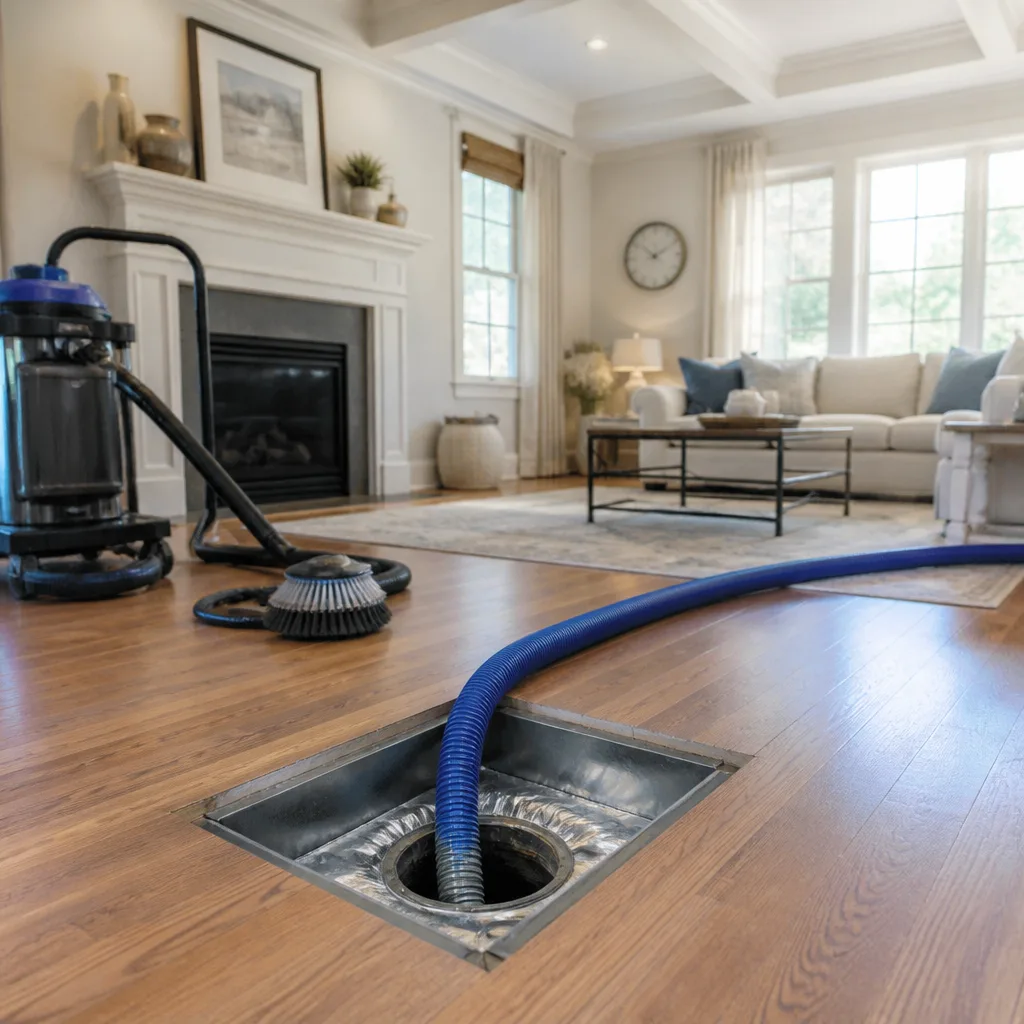 Whole-home duct cleaning
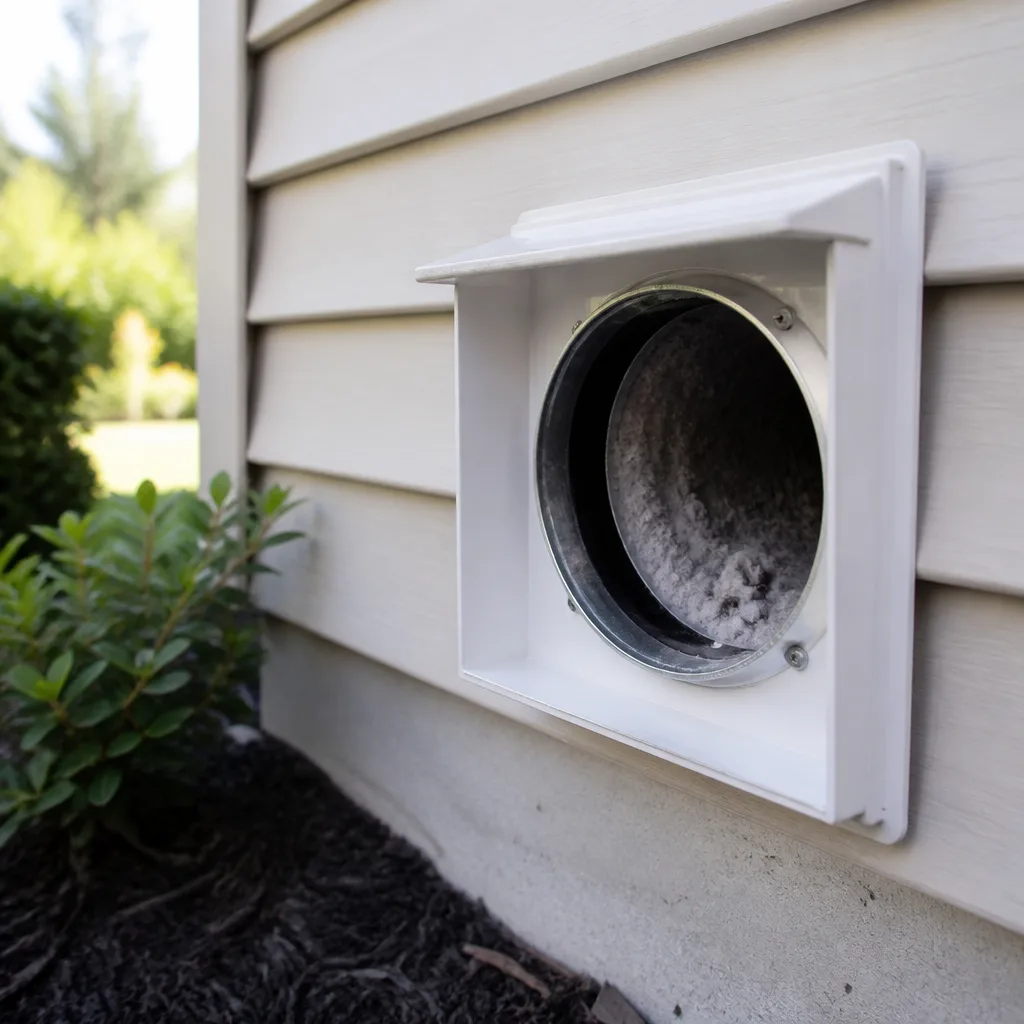 Dryer vent cleaning
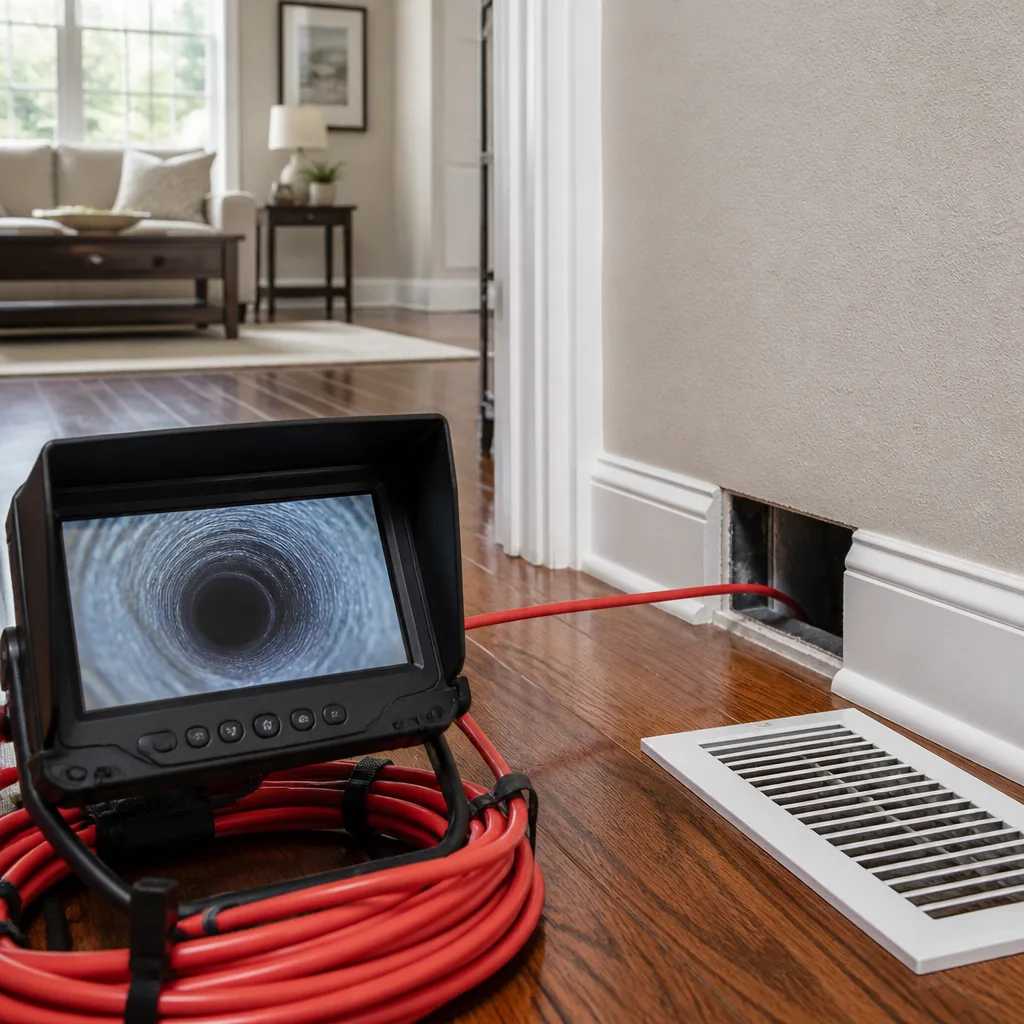 Camera inspection
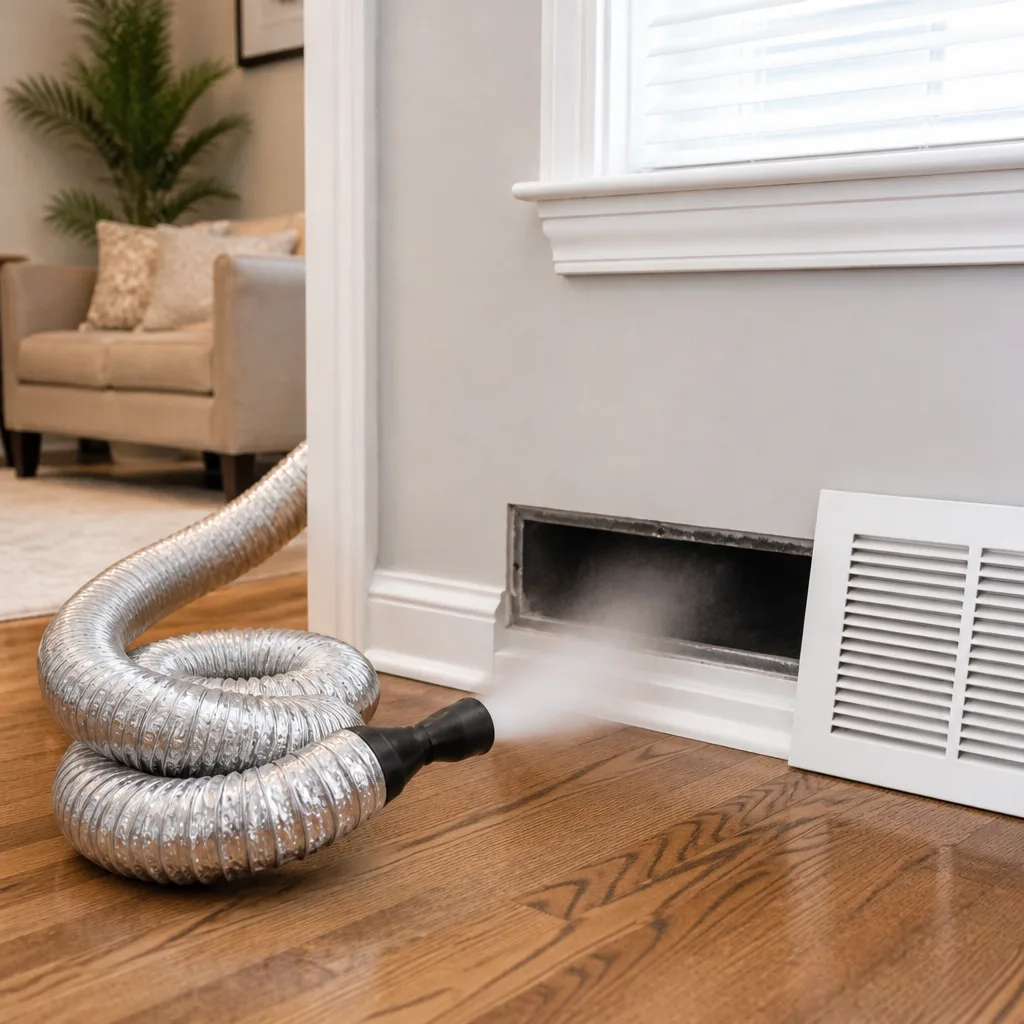 Sanitizing & deodorizing
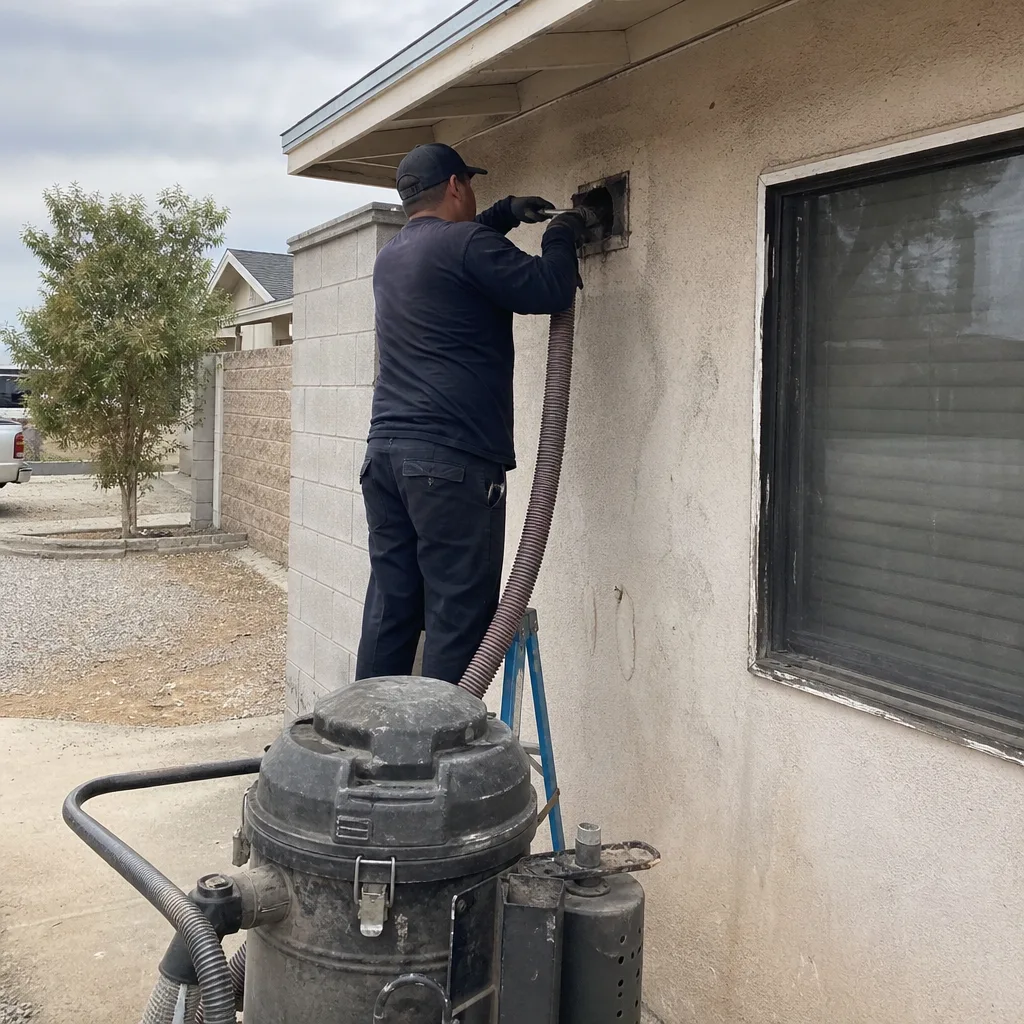
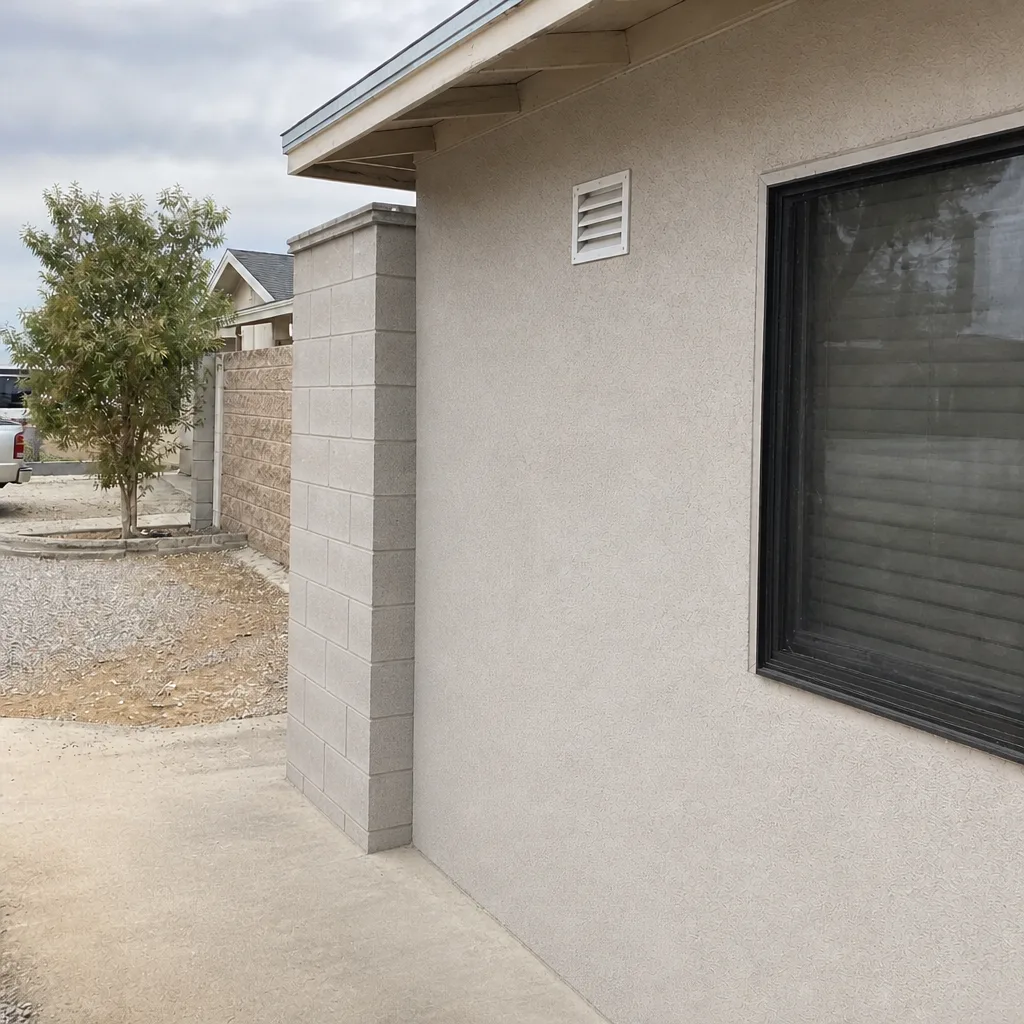
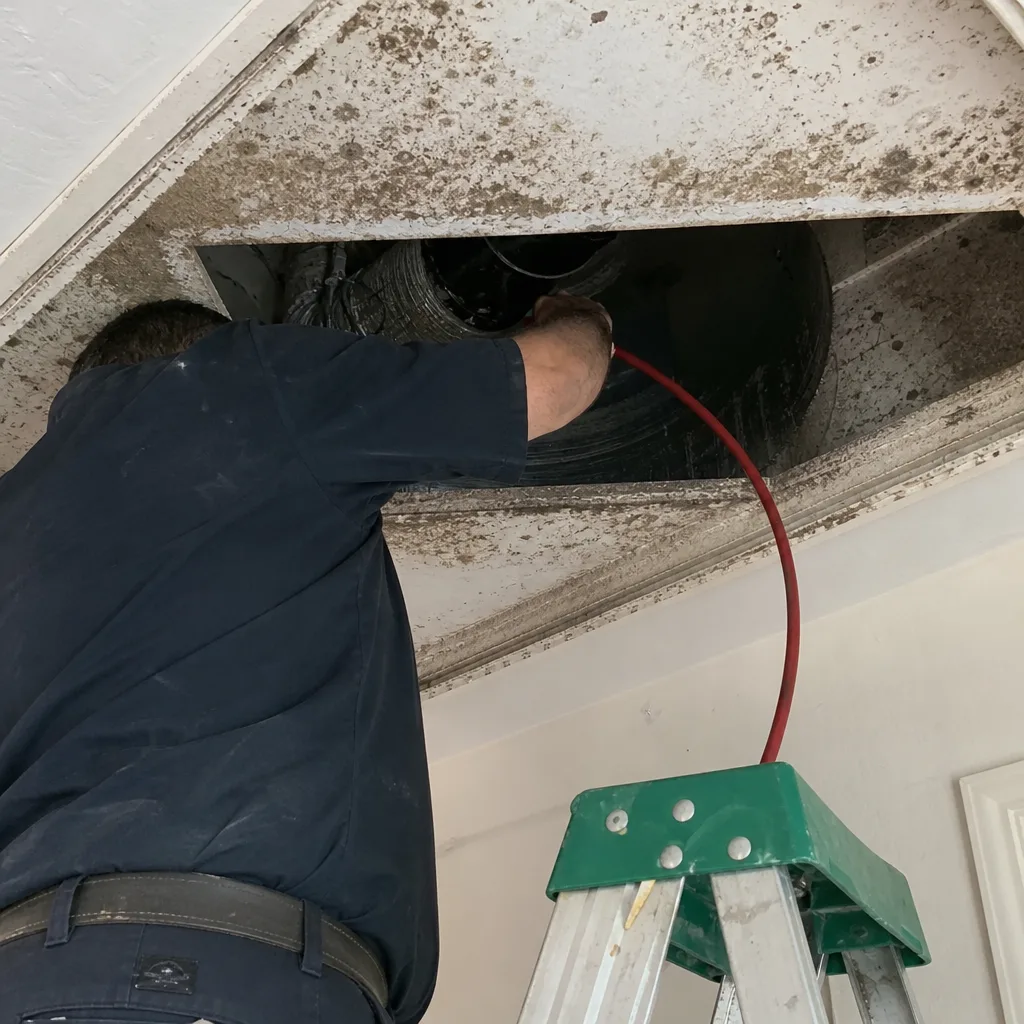
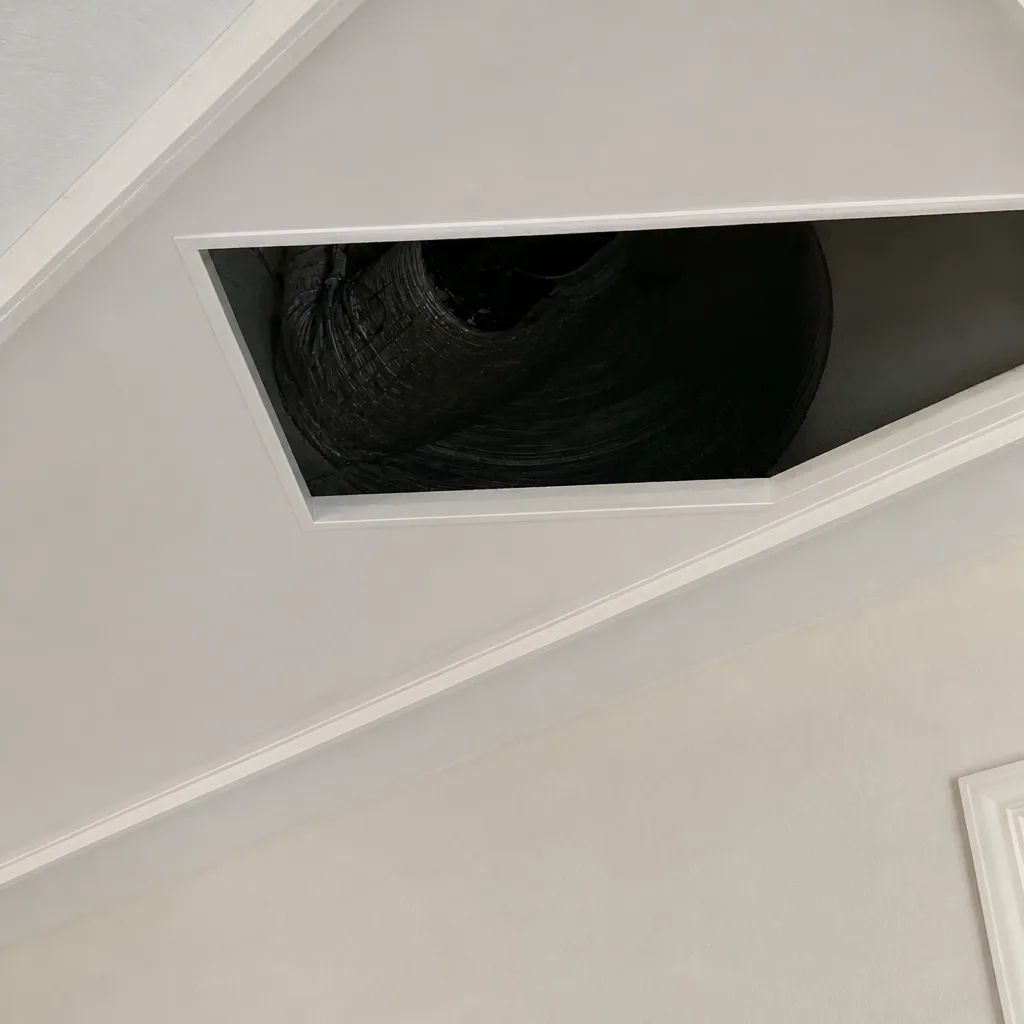
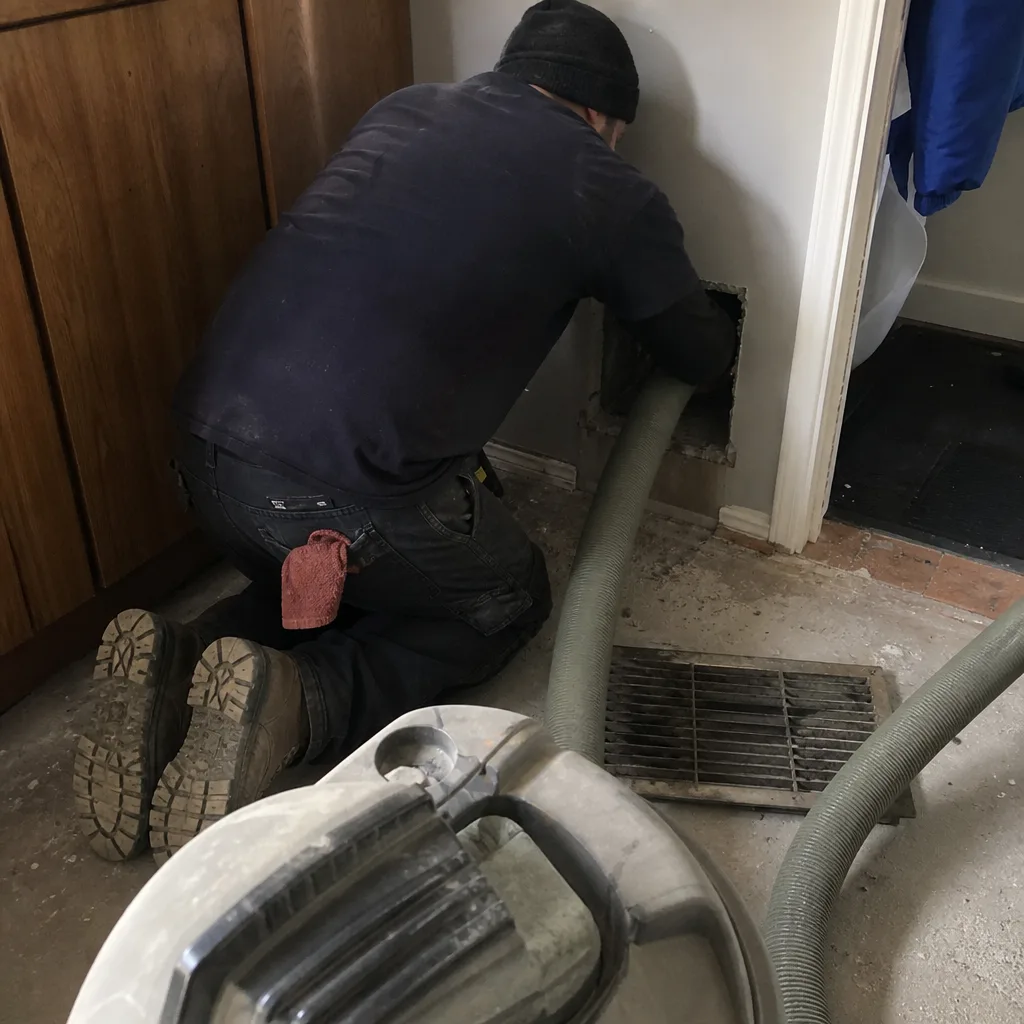
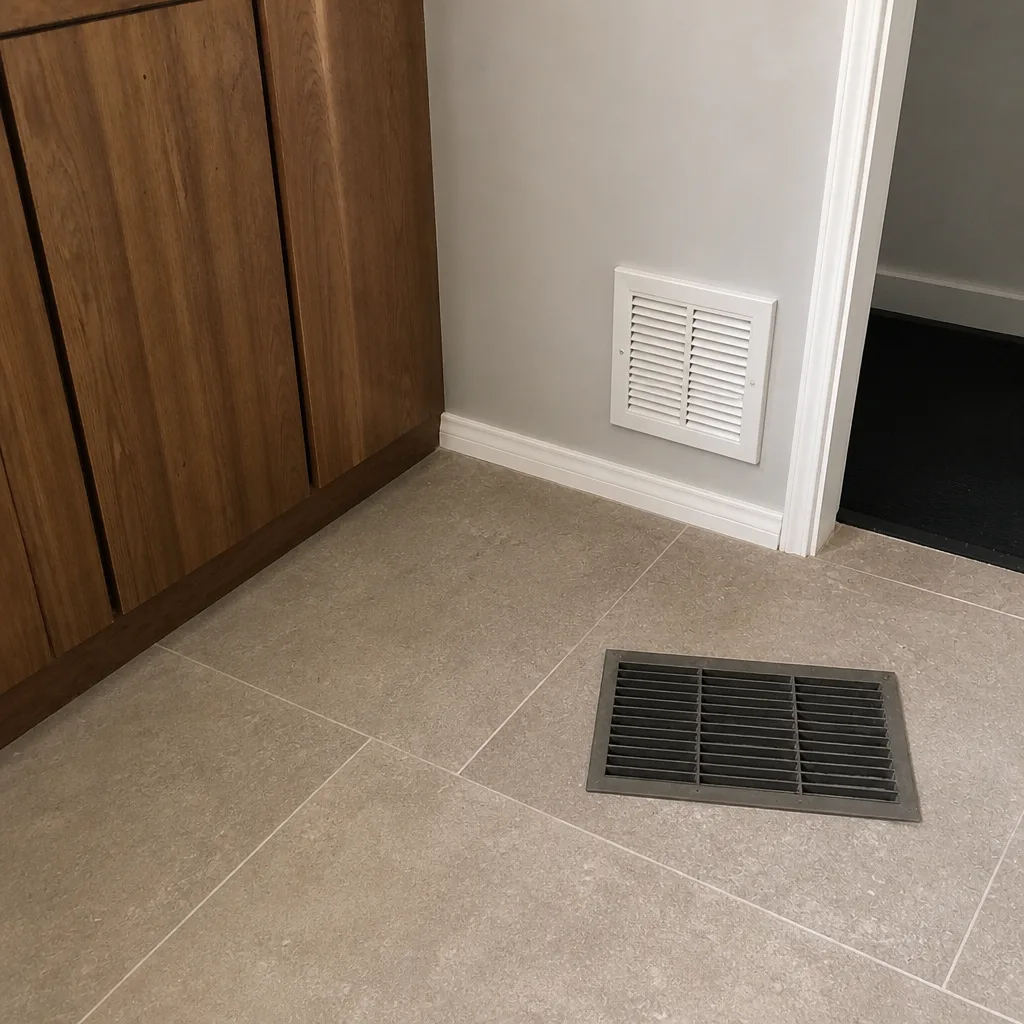
Whole-system duct and dryer vent check with before-and-after photos - you see exactly what came out of your vents
That "$99 whole-house special" is a bait ad - the real number appears once they are in your hallway, or the "clean" is a shop-vac at the register. We photograph the inside of your ducts before and after instead.
Air Duct Cleaning Permits, Codes & Inspections in Enterprise, NV: What You Need to Know
Cleaning a duct system doesn’t require a permit in Nevada. That’s the simple part, and most homeowners in Enterprise already assume it. The trouble starts the moment a contractor proposes a small modification to make the job “easier” – cutting a new access panel into the plenum, relocating a register a few feet over, or sealing a section the cleaning machine couldn’t reach. That’s no longer cleaning. It’s an alteration to a mechanical system, and in Clark County alterations to mechanical systems are regulated, permitted and inspected. If that work happens without a permit, the modification may never appear in your home’s records. The gap tends to surface years later, at resale, when a buyer’s inspector finds a patched plenum that was never documented. This guide walks through where the line sits between cleaning and permitted mechanical work in Enterprise, which Nevada license categories cover each task, how to check a permit history before you hire anyone, and what to keep on file if your home is inside a master-planned community.
Styles & brands we work with
- Whole-home duct cleaning
- Dryer vent cleaning
- Camera inspection
- Sanitizing & deodorizing
Quick Answer
Air duct cleaning itself does not require a permit in Enterprise or anywhere in Clark County. A permit becomes necessary when ductwork is altered, added to, relocated or replaced – including new access openings cut into the plenum or trunk lines – because that work falls under mechanical code. Mold remediation and major duct repair also bring separate Nevada licensing requirements into play. Cleaning performed by a licensed contractor who only cleans and leaves the system’s structure intact generally stays outside the permit process.
Table of Contents
- Cleaning vs. Alteration: Where the Permit Line Actually Sits
- Clark County Mechanical Permit Thresholds for Duct Work
- Nevada Licensing: Cleaning, Repair and Mold Remediation Are Three Different Things
- Mold Disclosure Under Nevada Law and When Remediation Requires a License
- HOA Considerations for Enterprise’s Master-Planned Communities
- How to Pull Your HVAC Inspection History Before Hiring Anyone
- What Documentation to Keep After the Work Is Done
- Why Enterprise’s Desert Conditions Make Duct Integrity Matter More
Cleaning vs. Alteration: Where the Permit Line Actually Sits
The distinction between cleaning and alteration is the single most useful thing to understand before you sign anything. Cleaning removes accumulated dust, debris and biological growth from the inside surfaces of ductwork that already exists. Alteration changes the physical system: a new opening, a rerouted run, a different register location, a replaced section of flex duct, a sealed or removed trunk line. One requires no permit. The other almost always does.
In our experience, the confusion arises because both start the same way. A technician arrives, inspects the system, and finds a run of duct that’s collapsed, disconnected or clogged beyond what the rotary brush can clear through existing access points. The honest next step is to quote a repair and explain that the repair triggers a permit. The shortcut, which we’ve seen more often than we’d like, is to cut a new hole in the plenum, patch it with mastic, and call it cleaning. That patch is a mechanical modification. It’s also invisible to every future record of the home.
Here’s how to tell which category a proposed task falls into:
- Cleaning: rotary brush and vacuum work through existing registers, returns and access panels. No new openings, no changed geometry. No permit.
- Alteration: cutting a new access hole in the plenum or a trunk line, moving a register, extending a run, replacing a section of duct, or removing ductwork. Permit territory.
- Repair: resealing joints, reconnecting a disconnected flex run, repairing a crushed section, or replacing damaged duct. Permit territory when the repair involves altering the system’s layout.
- Replacement: swapping out a duct run or a plenum. Full permit and inspection territory.
Ask any contractor to tell you, in writing, which of these categories their proposed work falls into. If the answer is “a little of both,” that’s your cue to ask whether a permit is being pulled. In Enterprise, where homes range from newer construction in Mountain’s Edge and Southern Highlands to mid-2000s builds near the 215 Beltway, the duct layouts vary enough that a general answer rarely holds. The specifics of your system decide it.
Clark County Mechanical Permit Thresholds for Duct Work
Clark County regulates mechanical work – which includes HVAC duct systems – through its building department. The threshold isn’t about the size of the job or the dollar value. It’s about whether the work changes the mechanical system in a way the code requires to be inspected. Cleaning doesn’t. Alteration does.
A permit is typically required when duct work involves any of the following:
- New duct installation – extending service to a new room, adding a return, or running a line to a converted space such as a garage conversion or an added bedroom.
- Relocating a register or return – moving supply or return air openings to a different wall, ceiling or floor location.
- Cutting a new access opening into the plenum or trunk – the plenum is part of the mechanical system, and modifying it is mechanical work.
- Replacing a duct run or a section of the plenum – including replacing damaged flex duct with rigid duct or vice versa.
- Sealing a duct system in ways that change airflow design – capping a run, closing a trunk branch, or significantly reducing the system’s capacity.
- Removing ductwork – abandoning a run requires documentation so future owners understand the system’s design.
The practical rule: if the work adds, removes or relocates part of the system, treat it as permit territory and ask the contractor to confirm. If the work only removes debris from ductwork whose geometry stays exactly as it was, you’re in cleaning territory. The Community Development section of Clark County has handled building permits for the unincorporated areas that include much of Enterprise, and their building department is where you’d confirm whether a specific scope of work needs one. A quick phone call before work begins is always worth the five minutes.
One nuance is worth knowing: minor repairs that restore a system to its documented condition without changing its design often fall below the permit line, while repairs that relocate or add anything usually don’t. Contractors will sometimes call a duct replacement a “repair” to avoid the permit. Ask specifically: does this change the location, length or capacity of any part of the system? If the answer is yes, ask for the permit.
Nevada Licensing: Cleaning, Repair and Mold Remediation Are Three Different Things
Nevada’s State Contractors Board issues licenses in a system of classifications, and the classification attached to a contractor’s license tells you exactly what they’re allowed to do. That matters here because duct cleaning, duct repair and mold remediation sit in different licensing categories, and a contractor licensed for one is not automatically authorized for the others.
Breaking it down by task type:
- Air duct cleaning – performed as a cleaning service. Verify the contractor holds a current Nevada license and carries insurance. Cleaning should never involve opening the system’s structure or cutting into the plenum.
- Duct repair and mechanical alterations – work that changes the duct system’s layout or replaces ductwork belongs to the mechanical classifications. This is the same category that pulls Clark County permits, and the licensed contractor should be certified to perform mechanical work, not just cleaning.
- Mold remediation – the remediation of significant mold growth inside ductwork or the HVAC system falls into a separate licensing territory. A duct cleaning technician is not automatically a licensed mold remediator, and it’s worth separating the two in your mind.
Verification takes two minutes. Nevada’s State Contractors Board publishes a license lookup where you can confirm the classification and current status of any contractor by name or license number. Before you hire anyone in Enterprise, look them up. Confirm the classification matches the work being proposed. A contractor who’s cleanly licensed for cleaning but quotes duct replacement might be fine on paper but will need a properly licensed mechanical contractor for the replacement itself.
Our technicians have up to 8 years of experience working across all three service categories – cleaning, dryer vent service and duct repair – under one provider, which means a homeowner doesn’t discover mid-job that the person who cleaned the ducts can’t legally fix them. When a repair is needed, we scope it as a repair and engage a properly licensed partner for the mechanical portion. Our Duct Cleaning Enterprise approach starts with the honest answer to that question.
Mold Disclosure Under Nevada Law and When Remediation Requires a License
Nevada takes mold disclosure seriously in real estate transactions. If a seller has knowledge of mold or mold damage in a property, that knowledge belongs on the disclosure form. That doesn’t mean every trace of surface mold inside a duct is a reportable condition, but it does mean that mold in a home’s HVAC system isn’t something a homeowner can quietly ignore or a contractor can quietly clean up without creating documentation questions.
The regulatory line: small-area surface cleaning is cleaning. Significant growth that requires containment, removal of affected materials, or treatment of system components is remediation, and remediation belongs with a properly licensed mold remediation contractor. The distinction isn’t always obvious from a homeowner’s vantage point, which is why a professional inspection matters before deciding which service you need.
What we’ve found inside Enterprise ducts is not unusual for the desert Southwest, given the combination of cooling season length and indoor humidity management. When the system runs cooling air through a duct network for six or seven months of the year with significant temperature differentials, condensation can occur at poorly insulated sections. That condensation plus dust equals a surface where biological growth can develop. The fix is a repair of the insulation and sealing work involved, plus remediation when growth is significant.
What a homeowner should ask when a contractor suggests mold treatment:
- Is the affected area limited enough to be cleaned under your cleaning license, or does it require remediation?
- If remediation is required, is the remediation work licensed and are you performing it or bringing in a licensed remediator?
- Are you deploying containment – air scrubbing, negative pressure and HEPA filtration – during the work?
- What documentation will I receive at the end confirming the work performed?
- Will the scope of the work need to be disclosed in future real estate transactions?
We deploy Abatement Technologies air scrubbing equipment as a standard step on jobs where particulate and contaminant control matter, which is most of them, and we’re familiar with whole-system air quality products from Honeywell and Aprilaire. Dust control during a cleaning job is a containment question, not just a convenience question.
HOA Considerations for Enterprise’s Master-Planned Communities
Enterprise sits inside a significant concentration of master-planned communities – Mountain’s Edge, Southern Highlands, Rhodes Ranch and similar developments where architectural review and community governing documents shape what a homeowner can change about their property. Duct cleaning itself rarely triggers HOA involvement, since it’s interior work with no exterior visible change. Duct repair and mechanical alteration are another story.
Where HOAs typically become involved:
- Exterior HVAC component changes – a replaced condenser, a relocated air handler or a new exterior vent run typically requires architectural review committee approval before work begins.
- Dryer vent routing changes – if vent work moves the termination point to a new exterior location, the change is visible from outside and likely needs approval.
- Solar-adjacent duct modifications – homes with solar arrays sometimes have mechanical work done in proximity to the system, and HOAs may want documentation that the work didn’t affect the array.
- Common-wall work – in attached or shared-structure properties, alterations that touch a shared wall need coordination with the HOA and adjacent owners.
What documentation to keep on file if your home is inside an HOA-governed community:
- A copy of the contractor’s license and proof of insurance.
- The written scope of work, clearly identifying whether the work is cleaning, repair or alteration.
- The Clark County permit number and final inspection record, if permits were pulled.
- Architectural review committee approval, if any exterior components changed.
- Before-and-after photos of the duct interiors and any repaired sections.
- A final invoice describing the work performed and any findings that require future attention.
We’ve seen HOA documentation requests arise most often when a homeowner sells the property, and the file you assembled at the time of the job is worth the twenty minutes it takes to organize. Enterprise property managers working across multiple HOA communities ask for the same documentation, so if you manage property in the area, expect to maintain those records.
How to Pull Your HVAC Inspection History Before Hiring Anyone
Your home’s permit history is public record. Before hiring anyone to touch your HVAC or duct system in Enterprise, it’s worth a few minutes to look at what’s been inspected and permitted on your property. The record tells you what was modified and when – and more importantly, what wasn’t.
To request a permit history on your HVAC system:
- Start with Clark County’s building department. The Community Development section maintains permit records for unincorporated Clark County, including most of Enterprise. Their public records request process or online permit portal will let you search by address.
- Request the mechanical permit history for your address. What you’re looking for is any mechanical permit filed for duct changes, system replacement, or alteration work.
- Compare the permit history against your home’s visible duct system. If your duct layout looks different from what neighbors with the same floor plan have, that’s a cue to check whether the modification was permitted.
- Ask the current or prior owner, if possible, about any ductwork changes. Sometimes the record is clean but a system was modified years ago under a different address or owner.
- Request inspection records – if a permit was pulled and inspected, the inspection record confirms the work passed inspection at the time.
Why this matters before you hire anyone: a contractor quoting duct repair needs to know whether the current configuration is what the permit record shows, because a repair of a non-permitted modification can create a compliance problem for the homeowner. We’ve walked into situations where the duct layout doesn’t match the property record, and the honest first step is documenting the discrepancy before touching anything.
If you’re in a newer Enterprise build with no permit history beyond the original construction, the record will typically show the original HVAC install permit and any subsequent mechanical permits. Any duct alteration after that original install should appear as an additional permit. If it doesn’t, ask questions before you proceed. The same logic applies when you’re comparing duct cleaning estimates across contractors – the scope question and the permit question are the same question, just asked at different stages.
If you’re not sure how to interpret what comes back, ask. We’ve helped Enterprise homeowners read permit records and understand what the entries actually mean for the work they’re considering. For a broader look at comparing quotes and scoping a duct cleaning job, our guide to air duct cleaning walks through what a proper scope of work includes.
What Documentation to Keep After the Work Is Done
The records you keep after the work is performed matter as much as the permits pulled before. In a resale transaction – and Clark County sees a lot of resale activity – the file you can produce about your home’s HVAC system is part of the property’s health record. A buyer’s inspector will ask. A future contractor will need it. An HOA may request it.
The essential file for a duct cleaning or repair job in Enterprise:
- The written estimate or contract with the scope of work, clearly identifying whether it’s cleaning, repair or alteration.
- The contractor’s current license and insurance certificate – a copy, not just a verbal confirmation.
- The Clark County permit number and final inspection confirmation if permits were required.
- Before-and-after photos of duct interiors and any repaired sections, ideally with timestamps.
- The final invoice describing what was performed and any findings noted for future attention.
- Any HOA architectural approval documents if exterior changes were involved.
Before-and-after photos of your own ductwork are the single most important document in that list. They’re the record that the work was performed, that the system was in the documented condition at the end, and that anything found has been identified for future attention. We photograph every job and provide the images to the homeowner, both because they’re useful at resale and because they’re the honest proof of work.
Why Enterprise’s Desert Conditions Make Duct Integrity Matter More
Enterprise sits in the southern Nevada desert, where the cooling season stretches across much of the year and the system runs longer than it would in a milder climate. That long run time is why duct integrity matters more here than in a colder market. A small leak in a duct run isn’t just a minor efficiency issue – it’s a small leak that’s open and pulling unconditioned attic air for hundreds of hours every cooling season.
Homes in Enterprise range from newer construction in the southern master-planned communities to older builds closer to the established core of the valley. Newer construction isn’t automatically better ducted – rigid duct in newer homes tends to hold up well, but flex duct runs installed with sharp bends and insufficient support develop kinks and disconnections over time. In older homes, duct mastic at joints dries and cracks, and tape used at joints degrades. Both are repair issues, not cleaning issues, and both benefit from being addressed while the ducts are being cleaned.
What the desert climate does to duct systems specifically:
- Long cooling seasons mean the system runs far more hours than in mild climates, so any leak is open for a much larger fraction of the year.
- Attic temperatures reach well above outdoor air temperature, so a disconnected duct run in an attic pulls air significantly hotter than the outdoor reading. In our experience, this is where homeowners notice the problem – a room that won’t cool becomes the tell.
- Dust and particulate accumulate inside ducts faster during high-run seasons, so a cleaning cadence tuned to a shorter season misses the accumulation.
- Indoor humidity management matters because the cooling system is the primary dehumidifier, and a system that’s leaking air can’t control interior moisture the way it should.
None of this argues for more permits or more inspections – the desert climate doesn’t change the regulatory picture. It argues for treating the duct system as part of your home’s mechanical integrity rather than a cleaning chore. The difference between a cleaning and a repair often surfaces during the job itself. That’s why we trained to identify the distinction and quote repair separately, and why we carry the equipment to do both correctly. Our dryer vent cleaning work follows the same logic, since dryer vent systems run into similar integrity issues in the same climate.
Common Mistakes to Avoid
- Assuming all duct cleaning is the same. Cleaning without a permit is fine, but any contractor who proposes cutting into the plenum or relocating a register without mentioning a permit is crossing a line in Clark County. Ask the scope question before the work is scheduled.
- Not confirming the license classification. A general cleaning license doesn’t necessarily cover mechanical repair. Nevada’s State Contractors Board lookup is free and takes two minutes, and it’s the difference between a properly licensed contractor and a cleanup problem at resale.
- Accepting a verbal scope of work in writing. A clear, written estimate that says exactly what’s cleaning and what’s repair protects you at resale and gives any future contractor the right context for the system.
- Skipping the permit history search. Before you hire anyone, pull your home’s Clark County permit history. It’s free, it’s fast, and it tells you what’s been done to the system and what wasn’t.
- Ignoring HOA requirements in Enterprise’s master-planned communities. Duct cleaning rarely triggers HOA involvement, but exterior HVAC work and dryer vent routing changes often do. Check your community’s governing documents before work is scheduled.
- Mistaking mold remediation for cleaning. Significant mold growth in HVAC systems requires a licensed remediator, not just a cleaning technician. A contractor willing to treat a significant issue as simple cleaning is creating a disclosure problem for you.
- Not photographing the work. Before-and-after photos of your own ductwork are the single most valuable document you can keep from a job. Make sure your contractor provides them, and store them with your permit records.
- Not distinguishing between leakage and dust. A duct system can be clean and still be leaking. Cleaning addresses dust. Repair and sealing address leakage. Treating one without checking the other leaves the same problem in place.
When to Call a Professional
Fixing a duct system yourself isn’t in the cards for most homeowners – the work happens inside a sealed network of ductwork and usually involves the plenum, attic runs and sealed connections. The scenarios where professional help is worth the call: a room that won’t hold its temperature while others are fine (probable disconnected or crushed duct run), visible dust accumulating at registers faster than usual (probable system leakage), musty odor from the registers when the system first starts (possible biological growth requiring inspection), dryer that takes significantly longer to dry a load (possible dryer vent obstruction, a fire-safety issue worth addressing), or a home with no accessible duct cleaning record and a concern about what’s inside. When the duct cleaning or repair scope requires a permit, the licensed contractor needs to handle it, and the homeowner needs documentation of the work. Duct Cleaning Enterprise offers free estimates in Enterprise – call (855) 684-4882. We answer 24/7. Fast dispatch from 7am to 7pm, Sunday through Friday.
Frequently Asked Questions
No. Air duct cleaning does not require a permit in Enterprise or elsewhere in Clark County. Cleaning removes debris from existing ductwork that isn’t changed structurally. A permit becomes necessary when ductwork is altered, relocated, extended, replaced or removed – including when a new access opening is cut into the plenum. If a contractor proposes cutting new access into the plenum, ask whether a permit is being pulled. Call (855) 684-4882 for an exact quote on your duct cleaning scope – estimates are free.
Cleaning removes accumulated dust, debris and biological growth from inside ductwork without changing the system’s structure. Repair covers resealing joints, reconnecting disconnected runs, replacing crushed flex duct, sealing the plenum, or addressing duct modifications. Repair in Nevada is mechanical work and typically requires a properly licensed mechanical contractor and, when the repair changes the system’s layout, a Clark County permit. We quote the two separately so the homeowner knows exactly which category the work falls into – call (855) 684-4882 to discuss your system.
Nevada’s State Contractors Board publishes an online lookup where you can search by contractor name or license number. Confirm the classification matches the work being proposed – a cleaning classification doesn’t authorize mechanical alterations or mold remediation. Also confirm the license is current and ask for a certificate of insurance. It takes two minutes and protects the homeowner if anything goes wrong. Call (855) 684-4882 for our license and insurance information before you decide.
Significant mold growth that requires containment, removal of affected materials or treatment of system components belongs with a licensed mold remediation contractor. Small-area surface cleaning falls under cleaning. The distinction depends on the extent of the affected area, and it’s worth having a professional inspect before committing to a service. Nevada real estate transactions also require disclosure of known mold conditions, so documentation matters. Call (855) 684-4882 to schedule an inspection and get a written scope of work.
Interior duct cleaning typically doesn’t require HOA involvement. Exterior HVAC component changes, dryer vent routing changes that alter the exterior termination point, and work that touches a shared wall generally do require architectural review committee approval in Enterprise’s master-planned communities. Check your community’s governing documents before scheduling exterior work. Keep any approval on file with your permit records – property managers and homeowners selling in HOA communities frequently need to produce it. Call (855) 684-4882 to discuss what documentation your job will generate.
Duct cleaning in Enterprise is priced per system, not per vent, and the written estimate sets the final price before work starts. Our approach is a flat price per system agreed up front, no per-vent pricing, and before-and-after photos of your own ducts as proof the work was performed. We work with professional-grade Rotobrush rotary brush systems and Nikro HEPA-rated vacuum equipment, and deploy Abatement Technologies air scrubbers for containment. Call (855) 684-4882 for an exact quote – estimates are free.
Cheap quotes usually reflect a narrower scope – a shop vacuum and a per-vent price that rises once the technician is on site, or a job that stops at visible registers without opening access panels. The written estimate protects against this. Ask what equipment is used, whether the plenum and returns are included, whether containment is deployed, and whether before-and-after photos are provided. We quote a flat price per system, provide the photos, and quote repair separately only when repair is genuinely needed. Call (855) 684-4882 to compare scopes honestly.
Before-and-after photos of your own ductwork, taken during the job, are the simplest verification. We photograph every job and provide the images to the homeowner. When the scope involves repair, we also photograph the repaired sections and note anything requiring future attention in the invoice. Keep all documentation with your permit records and HOA approval documents in the same file – it becomes part of your home’s health record for resale. Call (855) 684-4882 with any documentation questions about your job.
The Bottom Line
Cleaning a duct system in Enterprise doesn’t require a permit, but the moment a contractor cuts into the plenum, relocates a register, repairs a collapsed section or proposes mold remediation, the regulatory picture changes. Clark County’s mechanical code, Nevada’s State Contractors Board license classifications, and the mold disclosure requirements in real estate transactions all apply to the different work categories – and the honest contractor separates those categories in the estimate. Before you hire anyone, verify the license classification, request the estimate in writing, check the home’s permit history with Clark County, and confirm HOA requirements if you live in a master-planned community. After the work is done, keep the paperwork and the before-and-after photos together as part of your home’s records. That file matters at resale, matters for future repairs, and matters if anyone ever asks whether the modification was properly permitted. If you’re in Enterprise and want a straight answer about which category your project falls into, we’re happy to walk through it with you.
Whether you need a scheduled duct cleaning, dryer vent service, or a duct repair scoped properly for Clark County, Duct Cleaning Enterprise provides free estimates in Enterprise and throughout the surrounding valley. We answer 24/7. Fast dispatch from 7am to 7pm, Sunday through Friday. Call (855) 684-4882 to schedule a free estimate. We work with professional-grade Rotobrush and Nikro equipment on every air duct job, deploy Abatement Technologies air scrubbing for containment, and provide before-and-after photos of your own ducts so you know exactly what was done. Licensed, insured and equipped for the full scope of cleaning, repair and dryer vent service under one provider. We also serve Henderson and the surrounding communities, so if you’re just outside Enterprise, call and we’ll confirm your area.
Written by the team at Duct Cleaning Enterprise.
See the difference
 Before
 After
 Before
 After
 Before
 After