
Last updated November 16, 2026
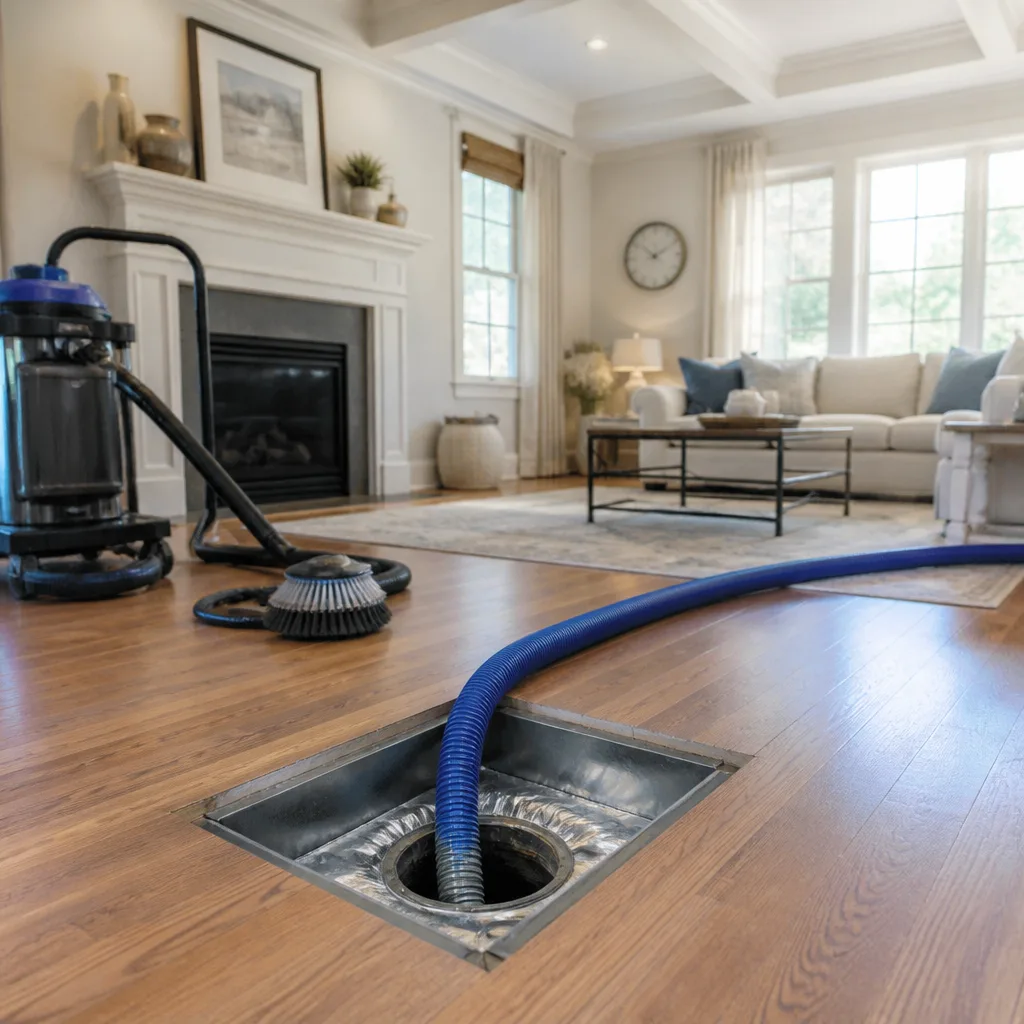 Whole-home duct cleaning
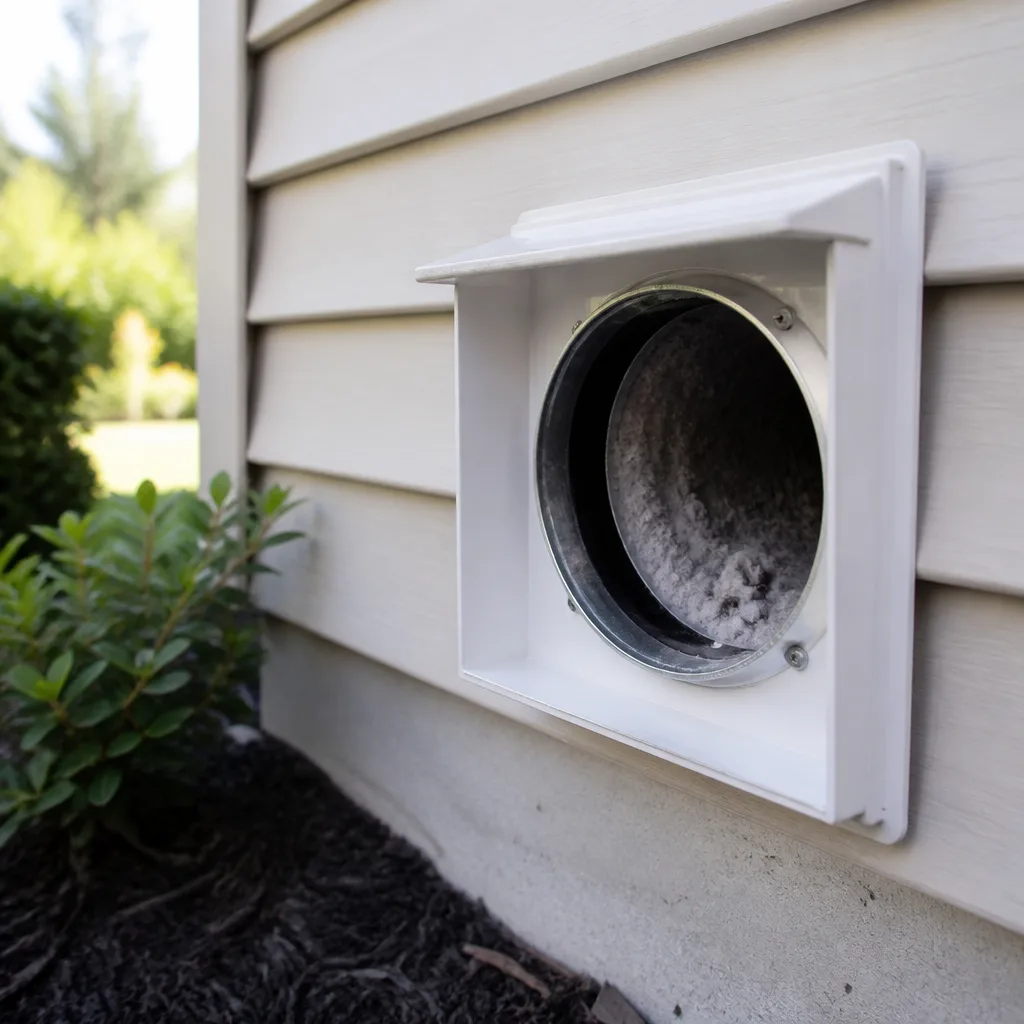 Dryer vent cleaning
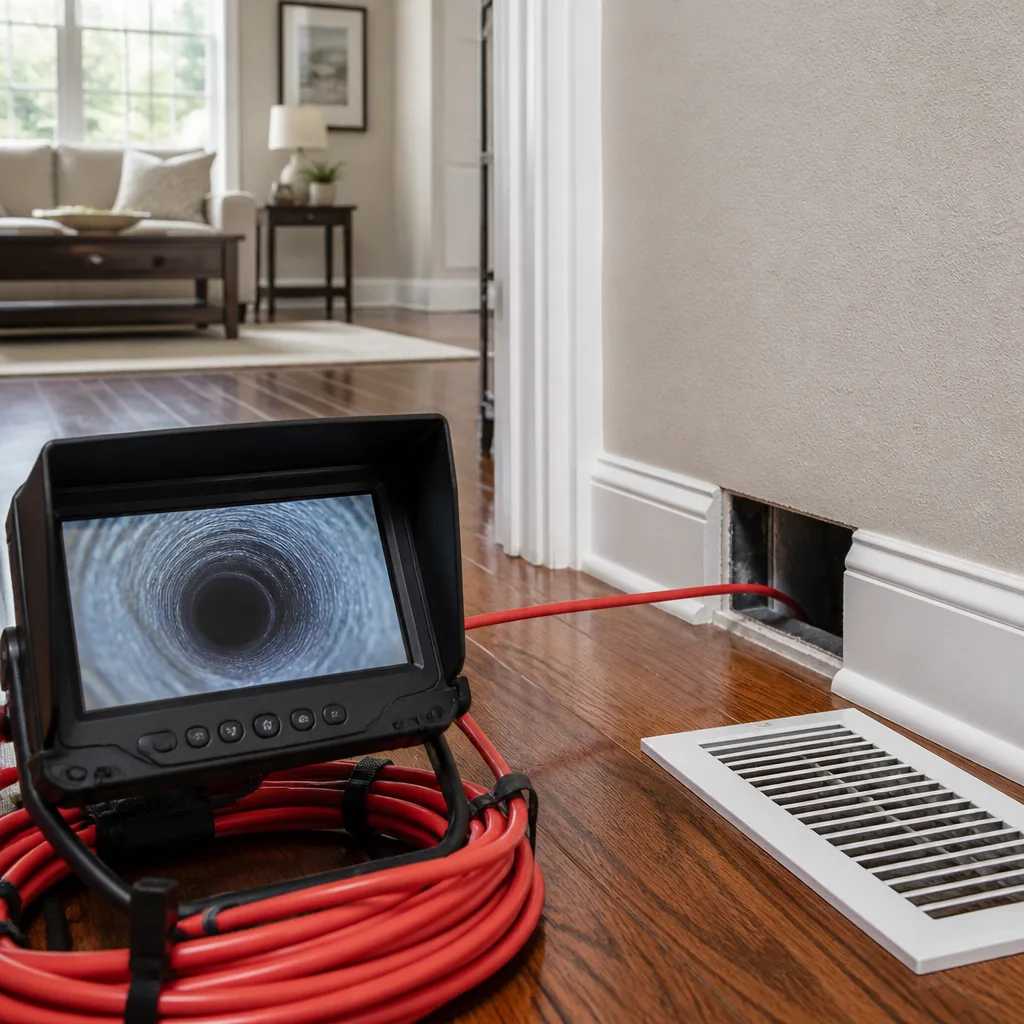 Camera inspection
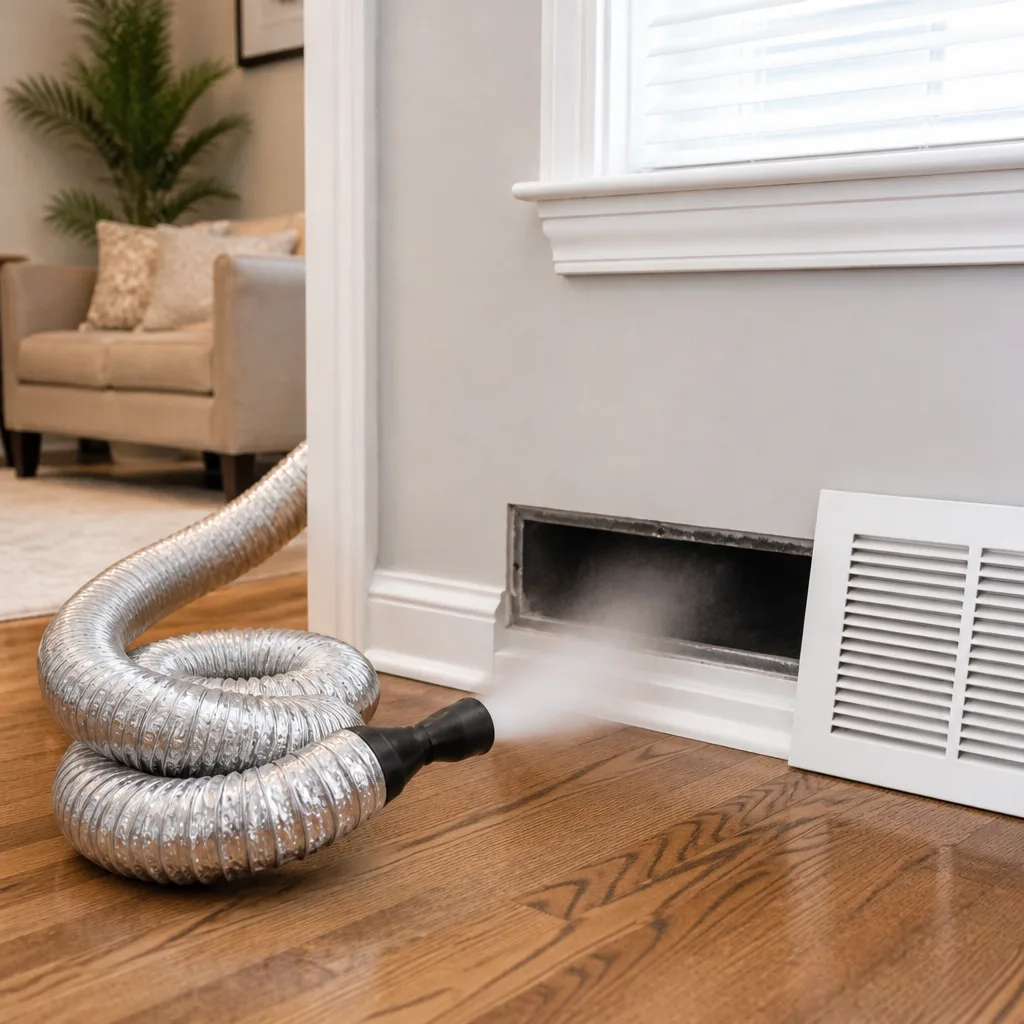 Sanitizing & deodorizing
Whole-system duct and dryer vent check with before-and-after photos - you see exactly what came out of your vents
That "$99 whole-house special" is a bait ad - the real number appears once they are in your hallway, or the "clean" is a shop-vac at the register. We photograph the inside of your ducts before and after instead.
Air Duct Cleaning Warning Signs: An Enterprise Homeowner’s Reference Guide
Warning signs rarely announce themselves. Most Enterprise homeowners think they’ll notice dirty ducts when dust starts collecting on the coffee table, but by that point the problem has been building for months. The early signals are quieter: a supply register that seems to push slightly less air, a system that runs a few minutes longer each cycle, a faint musty note in the return hallway that fades once someone opens a window. This guide walks you through the subtle, measurable signals that tell you your ductwork needs attention long before the obvious symptoms show up. You’ll learn how to check airflow with a tissue, how to read dust patterns, how to diagnose an odor, and what desert-specific problems look like in Enterprise ductwork. By the end, you’ll know when to watch, when to act, and when to call a professional.
Quick Answer
The most reliable warning signs of dirty air ducts are a measurable drop in airflow at supply registers, HVAC runtime that creeps longer than it used to, dust depositing in consistent geometric patterns in specific rooms, and odors that fall into three distinct categories: musty, burning, or stale. Visible dust trails and debris on registers are late-stage indicators, not early ones. In Enterprise, watch for caliche dust intrusion at crawlspace flex duct connections and degraded duct board in attic runs exposed to UV.
Styles & brands we work with
- Whole-home duct cleaning
- Dryer vent cleaning
- Camera inspection
- Sanitizing & deodorizing
Table of Contents
- The Airflow Drop You Can Feel (and Measure)
- Three Odors, Three Different Problems
- Reading Dust Patterns: What Geometry Reveals
- HVAC Runtime Creep: The Third Cause Nobody Checks
- Enterprise-Specific Warning Signs: Caliche and Duct Board
- When Air Quality Products Are Already Hinting
- Cleaning vs. Repair: Knowing Which You Need
- Common Mistakes to Avoid
- When to Call a Professional
- Frequently Asked Questions
The Airflow Drop You Can Feel (and Measure)
A 20% drop in airflow from a supply register is almost never noticed by feel alone. The hand-held test most people use, holding a palm in front of the grate, only registers a decline when the loss crosses 40% or more. That gap between feel and reality is why airflow reduction is one of the earliest and most overlooked warning signs of debris accumulation in Enterprise duct systems. A partially restricted run still moves air; it just moves less of it, and the difference takes months to become obvious.
The good news is you don’t need special tools to catch it. Two quick methods work.
- Tissue test. Hold a single ply of tissue paper about two inches in front of a supply register. On a healthy system, the tissue should flutter steadily and pull toward the grate. If it flutters weakly, drops toward the floor, or barely moves, that run is restricted.
- Anemometer app test. Free smartphone anemometer apps measure airflow in feet per minute. Hold the phone’s microphone at the register face and record a reading. Repeat at three or four registers in different rooms. A 20% spread between the strongest and weakest register often points to debris accumulation, a disconnected flex run, or collapsed duct liner.
Do the tissue test at each register in your home once a season. Write down the results. A pattern of gradual decline is the clearest signal that your ductwork is loading up with debris. If one register is dramatically weaker than its neighbors in the same zone, that’s a duct issue rather than a general cleaning need, and it may call for repair rather than a full cleaning. We see both situations in Enterprise homes, and the two services solve different problems.
Three Odors, Three Different Problems
Odor is one of the most informative warning signs in ductwork, and also the most misread. Homeowners tend to lump “smells a little off” into a single category, but three distinct odors point to three different underlying issues, and each one calls for a different kind of response. Getting the classification right saves you from calling the wrong trade.
Musty odor: moisture and microbial growth
A musty, basement-like smell that grows stronger when the system runs usually means moisture has found its way into the duct system or the air handler. Condensation on cold surfaces, high indoor humidity, or a small leak in an insulated run can all feed microbial growth on duct liner or insulation. In Enterprise, where the air is dry but the cooling system produces condensate year-round, this problem clusters around the air handler cabinet and any flex runs with torn vapor barriers. Musty is a cleaning problem first, and it may also be an air duct repair problem if the moisture source is a torn duct liner or failed vapor barrier.
Burning or hot-dust odor: debris on the heat exchanger
A burning, singed, or hot-metal smell during heating season almost always means dust and debris have accumulated on the heat exchanger. That’s not just an air-quality issue; it’s a safety signal. Turn the system off and call a licensed HVAC technician immediately. Duct cleaning may follow, but the first call is to someone qualified to inspect the heat exchanger itself.
Stale, dusty odor: high particulate load
A flat, stale smell that doesn’t quite read as musty or burning typically indicates high particulate load: the system is circulating a heavy concentration of fine dust, and the return path is saturated. This is the odor that responds best to a full cleaning with proper containment. Debris that’s been pulverized at the return boot or distribution plenum is now airborne every time the blower kicks on.
Reading Dust Patterns: What Geometry Reveals
Dust lands where it lands, but the pattern it makes tells you something. Random dust distribution across a room is normal. Dust that consistently accumulates in the same corner, the same wall near a particular register, or the same patch of floor is a signal about pressure balance inside your duct system. Homeowners often notice this as an oddity and never think to connect it to the ducts.
Here’s what the geometry usually means.
- Dust concentrated on the wall opposite a supply register. Debris is being pushed out of that run with unusual force, often because the register is out of balance or the duct has lost volume downstream.
- Dust clusters along the floor near a return grille. The return is pulling less than it should, and the room’s pressure profile is inverted. The duct between the register and the air handler is likely restricted.
- Dust streaks radiating outward from the register fins. This is the classic late-stage sign of a heavily loaded supply run. Air is finding a path around debris and shooting out at higher velocity where it clears the restriction.
- Dust collecting on ceiling corners in only one or two rooms. Those rooms are probably on the longest runs and receiving the least conditioned air, which is often the first area to show the effects of debris loading in the trunk line.
Different rooms with different dust patterns point to localized restrictions rather than a whole-system problem. A room that consistently holds dust while its neighbors stay cleaner is telling you something about the run that serves it. When we inspect ductwork during air duct cleaning, we map these patterns before we start, because they often tell us where to expect damage.
HVAC Runtime Creep: The Third Cause Nobody Checks
If your system is running longer than it used to in order to reach the same thermostat setpoint, the instinct is to blame the AC unit itself. That’s often wrong. In our experience, three causes account for most runtime creep: refrigerant charge problems, a failing blower or capacitor, and restricted airflow from debris-loaded ducts. Homeowners check the first two first. The third sits quietly at the bottom of the list, and it’s the one that most often benefits from a cleaning.
How to spot runtime creep before it becomes obvious.
- Note the exact time your system kicks on and off once during a normal cooling day. Write it down.
- Repeat the same measurement in a week under similar outdoor temperatures.
- Repeat again a month later. A fifteen- to twenty-minute increase in total runtime at the same outdoor temperature is a real trend, not noise.
- Cross-check with airflow. If runtime is creeping up and one or more register tissue tests have gone weak, duct restrictions are a likely contributor.
Runtime creep is expensive over time. Every minute of extra run time moves more air past a saturated filter and through a duct system that’s already restricted, so the problem compounds. It’s one of the clearest signals that a full cleaning and inspection is worth scheduling, especially in Enterprise where summer cooling demand pushes the system hard across most of the year. Our technicians have up to 8 years of experience diagnosing exactly this kind of slow decline.
Enterprise-Specific Warning Signs: Caliche and Duct Board
Enterprise homes sit in a desert environment, and that environment leaves its own fingerprints on ductwork. Two issues recur in this area more than anywhere else: caliche dust intrusion and deteriorating duct board insulation. Neither is visible from the living room, but both show up in specific, predictable ways.
Caliche dust at crawlspace flex duct connections
Caliche is the calcium carbonate-rich soil layer common across the Las Vegas Valley, and the dust it produces when disturbed is fine, alkaline, and abrasive. In homes with crawlspace or subfloor duct runs, small gaps at flex duct connections become entry points for caliche dust. The dust migrates into the flex run, dries out the inner liner, and begins to accumulate on the liner wall. Signs include pale gray dust on the flex duct surface itself, a gritty feel on the nearest register grate, and faster-than-normal loading in the runs that pass through that section of the crawlspace. Homes nearest the open desert fringe, especially those off the rural edges of Henderson toward the McCullough Range, are more prone to this. If you’re in that band, we’d suggest an inspection every couple of years as part of your air duct cleaning schedule.
Duct board degradation from attic UV exposure
Duct board insulation is engineered and reliable, but it does not love prolonged UV exposure. Attic runs that have lost their outer jacket or have a damaged radiant barrier can see their duct board slowly break down. The signs are subtle: small white or fibrous particles on the surface of the duct board, a soft or crumbly texture where you touch it, and increased dust landing on supply registers in rooms served by the affected runs. Once duct board degrades, cleaning alone isn’t always enough. The damaged section needs to be repaired or replaced, which is exactly the kind of work our duct repair service handles so you’re not calling a second contractor.
When Air Quality Products Are Already Hinting
Homes that already run a whole-house air cleaner or a high-MERV filtration setup have an advantage when it comes to spotting duct problems: the equipment itself reports on the underlying conditions. Aprilaire and Honeywell systems aren’t duct cleaners, but the way they perform can tell you something is wrong upstream.
Signs to watch for on your existing air quality equipment.
- Air cleaner media loading faster than usual. If you’re replacing filter media more often than the manufacturer’s intervals suggest, the ducts may be releasing more particulate than the cleaner can keep up with.
- Whole-house humidifier running dry-side constantly. Not a duct issue itself, but a sign the system is working against an unusual load.
- UV purification lamp failing early. Low airflow through the air handler cabinet can overheat the lamp housing. Worth checking the ducts before the warranty runs out.
- Air cleaner LED diagnostics showing reduced runtime. Honeywell electronic cleaners in particular report reduced hours when airflow is below spec.
We work with Honeywell and Aprilaire products because they form part of the full air quality chain from filter to register. Understanding how these components behave lets us spot duct problems at the early stage, before the equipment itself becomes the casualty. If you’re seeing early warnings from air quality equipment, that’s a strong cue to schedule a duct inspection before anything else.
Cleaning vs. Repair: Knowing Which You Need
Not every duct warning sign means cleaning. Some mean repair: torn flex runs, disconnected joints, crushed sections, or degraded duct board that no amount of cleaning will fix. Others mean cleaning, and cleaning alone. Distinguishing them at the symptom stage saves you from paying for one when you need the other.
The signals that usually mean cleaning.
- Uniform dust deposition across most registers
- Stale or mildly musty odors improving after filter replacement
- Runtime creep with no single room dramatically worse than others
- Visible dust and debris on register fins and diffusers
The signals that usually mean repair.
- One room consistently weak at the register while others are fine
- Pale dust or fiber residue on flex duct exterior surfaces
- Burning smell in heating season (this is a heat exchanger call first, then repair)
- Crumbling or soft duct board where accessible
- Disconnected fittings visible in crawlspaces or attics
Most real jobs need a bit of both. The structured way to approach it is what we call a containment-first process: inspect first, identify damage, contain the work area with air scrubbing, clean thoroughly, then repair anything damaged before it goes back into service. Cleaning and repair running under one provider is the only way to get that sequence done without a second visit or a second contractor. We clean it, and if it’s broken, we fix it. That’s the whole point of offering both services.
Common Mistakes to Avoid
- Testing airflow by hand only. A hand in front of a register cannot feel a 20% drop, so relying on feel alone lets the problem slide for months. Use a tissue or an anemometer app and write down results.
- Treating every odor as mold. A burning smell in heating season is a debris-on-heat-exchanger warning, not a mold warning. Calling a duct cleaner instead of an HVAC technician for a burning smell is a safety risk.
- Replacing filters and stopping there. A new filter does not fix debris that has already bonded to duct liner. In Enterprise, where caliche dust bonds hard and fast, filter changes are a supplement to cleaning, not a substitute.
- Assuming runtime creep is an AC problem. Refrigerant and blower issues account for much of it, but duct restrictions are the third cause and the one most often missed. Check all three before calling an HVAC tech.
- Ignoring crawlspace and attic duct runs. Duct issues in Enterprise almost always show up in the crawlspace or attic first, and almost always before they show up in living spaces. Get those areas inspected.
- Hiring a cleaner who cannot do repairs. If your ducts have a damaged flex run or degrading duct board, a cleaning-only contractor leaves you needing a second provider. Look for cleaning and repair together.
- Skipping a duct inspection on a new-to-you home. Buying an Enterprise home without a duct inspection is common, and the inspection is what tells you what the previous owner never fixed.
When to Call a Professional
Call a professional when you’ve documented a 20% or greater airflow drop across multiple registers, when runtime has crept up fifteen minutes or more at the same outdoor temperature, when an odor falls into the musty or stale category without an obvious source, or when you can see damaged flex runs or degrading duct board in accessible crawlspace or attic spaces. Also call if you’ve had work done in the home that disturbed dust (renovation, roof work, or foundation work) and dust is showing up in the living space afterward. The earlier you book the inspection, the simpler the job is. Duct Cleaning Enterprise offers free estimates in Enterprise. Call (855) 684-4882. We answer 24/7. Fast dispatch from 7am to 7pm, Sunday through Friday.
Frequently Asked Questions
A measurable drop of 20% or more in airflow at supply registers, caught with a tissue test or anemometer app, is the most reliable early sign of debris accumulation. Visible dust trails on registers are later-stage signals. Call (855) 684-4882 for an exact quote on a professional inspection; estimates are free.
If the smell intensifies when the system cycles on and fades when it’s off, the source is inside the HVAC air path and likely the ducts, air handler, or condensate line. Musty smell outside those conditions is usually a plumbing or drainage issue, not a duct issue. An inspection settles it quickly.
Yes, restricted airflow from debris-loaded ducts is one of the three primary causes of HVAC runtime creep. The other two are refrigerant charge problems and a failing blower. If airflow at registers is weak and runtime is creeping, dirty ducts are a likely contributor. Call (855) 684-4882 for a quote on duct inspection and cleaning; the written estimate sets the final price.
Enterprise’s desert environment brings two specific issues: caliche dust intruding into crawlspace flex duct connections, and duct board insulation degrading from UV exposure in attic runs. Both are common enough here that we inspect for them as a standard step. If you’re in or around Henderson, the caliche factor is even more pronounced on the desert-fringe edges.
No. A burning smell during heating season is a warning about debris on the heat exchanger and should be checked by a licensed HVAC technician before anything else. Duct cleaning may follow, but the first priority is heat exchanger safety. Call us after the inspection clears it, and we’ll schedule the cleaning.
Every three to five years is typical for most Enterprise homes, with more frequent service for homes near desert edges or crawlspace duct runs where caliche intrusion is a known factor. Homes with pets, recent renovations, or already-visible degradation in accessible duct runs may benefit from earlier attention. Call (855) 684-4882 for a quote based on your specific setup.
The Bottom Line
The warning signs of dirty air ducts in Enterprise are not the obvious ones most guides list. They’re measurable airflow drops, HVAC runtime creep, distinct odor categories, and dust patterns that reveal pressure imbalance. Add in caliche intrusion at crawlspace connections and UV-degraded duct board, and you have the complete picture of what to watch. If you’ve spotted one or more of these, the next step is a proper inspection, not a shop-vac attempt at home. We use air duct cleaning equipment and Abatement Technologies containment on every job because proper cleaning requires professional-grade tools. We also handle dryer vent cleaning and duct repair under one provider, so you’re not coordinating multiple contractors. Call (855) 684-4882 for a free estimate. We answer 24/7. Fast dispatch from 7am to 7pm, Sunday through Friday.
Written by the team at Duct Cleaning Enterprise.
See the difference
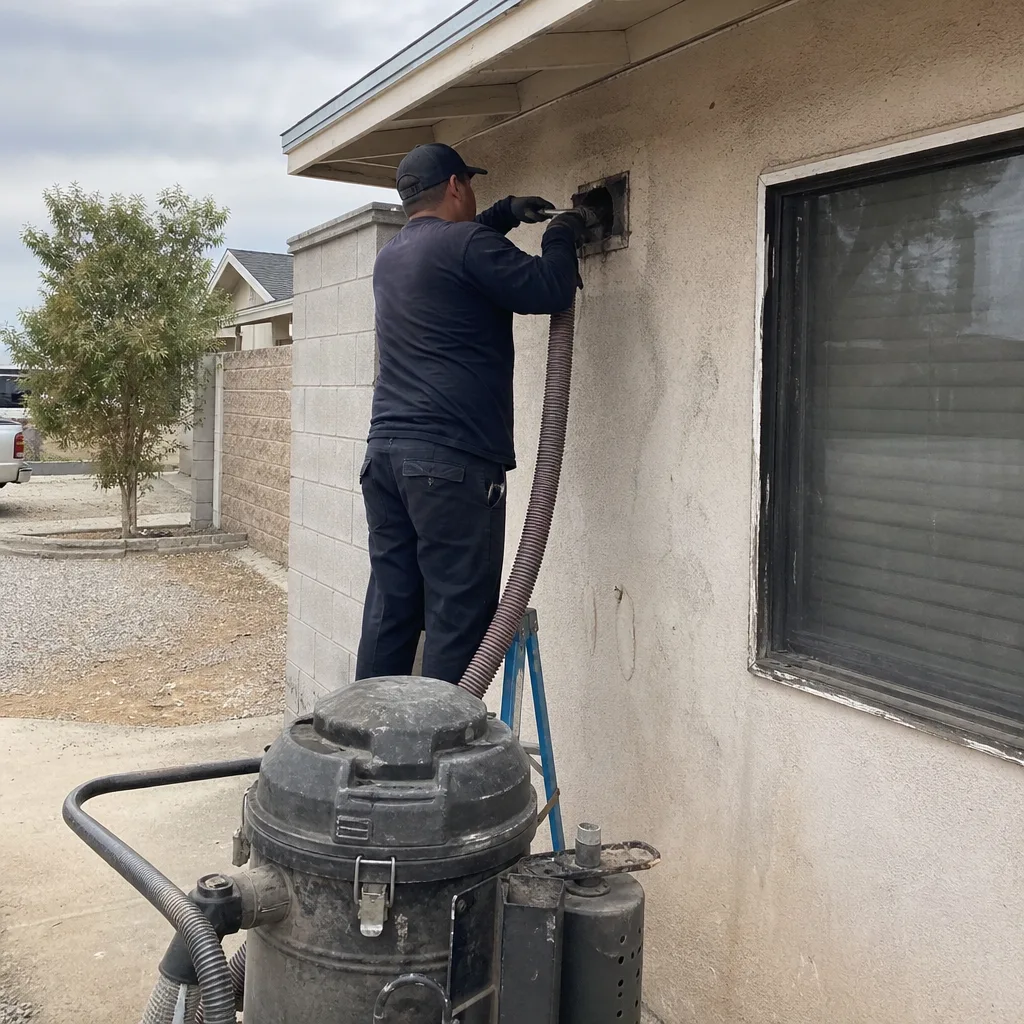 Before
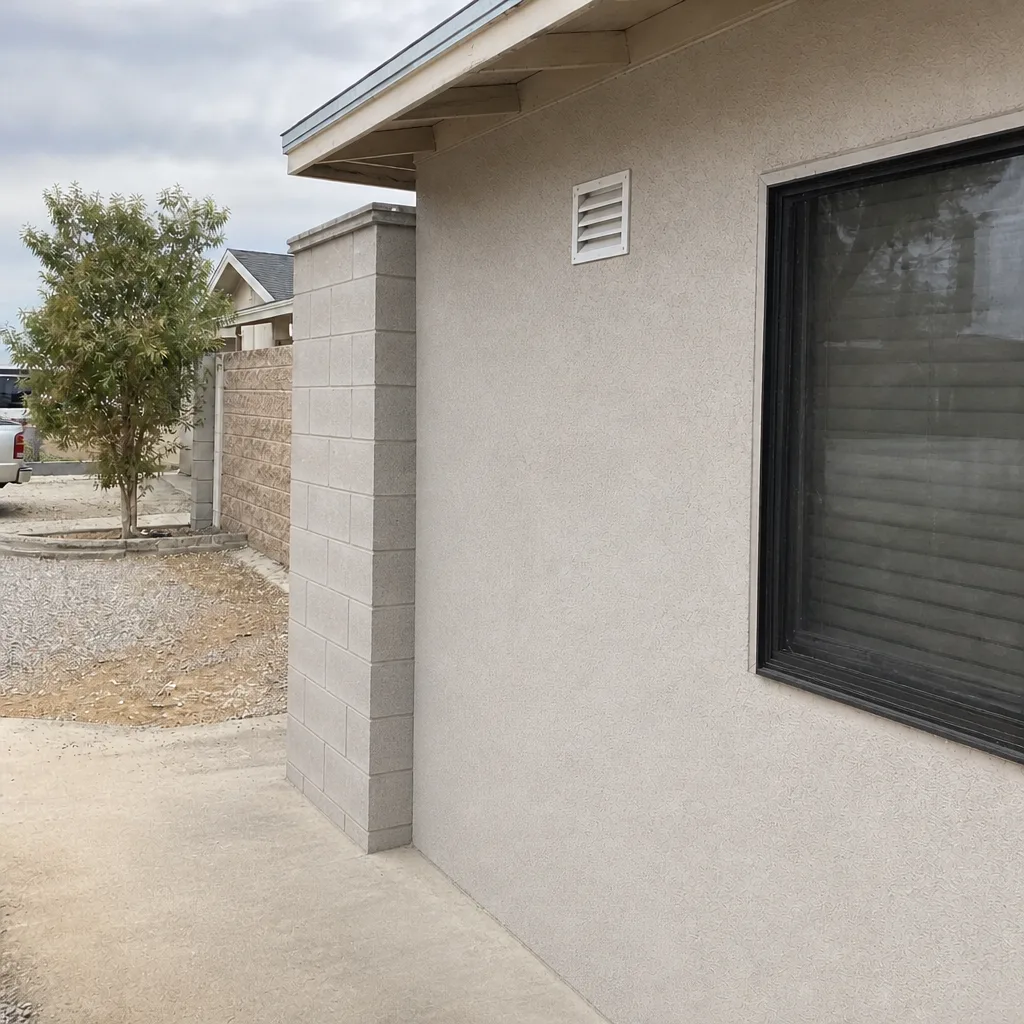 After
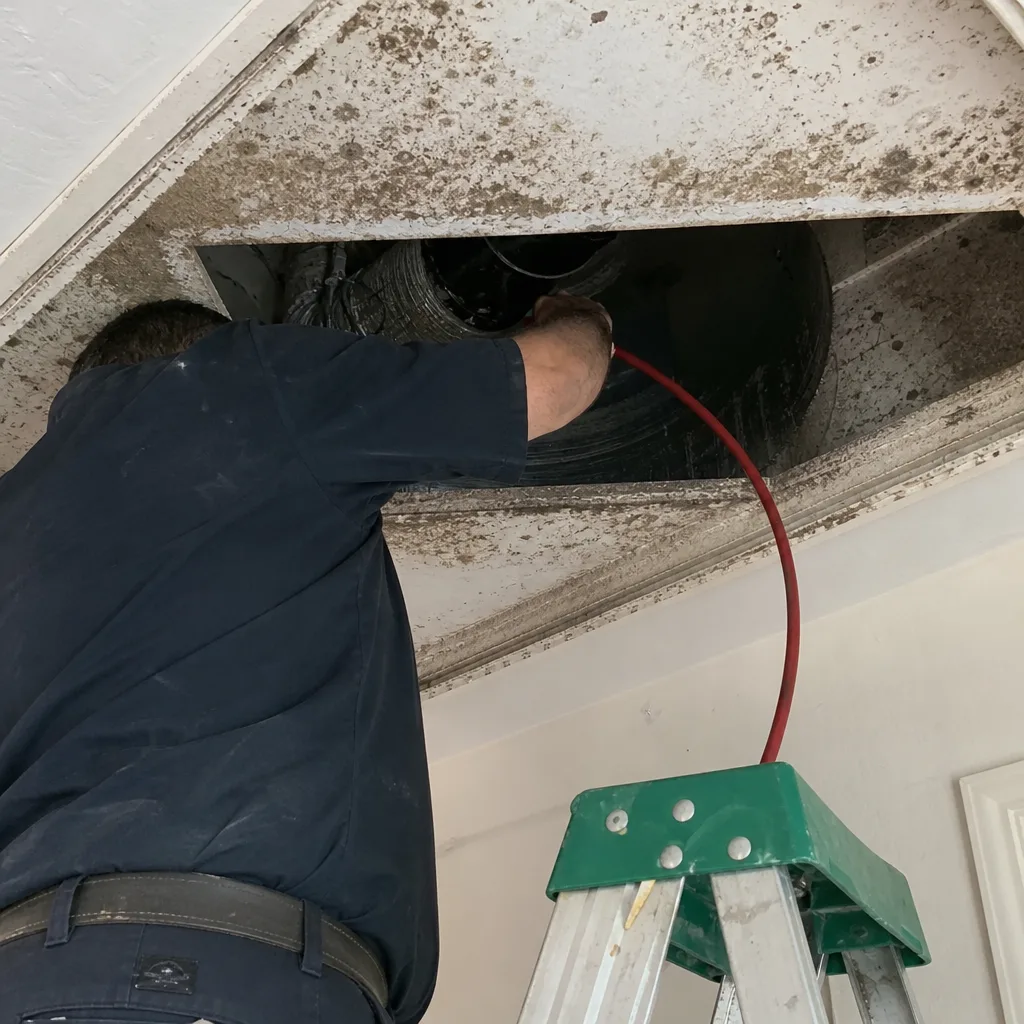 Before
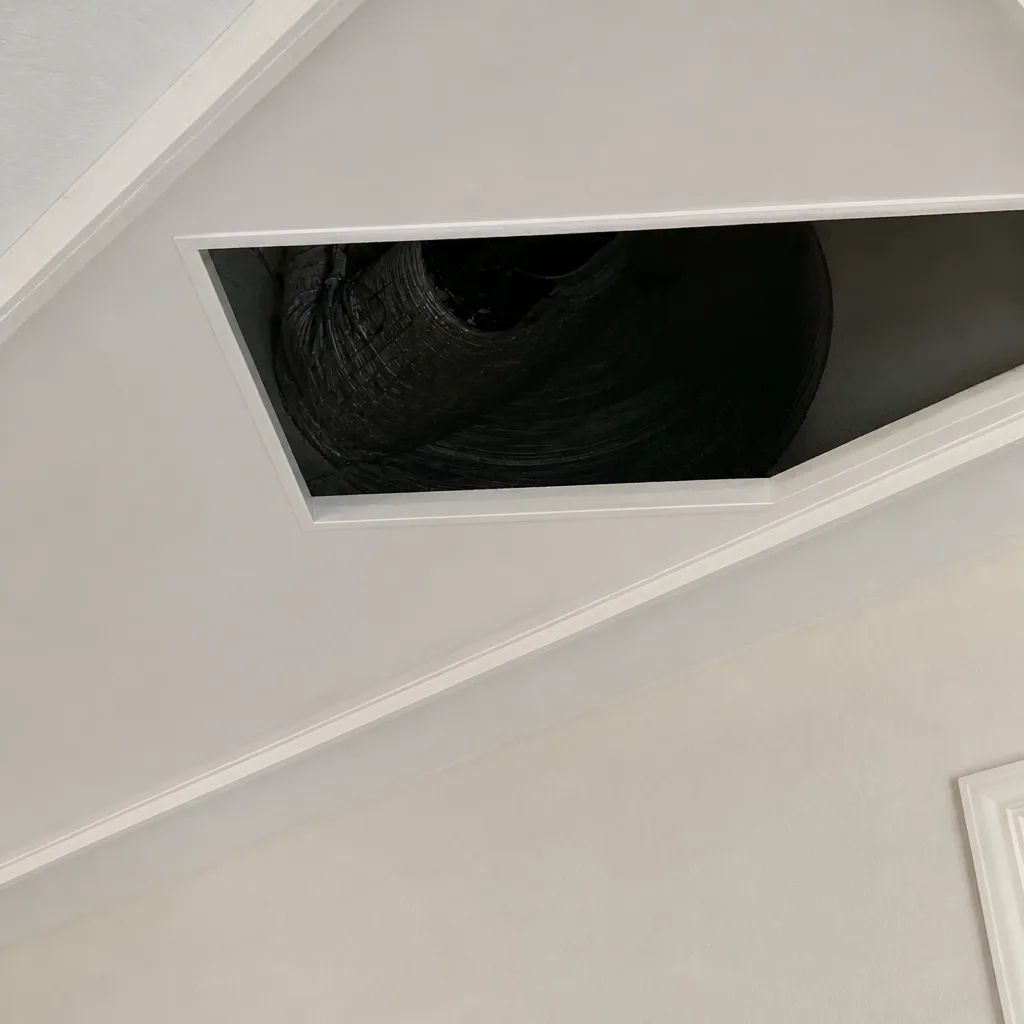 After
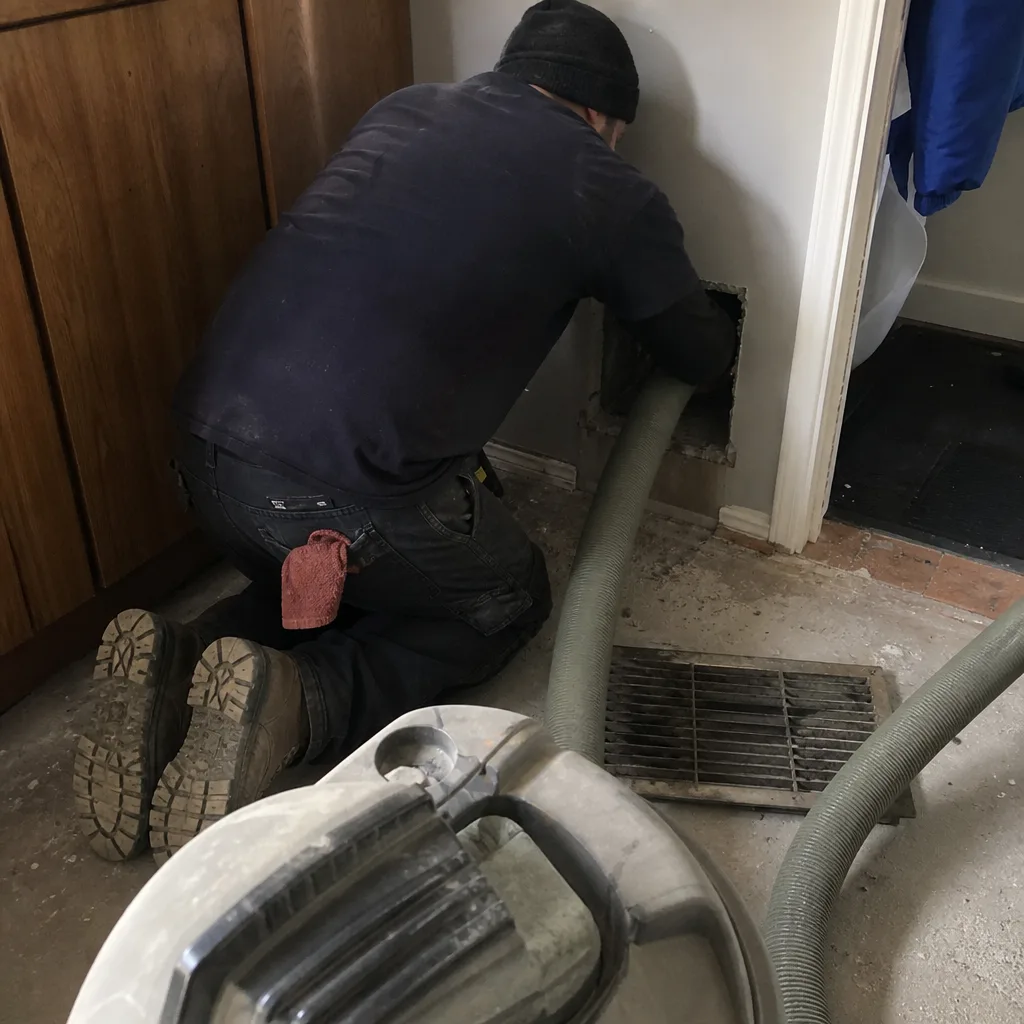 Before
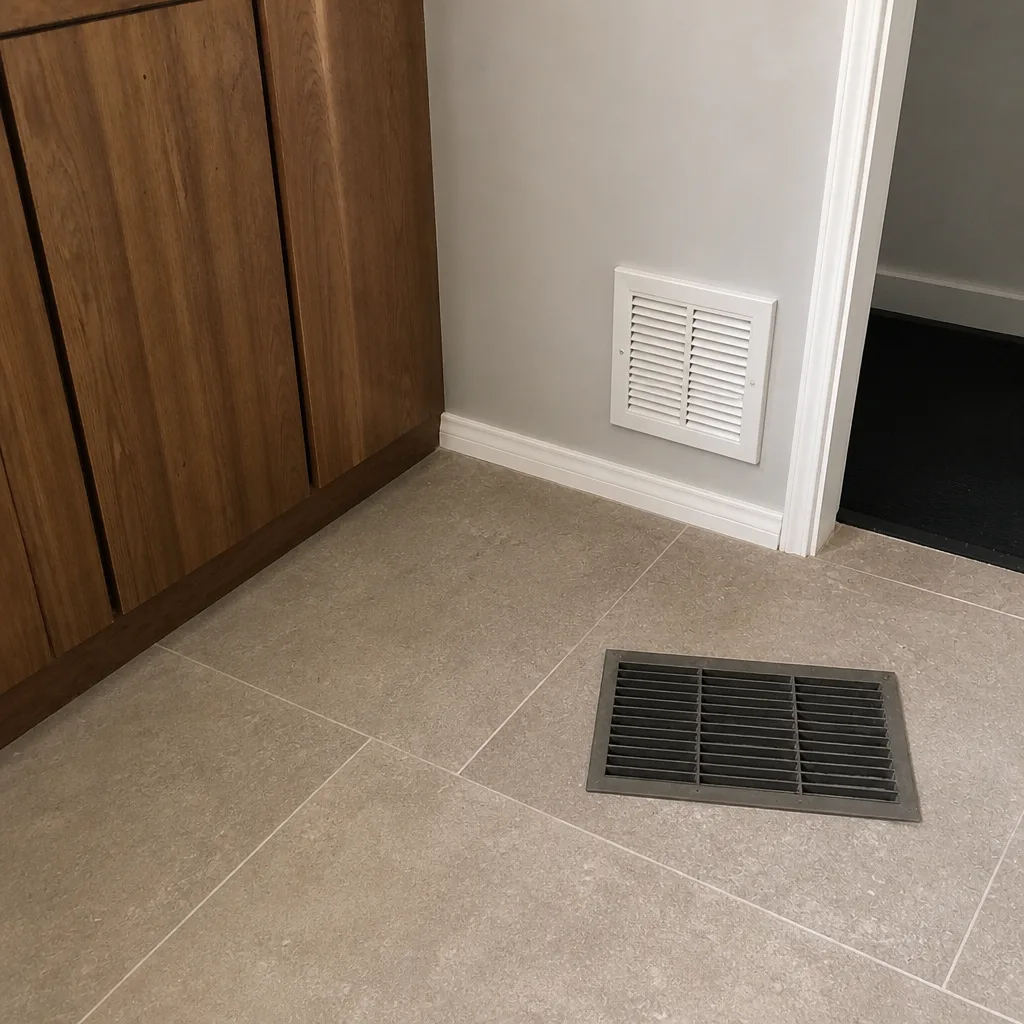 After