
Last updated November 16, 2026
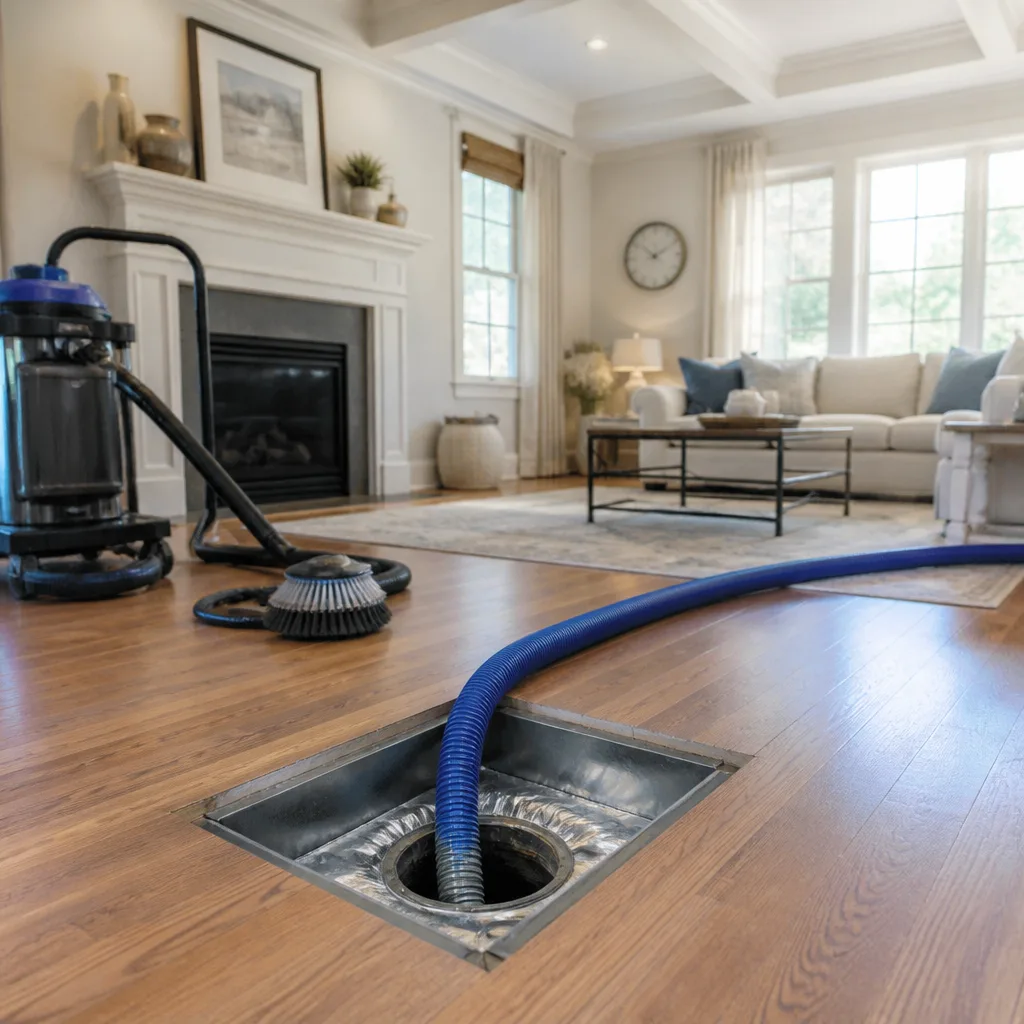 Whole-home duct cleaning
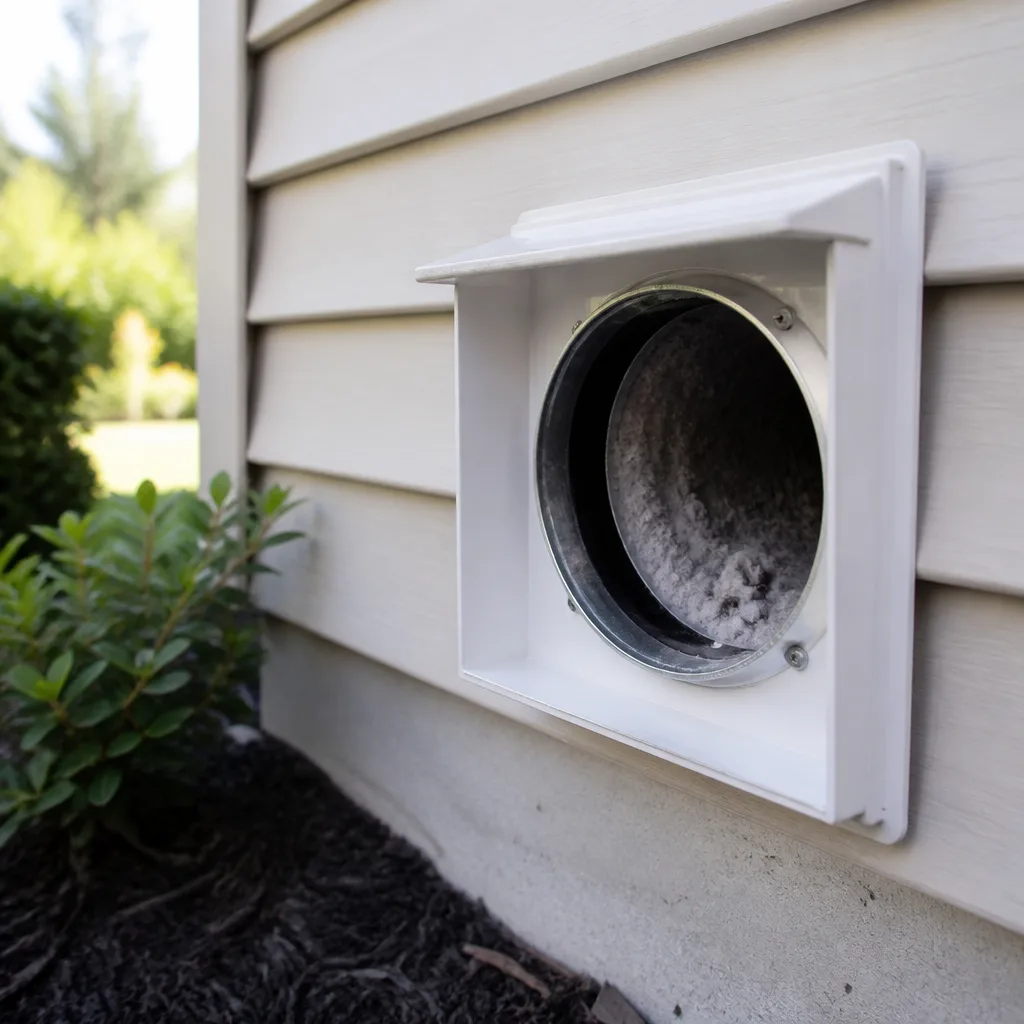 Dryer vent cleaning
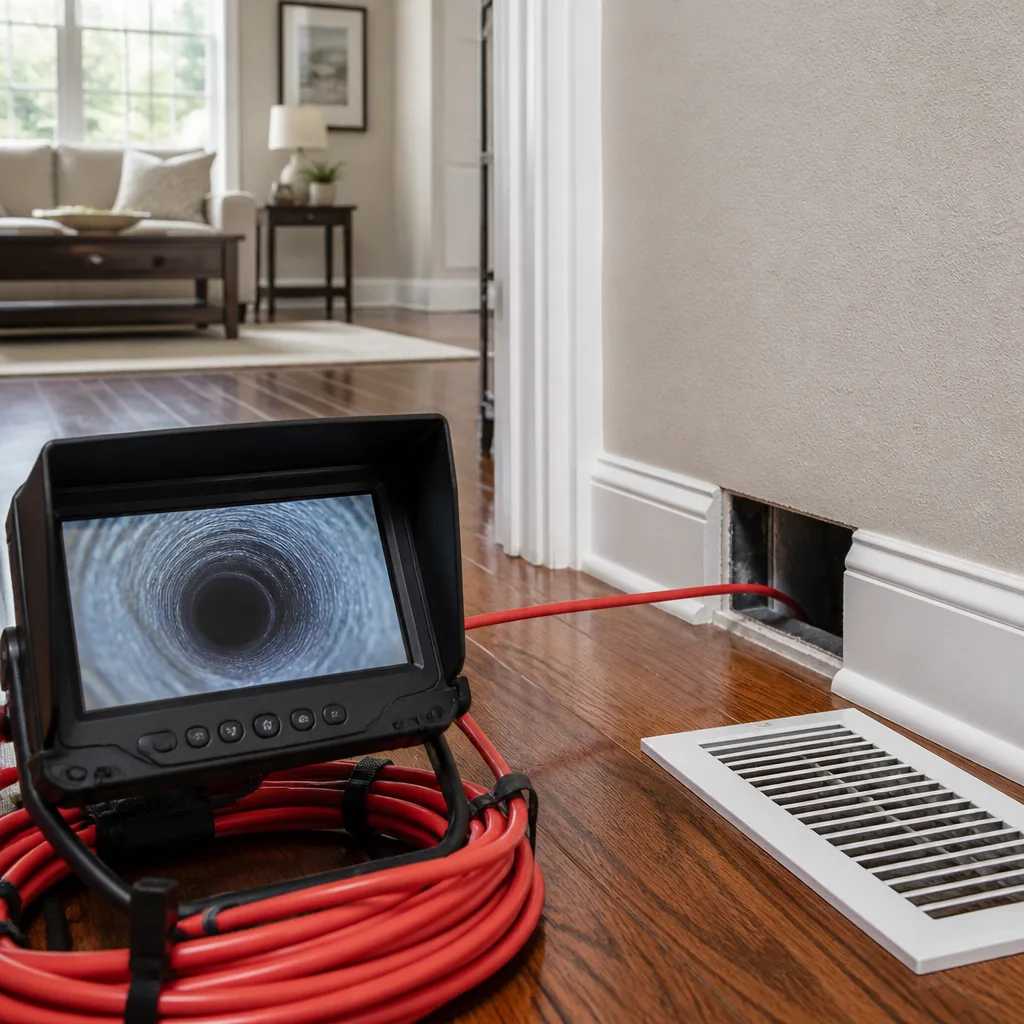 Camera inspection
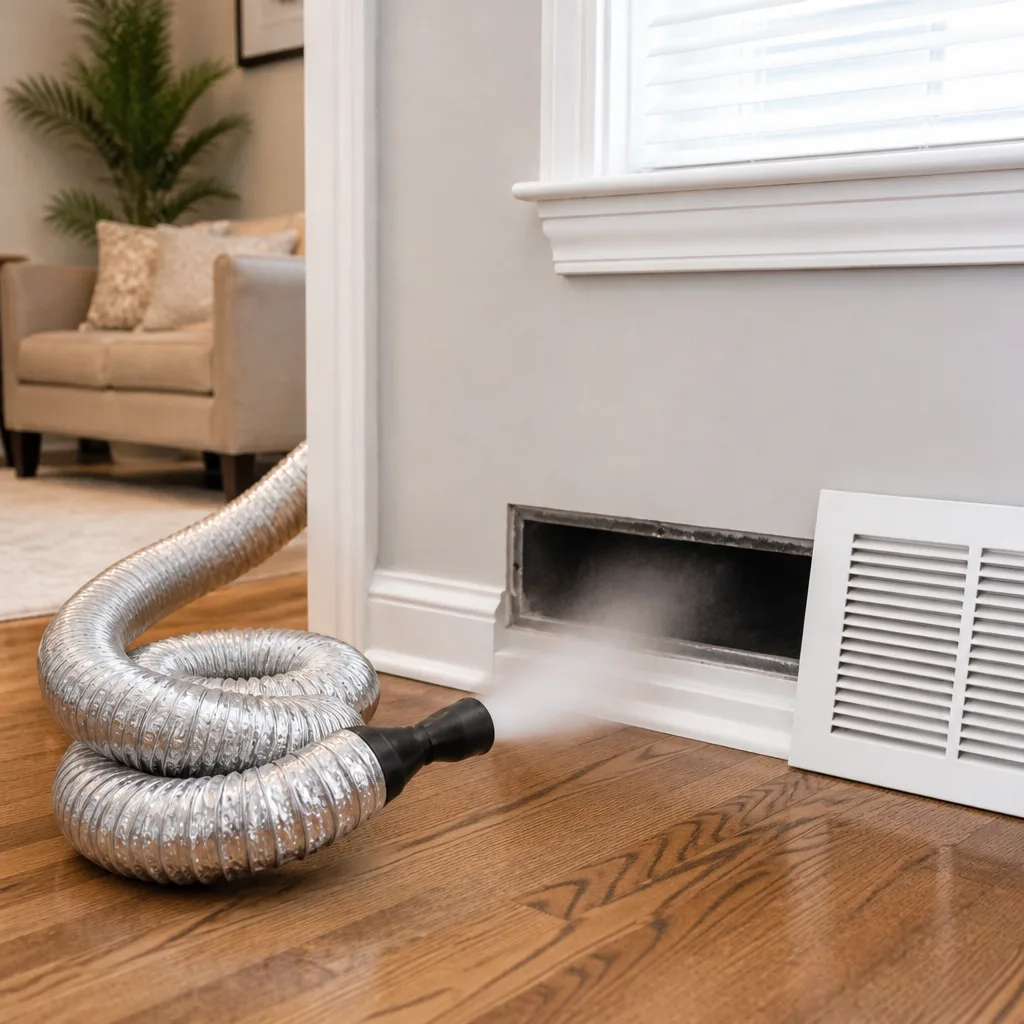 Sanitizing & deodorizing
Whole-system duct and dryer vent check with before-and-after photos - you see exactly what came out of your vents
That "$99 whole-house special" is a bait ad - the real number appears once they are in your hallway, or the "clean" is a shop-vac at the register. We photograph the inside of your ducts before and after instead.
Air Duct Cleaning Maintenance Checklist for Enterprise Homeowners
If you’ve replaced your MERV-8 filter on schedule but haven’t touched your supply registers in three years, you’ve been filtering incoming air while recirculating debris already sitting inside the system. That’s the gap most checklists ignore. The filter catches what enters; it does nothing about dust that has settled on duct walls, register grilles, and the return plenum. In a desert town like Enterprise, where wind-blown caliche dust and monsoon humidity alternate with bone-dry heat, the timing of every maintenance step matters more than the steps themselves. This guide gives you a month-by-month cycle built for Enterprise conditions, tells you which filter upgrades actually help, and shows you what to log so a contractor doesn’t start from zero each visit.
Quick Answer
Air duct maintenance in Enterprise runs on a cycle, not a one-time cleaning. Replace filters every 1 to 3 months depending on dust load, clean register grilles monthly, schedule professional duct cleaning every 3 to 5 years (sooner if you have pets, recent renovation, or visible dust trails), and book dryer vent cleaning once a year. Log odors, dust patterns, and allergy symptoms between visits so your next contractor has a baseline instead of a blank slate. Call (855) 684-4882 for a free estimate on professional cleaning in Enterprise.
Styles & brands we work with
- Whole-home duct cleaning
- Dryer vent cleaning
- Camera inspection
- Sanitizing & deodorizing
Table of Contents
- Why duct maintenance is a cycle, not an event
- The month-by-month calendar for Enterprise conditions
- Filter MERV ratings: when to upgrade and when to stop
- Register and grille maintenance between professional visits
- Indicators worth logging (odors, dust trails, allergy patterns)
- How to document duct condition so contractors don’t start blind
- Dryer vent maintenance: the separate cycle most homeowners forget
- When cleaning isn’t enough and repair is the real answer
Why Duct Maintenance Is a Cycle, Not an Event
Most homeowners in Enterprise treat duct cleaning the way they treat a carpet shampoo: something you do every few years when the mood strikes. That framing is why so many systems go from “slightly dusty” to “noticeably restricted” without anyone catching it in time. A duct system doesn’t fail all at once. It accumulates.
Dust builds in layers on the inside of the trunk lines and flex runs. The layer insulates nothing and filters nothing. It just sits there until air movement picks particles back up and carries them through your registers. That’s the cycle: every filter you change captures incoming debris, but recirculated debris keeps moving. Filter changes alone don’t reset it.
Here’s what the maintenance cycle actually looks like in practice:
- Weekly to monthly: register and grille checks, visible dust inspection, filter condition check.
- Every 1 to 3 months: filter replacement, tuned to the season.
- Annually: dryer vent cleaning, full system walkthrough, log review.
- Every 3 to 5 years: professional air duct cleaning, sooner for high-dust homes.
- As needed: duct repair for disconnected runs, crushed flex, or damaged seams.
When you work this cycle, the cleaning is easier, the cost is more predictable, and your HVAC equipment runs against less static resistance. That’s the whole thesis. Duct cleaning isn’t a purchase you make once. It’s the reset step in a cycle you maintain year-round.
The Month-by-Month Calendar for Enterprise Conditions
Enterprise doesn’t have four equal seasons. It has a dust season, a monsoon window, a cooling peak, and a mild shoulder period. Calibrating your duct maintenance to that rhythm does more for air quality than any single task done at the wrong time. Duct Cleaning Enterprise sees this pattern across the valley – homeowners who front-load maintenance before the peak months spend less fighting dust during them.
January to March: The Shoulder Window
This is the reset period. Cooling demand is low, outdoor dust is relatively calm, and it’s the best time to schedule professional cleaning so you start the year with clean ducts. Check the filter, clean all registers, and inspect visible duct runs in the attic or crawl space for damage. If you’ve been putting off repair, now is when it’s easiest.
April to June: Pre-Peak Preparation
Dust season ramps up as dry winds move through the valley. Filter checks go to every two to four weeks. Register grilles pick up visible dust faster. If your system has any disconnected flex or torn insulation, this is the window to fix it before cooling load peaks and the system has to push harder through damaged runs.
July to September: Peak Cooling and Monsoon
This is when systems run hardest and monsoon humidity arrives. High cooling demand means more air moving through the ducts, which lifts more settled dust. Monsoon moisture can push dust into slightly damp dust that clings to duct walls – a different problem than dry, easy-to-move dust. Filter changes go to monthly. Watch registers for dust trails and log any musty odor that appears after humid days.
October to December: Post-Peak Recovery
Cooling load drops, dust settles, and any monsoon-related moisture issues become visible. Run a full system walkthrough. Book dryer vent cleaning if it hasn’t happened this year. If you noticed odors, allergy flare-ups, or dusty registers during the peak months, note them in your log and reference them when you call for an estimate.
- Q1 (Jan-Mar): Professional cleaning if due, full visual inspection, start or refresh your condition log.
- Q2 (Apr-Jun): Filter every 2-4 weeks, register cleaning weekly, address any visible duct damage.
- Q3 (Jul-Sep): Filter monthly, register cleaning every 1-2 weeks, log odors and dust trails weekly.
- Q4 (Oct-Dec): System walkthrough, dryer vent cleaning, review the whole year’s log.
This calendar isn’t a strict rule – a home with two dogs in a windy Enterprise neighborhood will need more frequent checks than a low-pet household. Use it as a baseline and adjust based on what your log shows.
Filter MERV Ratings: When to Upgrade and When to Stop
Filter upgrades are the most misunderstood part of the maintenance cycle. The instinct is “higher number equals better air.” That’s not quite right. A MERV 13 filter installed in a system designed for MERV 8 will restrict airflow, force the blower to work harder, and can shorten equipment life while actually reducing the amount of air that gets filtered in the first place.
MERV ratings are a standardized measurement of how efficiently a filter captures particles. Higher capture means more resistance. The trade-off is real, and it’s the reason filter selection is a whole-system decision, not a duct-interior decision.
Filter Selection Guide
- MERV 6 to 8: The baseline most residential systems are designed around. Adequate for normal dust in most Enterprise homes. Change every 1 to 3 months.
- MERV 11: A reasonable step up for households with pets, allergies, or dust sensitivity. Confirm the system can handle the added static pressure before installing one – not every blower can.
- MERV 13: High filtration, meaningfully more resistance. Appropriate only on systems with a blower rated for it, and usually in combination with duct cleaning and sealing so the system isn’t fighting leaks at the same time.
- Above MERV 13: Rarely useful in residential HVAC. The airflow penalty outweighs the filtration gain in most setups.
When an Upgrade Actually Helps
Upgrading to MERV 11 or 13 helps when three things are true: your blower can handle it, your duct system is sealed well enough that filtered air stays in the house, and your ducts are already clean. Install a high-MERV filter on a dirty system and you’ve added resistance without removing the source of the debris.
When It Backfires
A MERV 13 on an undersized blower causes the system to run hotter, cycle longer, and pull harder through leaks. In a desert climate where the system already runs during peak hours, that’s equipment stress you don’t need. If you’re unsure, a whole-system air-quality walkthrough from technicians familiar with Honeywell and Aprilaire products will tell you what your specific system can carry. Our technicians have up to 8 years of experience and can advise on that without guessing.
Register and Grille Maintenance Between Professional Visits
Your supply registers are the visible face of the whole duct system, and they’re the easiest part of the cycle to maintain yourself. What you can do at the register level between professional cleanings is meaningful, and it doesn’t void anything or risk the ducts.
What You Can Safely Do Yourself
- Vacuum supply and return grilles regularly with a brush attachment. Do this monthly during peak months, every 2 to 3 months the rest of the year.
- Wipe the grille face and louvers with a slightly damp cloth to remove stuck dust.
- Check that all supply registers have visible airflow by holding a tissue near them. Weak or no airflow suggests a closed damper, a crushed run, or an obstruction worth flagging.
- Remove the return grille cover (most are hinged or have two snap clips) and vacuum the visible filter surface before replacement or reinstalling the filter.
- Look inside the register neck with a flashlight. Wipe what you can reach. Don’t climb inside or disassemble the boot or duct run – that’s where professional work begins.
- Reinstall grilles snugly. Loose covers cause register rattle and small leaks.
What to Leave to a Technician
Don’t remove flex duct from register boots, don’t open the plenum, and don’t try to clean beyond the register neck. Beyond that point, you can’t see anything, and you can easily disconnect a run without knowing. Register work is a surface job; duct work is a containment job. This is exactly why Duct Cleaning Enterprise deploys a Rotobrush rotary-brush system and Nikro HEPA-rated vacuum on full cleaning jobs – the tools that reach inside the runs a home vacuum can’t.
Indicators Worth Logging (Odors, Dust Trails, Allergy Patterns)
The single biggest gap in how most homeowners think about ducts is that they don’t know what “bad enough to call” looks like. Professional cleaning is often scheduled too late because the signs were there for months and no one tracked them. A simple log changes that.
What to Log
- Odors: Musty, dusty, or “basement” smell when the system turns on. Note the date and whether it’s constant or intermittent. In Enterprise, musty smell that appears after monsoon humid days often points at moisture contacting dust.
- Visible dust trails: Dark streaks around register edges, dust settling on horizontal surfaces within an hour of dusting, or visible dust plumes from registers when the system kicks on.
- Allergy and symptom patterns: Note when you feel worse – after the system runs, after filter changes, after monsoon weeks. Don’t diagnose yourself; just note the pattern.
- Airflow changes: Weak registers, rooms that heat or cool unevenly, or a noticeable difference between rooms on the same floor.
- Filter loading rate: Note how fast your filter turns grey after replacement. If it’s visibly loaded in under a month during the off-season, something is producing more debris than typical.
- HVAC equipment behavior: Short cycling, longer-than-usual runtimes, or a blower that seems louder than last season.
How to Read the Log
Two or three entries over a season is coincidence. A clear pattern across a full calendar cycle is your signal. If you see odor plus dust trails plus fast filter loading in the same quarter, that’s the combination that indicates the ducts themselves are the source and a professional cleaning is overdue. Respiratory and allergy concerns are medical questions – talk to your doctor about symptoms. The log is about duct condition, not health diagnosis.
How to Document Duct Condition so Contractors Don’t Start Blind
Every professional visit starts better if the contractor has a baseline. That means a record of what the ducts looked like at the last cleaning, what the airflow was like, what the filter loading rate was, and whether any repairs were done. Most homeowners have none of that – they call a company, someone shows up, and the assessment starts from scratch. That costs both time and accuracy.
What a Duct Condition Record Looks Like
- Photos at cleaning time. When a contractor cleans, ask for before-and-after photos of your own ducts. Any reputable company – Duct Cleaning Enterprise, for example – provides these as part of the process. Keep them.
- Date and scope of the last cleaning. Note when, which runs were cleaned, and whether any repairs were done to specific sections.
- Filter brands and MERV ratings you’ve used with dates changed.
- The 12-month indicator log from the section above.
- Dryer vent cleaning dates – kept in the same record so the cycle stays coherent.
- Any HVAC service notes that mention duct condition, airflow, or static pressure readings.
How a Contractor Uses It
With the photos, we can compare current conditions to the baseline without guesswork about what “normal” looks like for your home. With the log, we know which indicators to look at first. With the dryer vent dates, we can point out when the next cleaning is due without trying to sell you something that isn’t. A baseline isn’t a trick – it’s the difference between a professional process and a fresh guess.
If you’re starting from zero and don’t have a baseline, that’s fine. A first professional cleaning establishes one. Henderson area homeowners who’ve been in the same house for years and never had a cleaning done are the easiest cases to baseline – the ducts tell the whole story in one visit.
Dryer Vent Maintenance: The Separate Cycle Most Homeowners Forget
Your dryer vent is not part of your HVAC duct system, but it’s part of the same maintenance mindset – and it’s the highest-stakes node in the cycle. Lint accumulates in the vent run and restricts exhaust flow. The problem isn’t just slower drying; restricted exhaust means heat and lint accumulate where they shouldn’t. That’s why dryer vent cleaning belongs on your annual checklist as a standalone item, separate from air duct cleaning.
The Dryer Vent Cycle
- Lint screen: Clear before every load, no exceptions.
- Vent run inspection: Every 3 to 6 months, check the outdoor vent flap opens freely and there’s no visible lint around the termination.
- Professional cleaning: Once a year for most homes. More often if you have a high laundry load, long vent runs, or a vent that exits through the roof or a second-floor wall.
- Log the drying time: If a standard load takes noticeably longer than it used to, that’s a signal, not an inconvenience.
What Professional Cleaning Involves
A proper dryer vent cleaning uses rotary brush equipment and vacuum containment to reach the full length of the vent run. The same containment-first approach we use on air ducts – Abatement Technologies air scrubbers deployed during the job – applies here. Cleaning is not the same as clearing the vent termination; a full cleaning clears the entire run from the appliance connection to the outdoor termination.
When Cleaning Isn’t Enough and Repair Is the Real Answer
Cleaning removes debris. It doesn’t repair the duct system. Homeowners often assume a cleaning will solve their problem only to find that one run is disconnected, another is crushed, and a third has torn insulation that’s shedding fibers into the airstream. That’s not a cleaning problem. It’s a repair problem, and most cleaning-only companies have to refer you elsewhere.
Signs You Need Repair, Not Just Cleaning
- Consistently weak airflow at one or two registers on the same system
- Visible gaps at joints or where flex duct connects to register boots
- Crushed or kinked flex runs in attic or crawl space
- Torn or shedding insulation inside a run
- Whistling or rattling sounds when the system runs
- Dust trails that reappear within days of cleaning
- HVAC equipment struggling against high static pressure despite clean ducts
The Repair Process
- Inspection and diagnosis: Identify damaged runs, disconnected joints, or leaks.
- Isolation of affected sections: Containment is maintained so the rest of the system isn’t disturbed.
- Repair or replacement: Reconnect, seal, or replace the damaged run as appropriate.
- Verification: Airflow is rechecked to confirm the system now performs as designed.
- Documentation: Photos of the repair go into the baseline record so the next visit has context.
What we do differently is that we handle cleaning and repair under one provider. That matters because half the calls we get from Enterprise homeowners about “cleaning” turn out to need at least one repair to be worthwhile. One visit, one report, one set of photos – not two contractors with two theories.
Common Mistakes to Avoid
- Replacing the filter without ever checking registers. Two minutes every few weeks of vacuuming at the grille prevents the buildup that unbalances the whole cycle.
- Upgrading to MERV 13 without checking blower capacity. Higher filtration on an undersized system restricts airflow and stresses the equipment in peak cooling months. Confirm before you swap.
- Skipping duct cleaning for years because the registers look fine. Visible registers are the surface. The dust that matters is inside the trunk lines, out of sight. In Enterprise’s dust season, “looks fine” is often a year out of date.
- Treating dryer vent cleaning as optional. It’s a separate cycle with its own risk profile. Once a year, or more if laundry load is high – not “eventually.”
- Hiring the cheapest quote and expecting equipment-grade results. Shop-vac and consumer-grade equipment can’t match Rotobrush or Nikro systems, especially on containment. A cheaper bill that misses half the duct work is not cheaper.
- Not asking for before-and-after photos. If you don’t have proof your ducts were actually cleaned, you can’t tell a good job from a rushed one. Insist on photos.
- Calling for cleaning when the real problem is repair. A crushed or disconnected run can’t be fixed by cleaning. Ask for diagnosis first, then agree on the scope.
See the difference
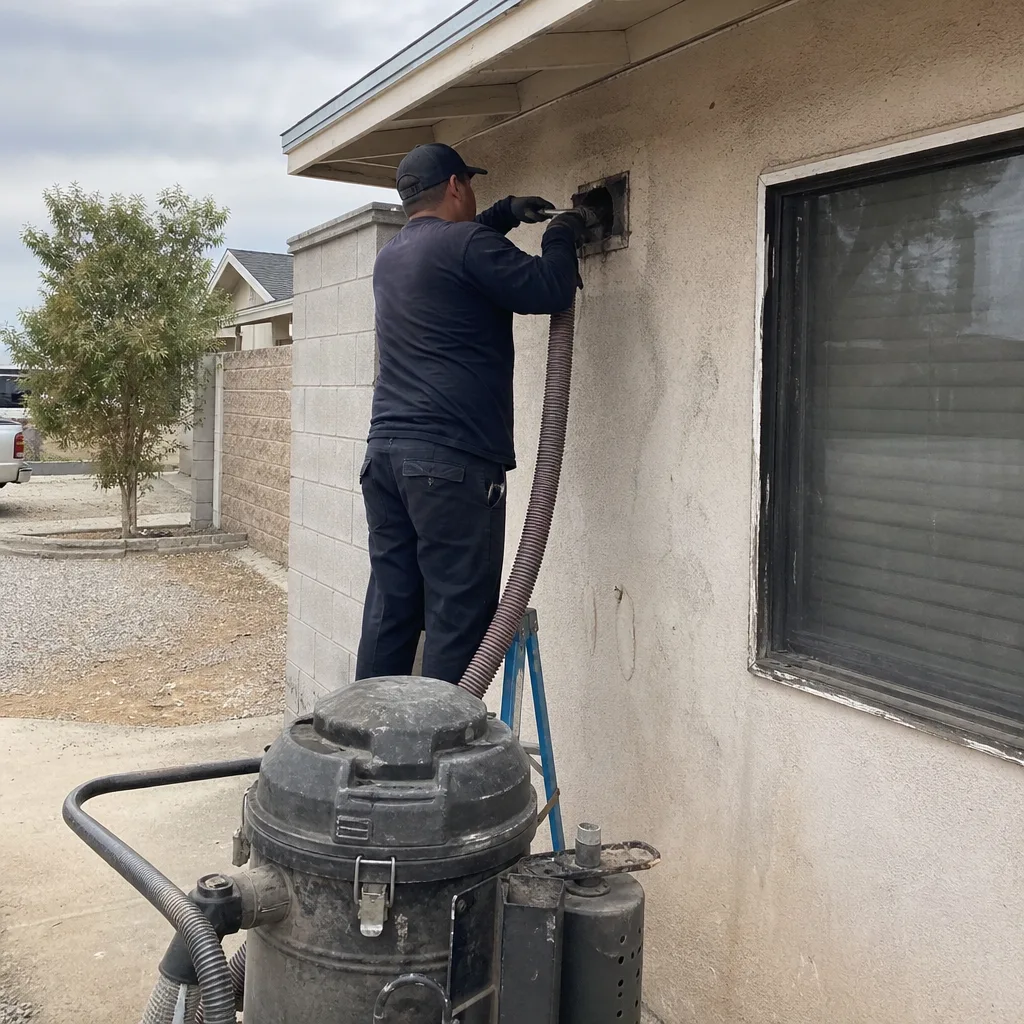 Before
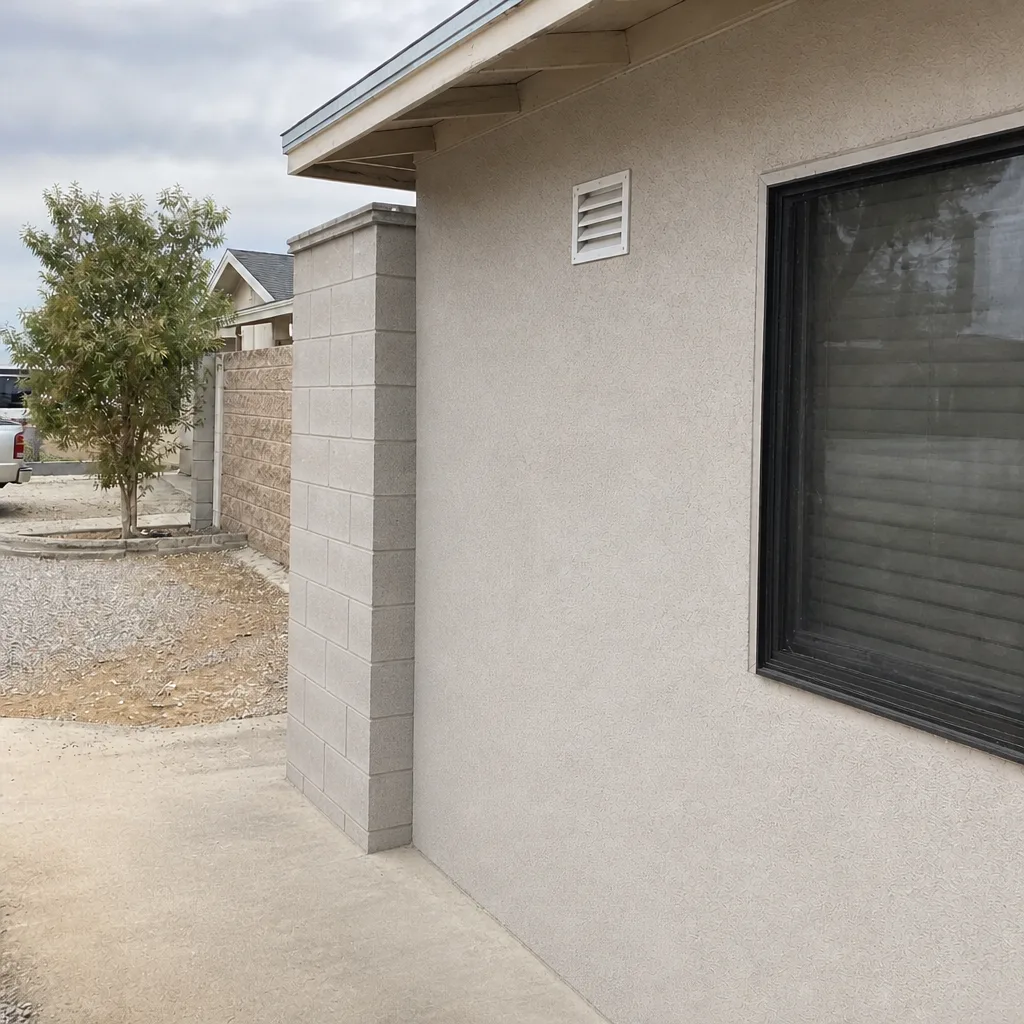 After
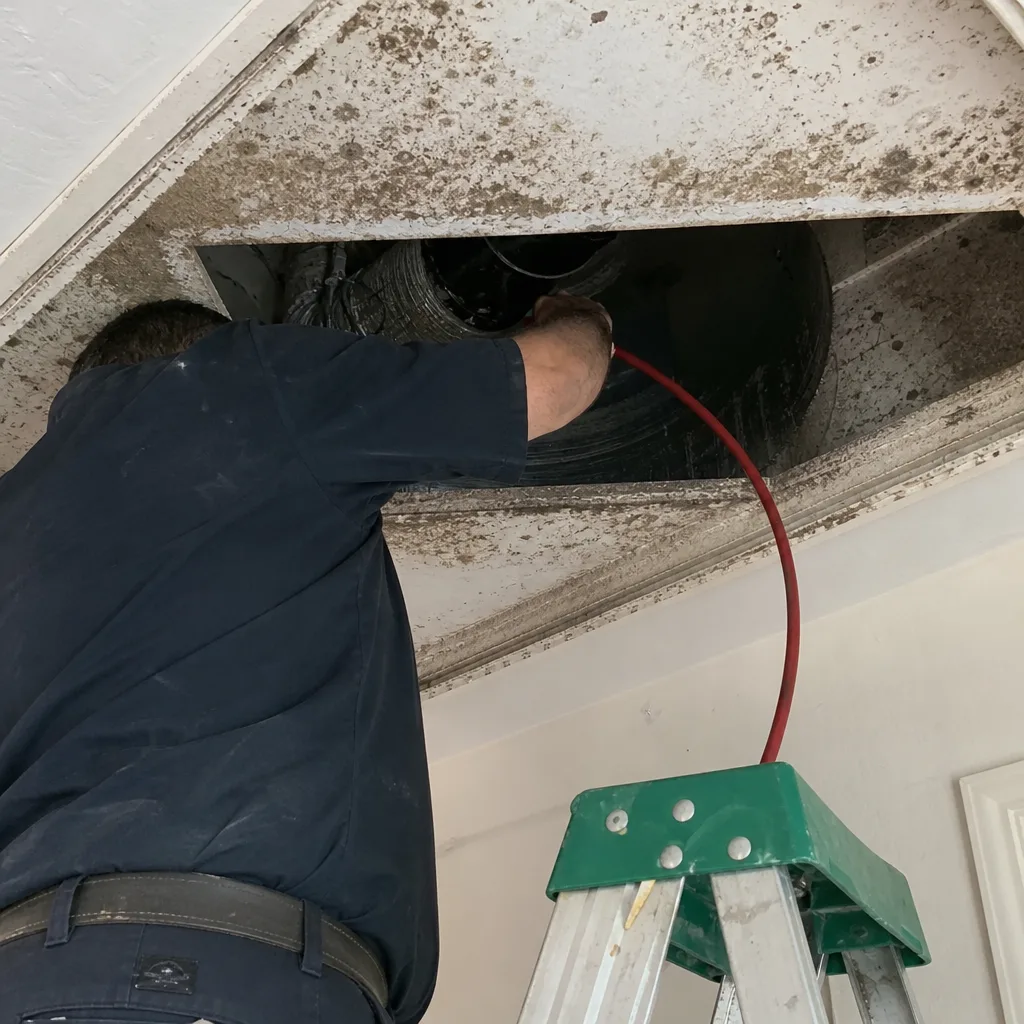 Before
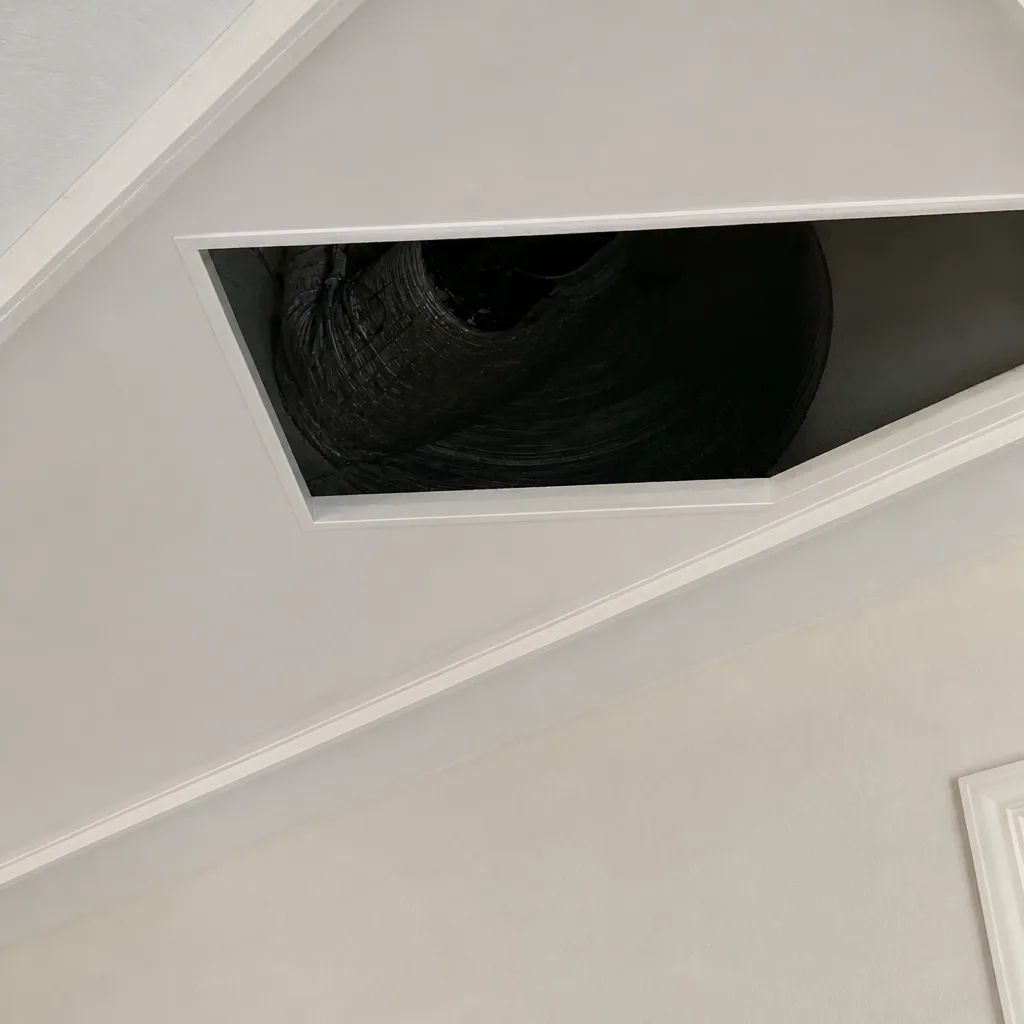 After
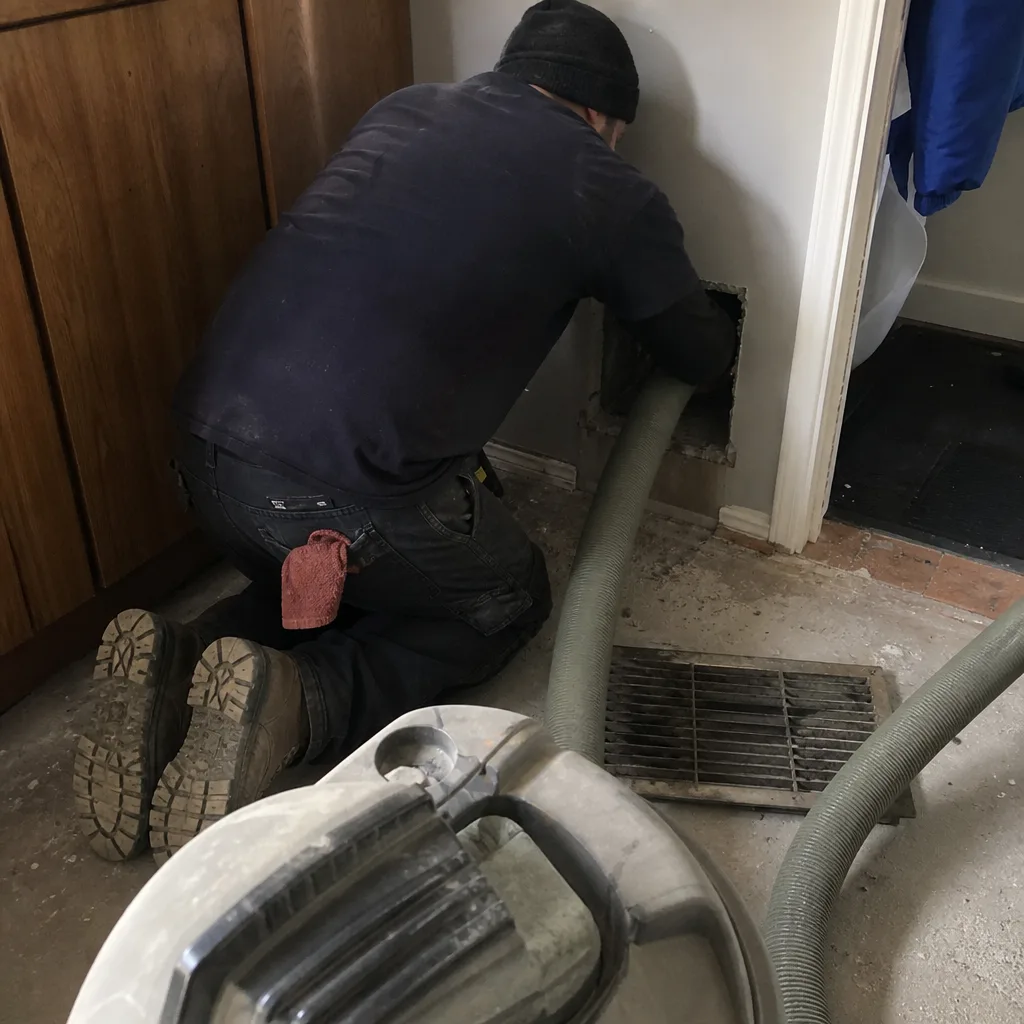 Before
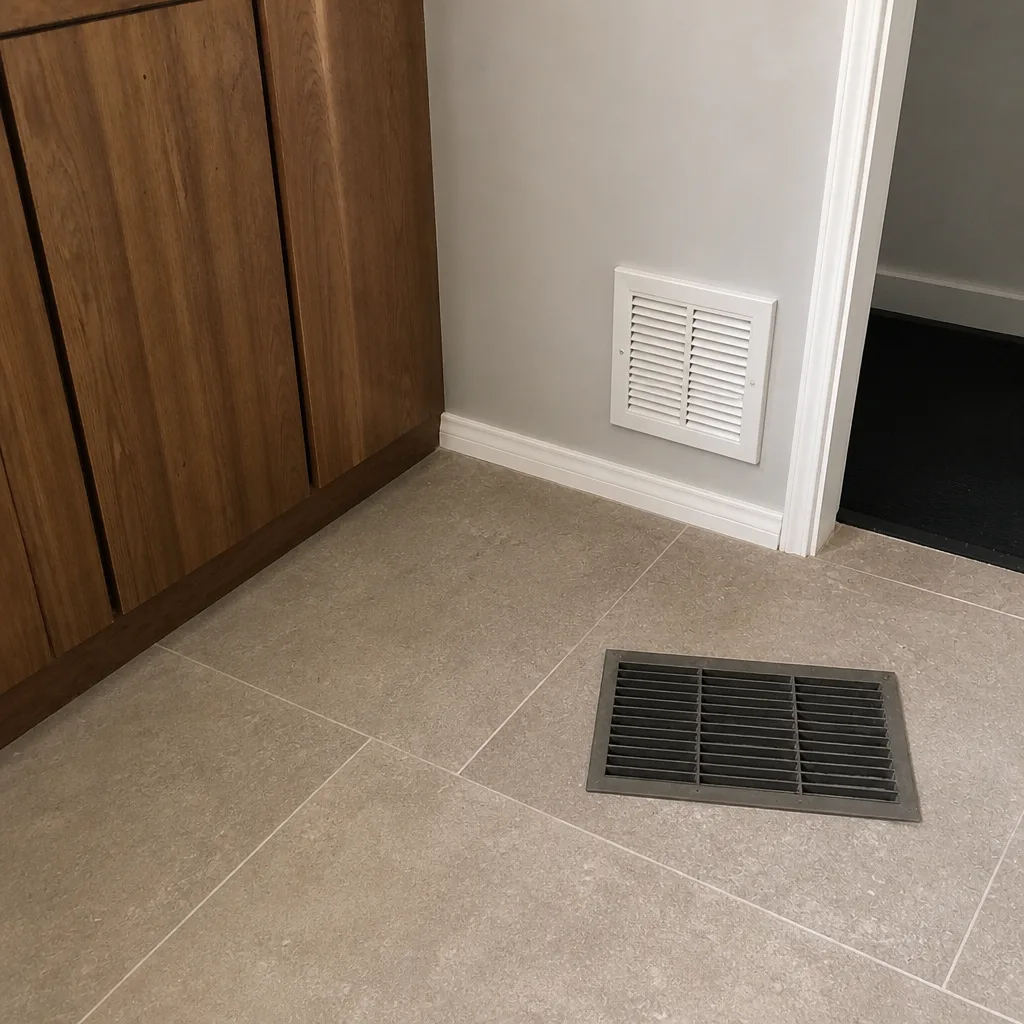 After
When to Call a Professional
Call for professional service when your log shows a pattern: odors that follow monsoon humidity, dust trails that return within days of cleaning, filter loading that’s faster than seasonal, or registers that have lost consistent airflow. Call sooner if you’re in a new-to-you home and don’t have a baseline, if you’ve had recent renovation work that generated dust, or if the dryer takes noticeably longer to finish a load than it used to. Don’t wait for a major symptom. The whole point of the cycle is that regular service is cheaper and easier than corrective service. Duct Cleaning Enterprise offers free estimates in Enterprise – call (855) 684-4882. We answer 24/7, and fast dispatch from 7am to 7pm, Sunday through Friday.
Frequently Asked Questions
Every 3 to 5 years for most homes, and closer to every 2 years if you have pets, high dust exposure, recent renovation, or a history of allergy sensitivity. The frequency depends on how the ducts are loaded, not a fixed calendar. Follow your condition log and let it tell you when the cycle is due. If you’re not sure where you stand, call (855) 684-4882 for a free estimate.
Air duct cleaning in Enterprise is priced per system, not per vent, and the exact figure depends on the size and layout of your home. We provide a written estimate before any work begins, one flat price for the whole system, with before-and-after photos of your own ducts included. Estimates are free. Call (855) 684-4882 and we’ll get you a number.
The low quote often means consumer-grade equipment, no containment during the job, and cleaning only the easily reached registers. The result is that the dust that matters – the debris inside the trunk lines and flex runs – stays where it was. Professional Rotobrush and Nikro equipment costs more to run, and that shows in the quote. Ask what equipment and containment each bid uses before comparing prices. Call us at (855) 684-4882 for a free estimate on work that accounts for the full system.
Ask for before-and-after photos of your own ducts, not stock photos. Ask what equipment was used and whether air containment was deployed during cleaning. A professional company will provide all three as part of the job. We include before-and-after photos on every cleaning. Call (855) 684-4882 for a free estimate and a written scope.
Yes. Vacuum supply and return grilles monthly during peak cooling, wipe the louvers with a damp cloth, and check for airflow with a tissue test. That’s the safe surface work. Beyond the register neck, stop there – disassembling boots or duct connections risks damage and loss of efficiency that’s greater than the cleaning benefit. For inside-the-duct work, schedule a professional cleaning.
If you have cleaning done repeatedly and dust returns fast, or airflow is weak in one or two rooms specifically, you likely need repair, not cleaning. Cleaning removes debris; repair fixes disconnected, crushed, or damaged runs. We handle both, so you don’t need a second company. Call (855) 684-4882 and describe the symptoms – we can tell you which service is likely the right one when we arrive.
The Bottom Line
Duct cleaning isn’t a one-time purchase; it’s the reset step in a cycle that runs all year. Filter changes catch what’s entering, register cleaning keeps visible surfaces tidy, professional cleaning resets the internal duct condition every few years, dryer vent service protects a separate high-stakes system, and repair fixes what cleaning can’t. Enterprise conditions – dust season, monsoon humidity, and peak cooling months – dictate when each step is most effective. Log the indicators, keep a baseline record, and don’t skip the register cleaning between professional visits. When the cycle comes due, call Duct Cleaning Enterprise at (855) 684-4882 for a free estimate. We answer 24/7, and fast dispatch from 7am to 7pm, Sunday through Friday. That’s a professional-grade process, from the filter to the register.
Written by the team at Duct Cleaning Enterprise.