
Last updated November 16, 2026
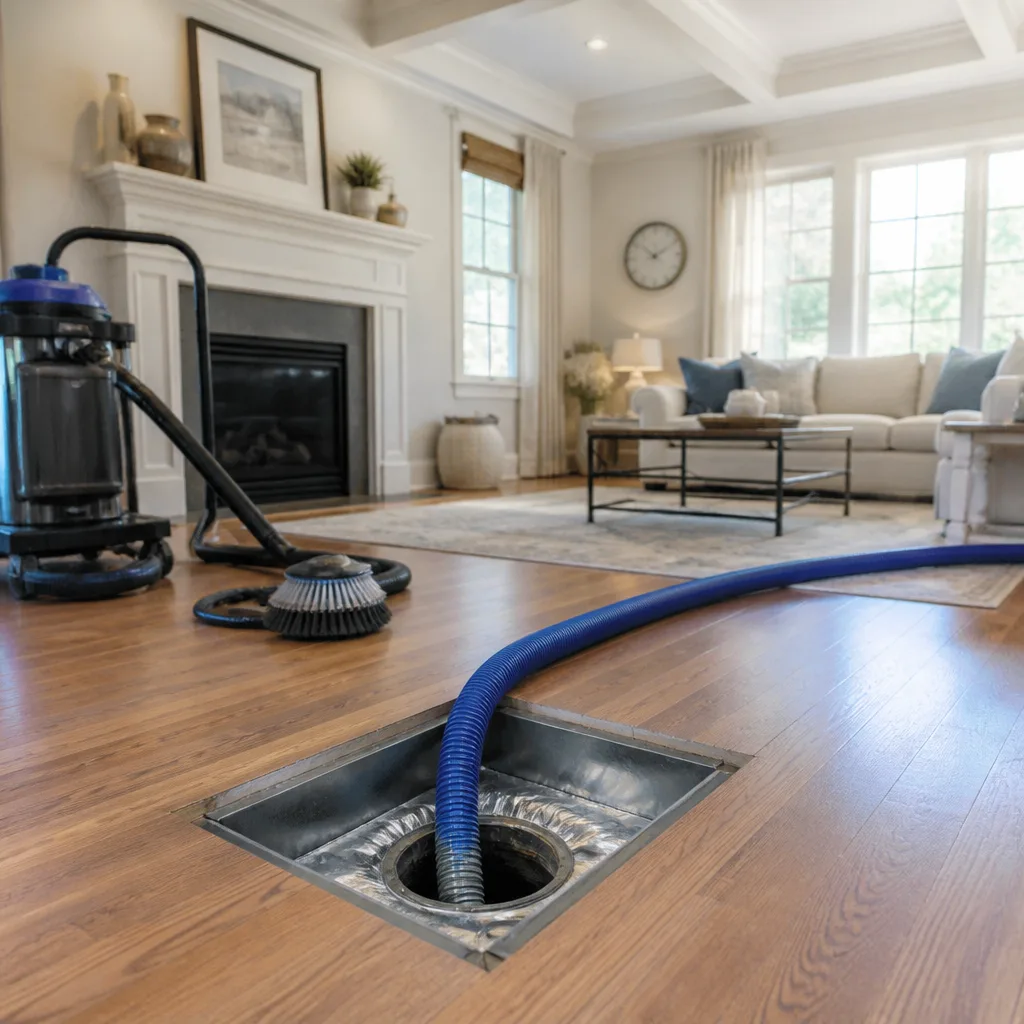 Whole-home duct cleaning
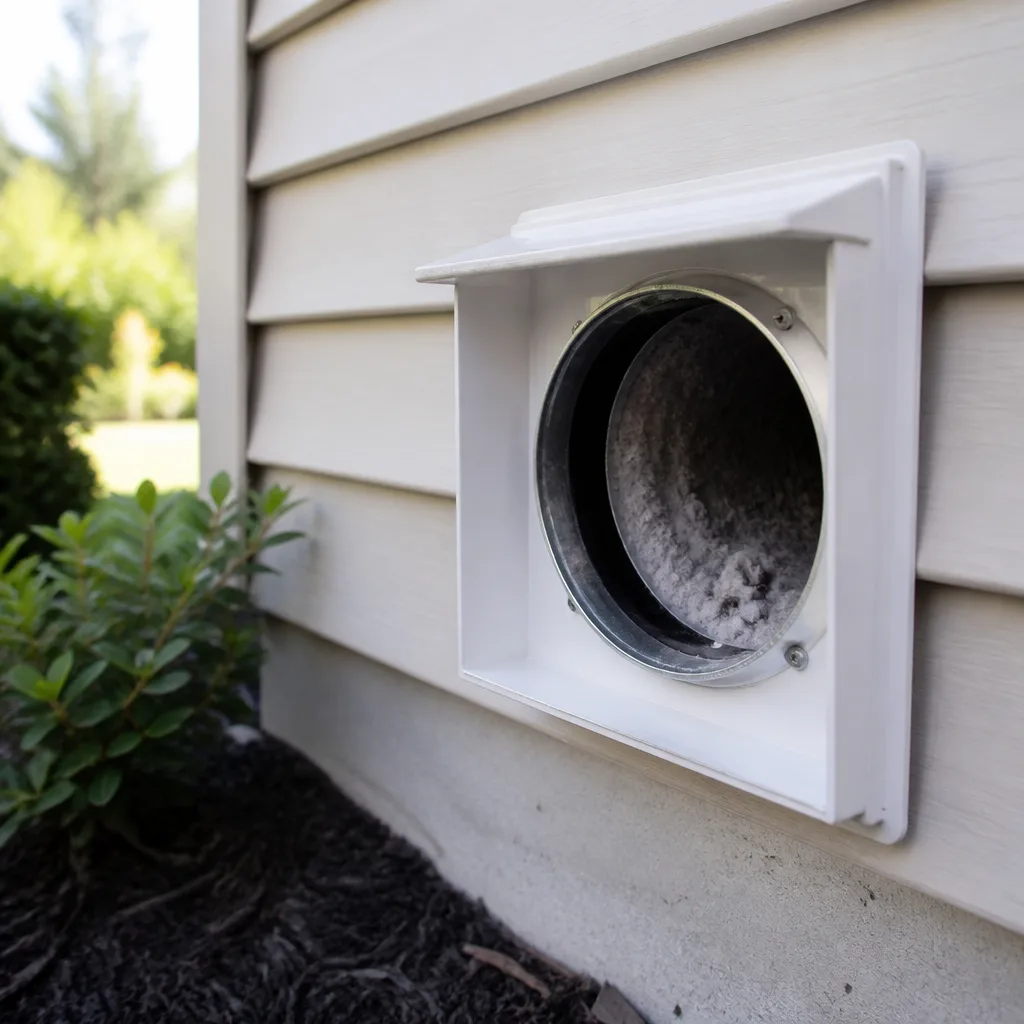 Dryer vent cleaning
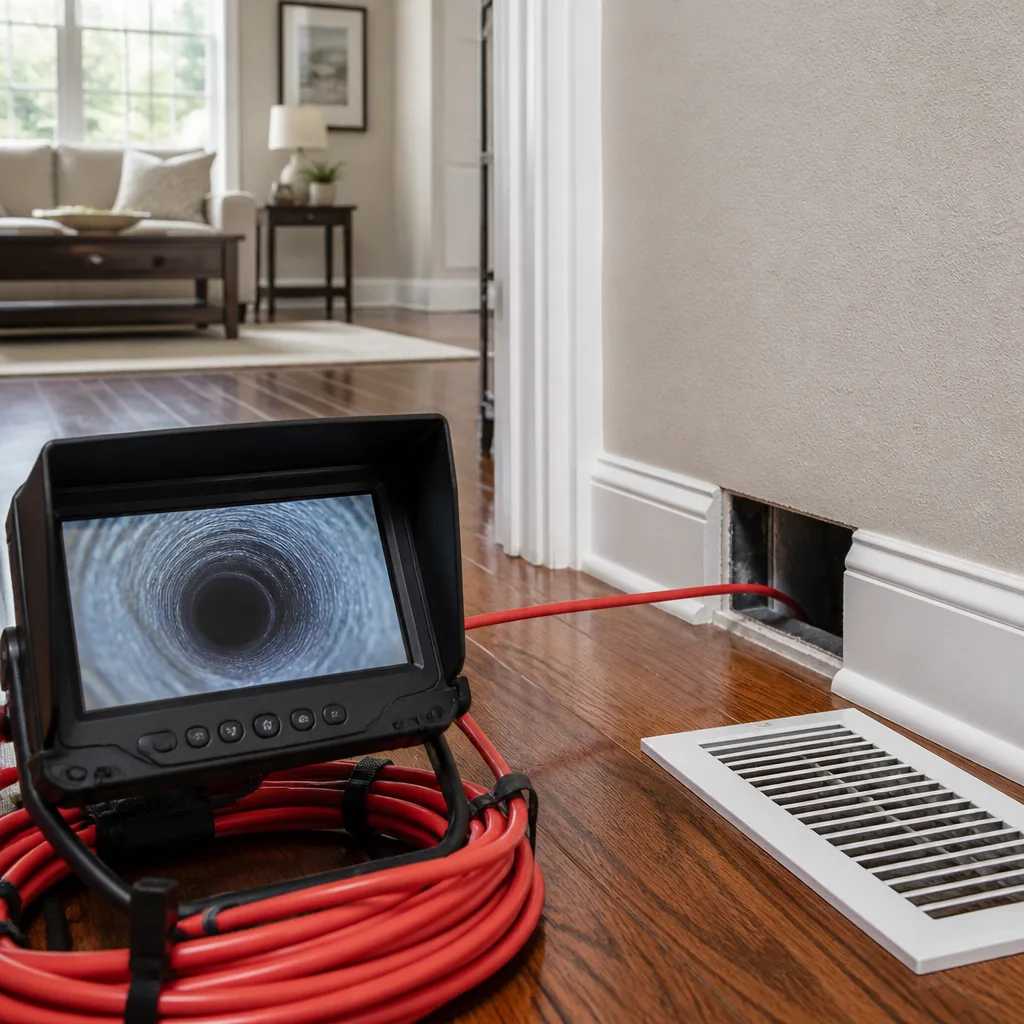 Camera inspection
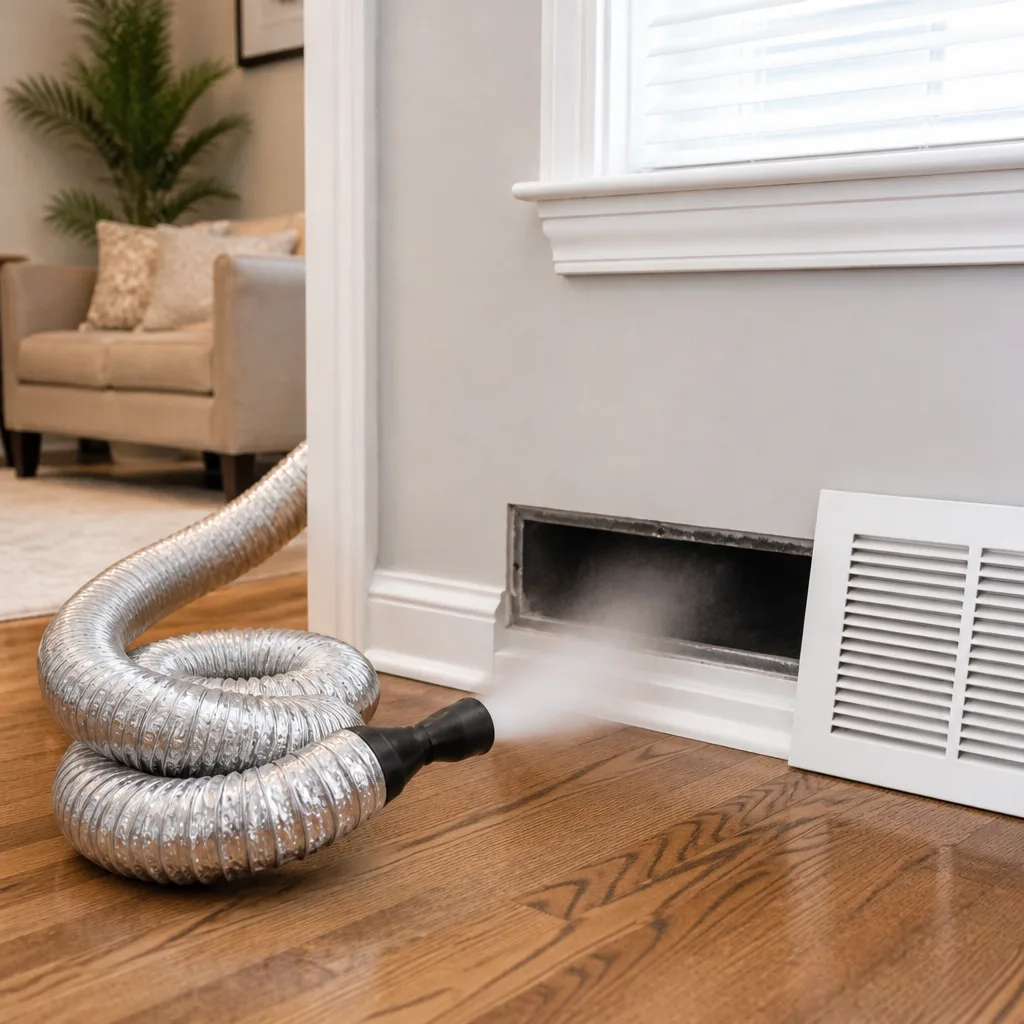 Sanitizing & deodorizing
Whole-system duct and dryer vent check with before-and-after photos - you see exactly what came out of your vents
That "$99 whole-house special" is a bait ad - the real number appears once they are in your hallway, or the "clean" is a shop-vac at the register. We photograph the inside of your ducts before and after instead.
Air Duct Cleaning Cost Breakdown: The Enterprise Homeowner’s Reference for 2026
Most articles on this subject quote a national average pulled from a dataset that quietly includes $49 bait-and-switch promotions. Those numbers tell you what a coupon costs, not what clean ducts cost. In Enterprise, real scopes run from roughly $99 teaser pricing to $800 and well beyond, and the gap has almost nothing to do with markup. It comes down to equipment, time, and how much of the system actually gets touched. This guide breaks the invoice apart line by line, compares flat-rate and per-duct models, sorts legitimate add-ons from upsells, and shows you how to use a written scope to compare quotes fairly. If you’re budgeting for air duct cleaning in Enterprise, start here.
Quick Answer
Air duct cleaning in Enterprise typically costs between $300 and $800 for a standard residential system, with larger homes, difficult access, or heavy debris pushing the total higher. A $99 coupon generally buys a surface vacuum of the main trunk and a few registers, not a full-system clean. The written estimate – not the headline price – should tell you exactly which components get cleaned, what equipment is used, and whether repair is included.
Styles & brands we work with
- Whole-home duct cleaning
- Dryer vent cleaning
- Camera inspection
- Sanitizing & deodorizing
Table of Contents
- Why National Averages Mislead Enterprise Homeowners
- Flat-Rate vs. Per-Duct Pricing: Which Model Fits Your Home
- The Line-Item Breakdown: What You’re Actually Paying For
- Add-Ons With Real Justification vs. Upsells to Skip
- How Enterprise Housing Stock Affects Labor and Price
- Reading a Written Scope: Comparing Quotes Apples-to-Apples
- When Cleaning Turns Into Duct Repair
- Questions to Ask Before You Book
Why National Averages Mislead Enterprise Homeowners
The “$35 to $75 per vent” figure you’ll see on nearly every cost article isn’t wrong so much as it’s polluted. It averages together two completely different products: one where a technician runs a shop vacuum over accessible register boots, and one where a truck-mounted or portable HEPA system creates negative pressure across the whole envelope while a rotary brush travels each run. Those jobs are not in the same pricing universe. When a national benchmark blends them, the resulting number describes neither. We’ve seen homeowners in Enterprise walk away from a legitimate $500 estimate because a website told them the average was $280.
Duct cleaning isn’t a commodity, and pricing it like one leads to bad decisions in both directions. A quote that’s far below everything else is usually missing steps, not offering a deal. A quote that’s wildly high may be padding add-ons you don’t need. The honest approach is to understand what drives the number up or down in your specific home.
Three variables do most of the work:
- System size and layout. A single-story home with short, straight runs in Enterprise cleans quickly. A two-story with a long trunk, multiple zones, and registers tucked into tight soffits takes considerably longer.
- Access. Ducts that are hidden behind drywall or buried above a finished ceiling require cutting access panels, which is real labor.
- Condition. A system that hasn’t been touched in a decade, or one that’s been pulling construction dust, holds more debris and takes more passes to clear.
None of those variables appear in a national average. That’s why the number you should trust is the one written down for your address, after someone has looked at your system or at least asked the right questions about it. Duct Cleaning Enterprise puts the estimate in writing for exactly this reason: it turns a vague number into a scope you can compare.
Flat-Rate vs. Per-Duct Pricing: Which Model Fits Your Home
There are two ways residential duct cleaning gets priced, and the model you’re quoted shapes whether the total feels fair. Per-duct pricing multiplies a rate by the number of registers or vents. Flat-rate pricing sets one number for the whole system, regardless of how many registers it has. Neither is inherently more honest – but one will favor your specific home.
How per-duct pricing works
A per-duct quote gives you a per-register rate and counts what you have. Say you’ve got 14 registers. Multiply by the rate and that’s the estimate. This model is transparent in the sense that you can verify the count. But it creates an incentive to count generously, and it punishes large homes. A 2,800-square-foot house in Enterprise with 18 registers pays heavily under this model even though the extra registers may be short, easy runs.
Per-duct pricing also tends to exclude the components that don’t have obvious register endpoints: the main trunk line, the plenum above the air handler, the return-side ductwork, and the air handler cabinet itself. Those are frequently the dirtiest parts of the system. A quote that prices only the 14 supply registers is pricing roughly half the ductwork.
How flat-rate pricing works
A flat-rate quote is one number for the whole system, agreed before work starts. It’s built on a walkthrough or a detailed intake conversation, and it accounts for trunk lines, returns, plenum, and register boots as one scope. For larger Enterprise homes, flat-rate usually comes out more economical. For smaller homes with four or five registers, per-duct may be cheaper – if the scope actually includes the trunk.
We price by flat rate per system, agreed in writing before any equipment is unloaded. That removes the mid-job surprise where the number on the invoice doesn’t match the number on the phone quote. It also matches how the work actually happens: a technician creates negative pressure across the whole envelope and moves through the system branch by branch, not register by register in isolation.
Here’s the decision rule, simplified:
- Count your registers. Under 8, per-duct can work – confirm the trunk and returns are included.
- Over 12 registers, flat-rate almost always wins on total price.
- If your home has multiple HVAC systems, quote each as its own system, not as a single blended number.
- Whatever the model, insist the scope names trunk lines, returns, plenum, and the air handler cabinet.
The Line-Item Breakdown: What You’re Actually Paying For
Every legitimate duct cleaning job is a sequence of discrete steps, each with its own time and equipment cost. When you understand them, a quote stops being a single opaque number and becomes something you can audit. Here’s how the work breaks down on a professional-grade job in Enterprise, with typical estimated ranges for each component.
- Negative air setup: $75-$175. This is the step that separates real cleaning from a vacuum pass. A HEPA-rated unit – we use Nikro HEPA equipment – connects to the system and pulls the entire duct envelope under negative pressure, so loosened debris travels toward the collection unit instead of into your living room. Setup involves sealing registers, connecting the vacuum, and confirming the pressure holds before anything is disturbed.
- Air scrubbing and containment: $50-$150. Abatement Technologies air scrubbers run in the work area to capture particulate that escapes during register pulls and access work. It’s a containment step, and it’s one many operators skip entirely because it costs time and equipment.
- Agitation pass: $100-$250. A rotary brush system – we use Rotobrush – travels each duct run, mechanically breaking debris off the duct walls. Vacuum alone doesn’t dislodge adhered dust, dust that’s bonded to sheet metal with moisture, or construction debris; the brush does. Longer systems and heavier debris mean more passes and more time.
- Register pulls and cleaning: $50-$125. Supply and return registers come off, get cleaned, and go back. This is also the point where a technician sees the condition of the boot and the first few feet of duct, which matters for the repair conversation later.
- Access panel creation: $75-$200 per panel. If ducts are concealed behind drywall or above a finished ceiling, access has to be cut and later closed. This is legitimate labor. A quote that includes it is a more honest quote than one that “discovers” the need mid-job.
- Air handler cabinet and blower inspection: $0-$75. The cabinet above the air handler collects dust and should be cleaned as part of the system, not treated as an optional extra.
- Sanitizer application: $75-$200, optional. An antimicrobial fog is useful when there’s visible microbial growth, standing moisture, or a persistent odor. It’s not a substitute for cleaning, and on a clean, dry system it rarely delivers value.
Add those midpoints up and you land in the $400-$700 range for a typical single-system Enterprise home, which matches the $300-$800 range most homeowners should budget. A quote meaningfully below that floor is almost always missing one of the steps above. Our technicians have up to 8 years of experience running exactly this sequence, and the pattern is consistent: the cheap jobs are cheap because they skip containment, agitation, or both.
Add-Ons With Real Justification vs. Upsells to Skip
The add-on menu is where honest pricing and padding diverge most sharply. Some add-ons are integral to a real job. Others exist to raise the ticket on work the customer can’t verify.
Add-ons with real cost justification
- Access panels. Necessary when ductwork is concealed. You can’t clean what you can’t reach, and the panel is what makes the cleaning possible. Worth every dollar when the alternative is leaving half the system untouched.
- Antimicrobial sanitizer – conditionally. Justified when there’s visible growth, a musty odor that persists after cleaning, or evidence of moisture intrusion. Not justified as a routine line item on every job.
- Dryer vent cleaning. A genuinely separate system with a genuine safety purpose – lint accumulation in a dryer vent is a fire risk, and it’s one of the three core services we handle. If your dryer is taking two cycles to dry a load, this belongs on the list.
- Duct repair. Not an upsell at all when there’s disconnected flex, crushed runs, or torn duct board. Cleaning a broken system and leaving it broken is money wasted. Being able to clean it and fix it is why single-provider coverage matters.
- Whole-system air quality components. If your home has a Honeywell or Aprilaire filter system, humidifier, or media cabinet, those components interact with duct cleanliness. Familiarity with them – from the filter to the register – means the technician understands where air actually flows, not just what’s inside the pipe.
Upsells that rarely deliver value on a standard job
- Repeated sanitizer fogging on a clean, dry system. If the ducts are clean and there’s no moisture, a fog does nothing the cleaning didn’t already do.
- “Sealing” treatments applied inside a duct system. Coating a dirty duct seals the dirt in. Cleaning must come first, and sealing is a separate discipline with its own considerations.
- UV lights pitched as a duct-cleaning complement. A UV system addresses the coil area, not the duct run. It’s a legitimate product in some installations, but it’s not part of a duct cleaning and shouldn’t be bundled as if it is.
- Air purifier hardware sold at the door. Any air quality hardware decision deserves research, not a same-visit purchase decision. The cleaning is what you’re buying today.
The general rule: an add-on is fair when it’s tied to a condition the technician can show you, and suspect when it’s offered routinely to every customer regardless of what’s in the system. Before-and-after photos of your own ducts settle most of this. Ask for them.
How Enterprise Housing Stock Affects Labor and Price
Pricing isn’t uniform across a metro area, and it shouldn’t be. The physical characteristics of a home drive labor time, and labor time drives price. Enterprise has a mix of housing ages and duct materials that affect how long a job runs.
Newer construction in Enterprise often uses flex duct – the insulated, expandable plastic duct that’s fast to install but prone to sagging, kinking, and collapsing under its own weight. Flex is quicker to clean when it’s properly supported and running straight. It’s slower when it’s been crushed at a bend or routed with a sharp sag, because the brush can’t travel as efficiently and debris packs into the low points. Flex also takes damage more readily, which is why cleaning and repair belong with the same provider.
Older Enterprise homes frequently have sheet metal trunk lines with flex or sheet metal branches. Sheet metal is durable and cleans well under a rotary brush, but seams and joints trap debris, and older systems often have more of them. Sheet metal also shows you its condition more honestly – the technician can see corrosion, separation, and disconnected joints through the access points.
Duct board – rigid fibrous panels, often used in plenum construction – is the material that changes a quote the most. Duct board can’t take aggressive brush agitation the way sheet metal can. It requires a lighter touch, and if it’s deteriorated inside, cleaning may not be the right answer at all. Recognizing that before the equipment is running is part of what professional-grade scopes include.
Add climate to the equation. Enterprise is hot and dry for much of the year, which means the air handler runs hard and the system pulls dust continuously. Homes here also see fine particulate from desert dust infiltrating through returns, which settles in the trunk line. That’s not a reason to clean more often than necessary, but it does explain why a neglected system in Enterprise can hold more debris than the square footage suggests.
Access is the last variable. Two-story homes with registers in high soffits, or additions where the HVAC was extended into a space that wasn’t designed for it, add labor. A written estimate confirms the number of access points before work begins, so the price you were quoted is the price you pay.
Reading a Written Scope: Comparing Quotes Apples-to-Apples
The headline number is the least useful part of a quote. Two estimates can both say “$400” and describe entirely different work. The written scope is what lets you compare them honestly, and requesting one is the single most useful habit a homeowner can build.
Here’s what a complete scope should contain, and what each item tells you:
- System size and count. How many HVAC systems, how many supply registers, how many returns. A scope without counts is a scope you can’t verify.
- Components included. Trunk lines, branch runs, return ductwork, plenum, and air handler cabinet should all be named. If a component is missing from the list, it’s not being cleaned.
- Equipment specified. Negative air unit type and rating, agitation method (rotary brush vs. air whip vs. hand tools), and whether containment scrubbing is included. “Professional equipment” is not a specification. A named system is.
- Access work. How many access panels will be created, and whether closing them is included in the price.
- Add-ons priced separately. Sanitizer, dryer vent service, and any repair items should be itemized, not folded into a vague total.
- What happens if damage is found. A scope should say how a discovered issue is handled – whether it’s repaired in the same visit, quoted separately, or documented for your decision.
- Verification. Before-and-after photos of your own system, and the terms of any satisfaction guarantee, stated in writing.
When you line up three quotes against those seven items, the “cheapest” one frequently turns out to be the least complete. A quote that omits containment, skips the plenum, and doesn’t mention agitation isn’t a $250 job – it’s a partial job priced at $250. Compare the scope to the scope, not the number to the number, and the right choice usually becomes obvious.
If you’re also weighing dryer vent service, the same discipline applies. dryer vent cleaning is priced by run length and access, not by some flat teaser rate, and the scope should confirm the full run is cleared from the dryer to the exterior termination.
When Cleaning Turns Into Duct Repair
In our experience, a meaningful share of jobs uncover something that’s not a cleaning problem. Ductwork fails in ways that don’t announce themselves: a flex run that’s torn or disconnected, a joint that’s pulled apart, a crushed section behind a wall, duct board that’s deteriorated inside. Cleaning a system with a disconnected run just moves dust into the wall cavity.
This is where the single-provider model pays for itself. Having one provider clean, inspect, and repair means no handoff to a second contractor, no waiting period where the system sits partially disassembled, and no argument about who owns the problem if something isn’t right afterward. We clean it, and if it’s broken, we fix it.
How a repair gets handled in a scoped job:
- The technician documents the issue during the cleaning pass, with photos.
- You get a clear explanation of what failed and what the repair involves.
- The repair is quoted per job, in writing, agreed before work continues.
- Repair is completed in the same visit where parts and access allow, or scheduled as its own job if it needs more.
Repair pricing depends entirely on what’s involved – a single reconnect is a small job, replacing a full run or rebuilding a section of duct board is larger. The one rule that matters: you should never be told about a repair need for the first time on the invoice. The scope protects you here too.
Questions to Ask Before You Book
Booking the right provider is easier when you know what to ask. These questions separate a professional scope from a coupon visit, and any reputable operation in Enterprise should answer all of them without hesitation:
- “What equipment will you use?” A named system – Rotobrush, Nikro – tells you they’re running professional-grade equipment, not a shop vacuum. Ask specifically whether a HEPA vacuum and containment scrubbing are part of the job.
- “What’s included in the price?” Trunk, branches, returns, plenum, and air handler cabinet. If any of these is missing, ask why.
- “Is the price flat or per vent?” Get the model clear before you compare numbers to anyone else’s.
- “How many access points will you create, and who closes them?” The answer should be in the written scope.
- “Will you take before-and-after photos?” Photos of your own ducts are how you verify the work actually happened.
- “What if you find damage?” The answer should describe documentation and a written quote, not an on-the-spot pressure decision.
- “Are repairs done by the same company?” Single-provider coverage means the cleaning and any fix are handled together.
An operator who can answer all seven with specifics is running a process. One who deflects, or pushes hard on a same-call decision, is selling a price.
Common Mistakes to Avoid
- Comparing headline prices without comparing scopes. A $199 quote and a $650 quote for different work aren’t the same offer. Line up the components first, then the price.
- Booking a coupon job without asking what it covers. Teaser pricing almost always describes a partial service. Ask which components and which steps are included before you book.
- Accepting a per-vent quote in a large home. On a 2,000-square-foot-plus Enterprise home with many registers, per-vent pricing can cost you significantly more than a flat-rate scope for the same or less work.
- Skipping containment checks. If the operator can’t describe how particulate is controlled during the job, expect dust to settle across your home afterward.
- Cleaning without an inspection. Running a brush through a system with a disconnected or crushed run spreads debris and fixes nothing. Ask whether inspection is built in.
- Buying add-ons you can’t verify. Sanitizer and air quality hardware are worth considering when there’s a documented condition. Routine add-ons on every job are a pricing tactic, not a service.
- Foregoing photos. Before-and-after photos of your own system are the single most reliable way to know the work was done. Ask for them in writing.
See the difference
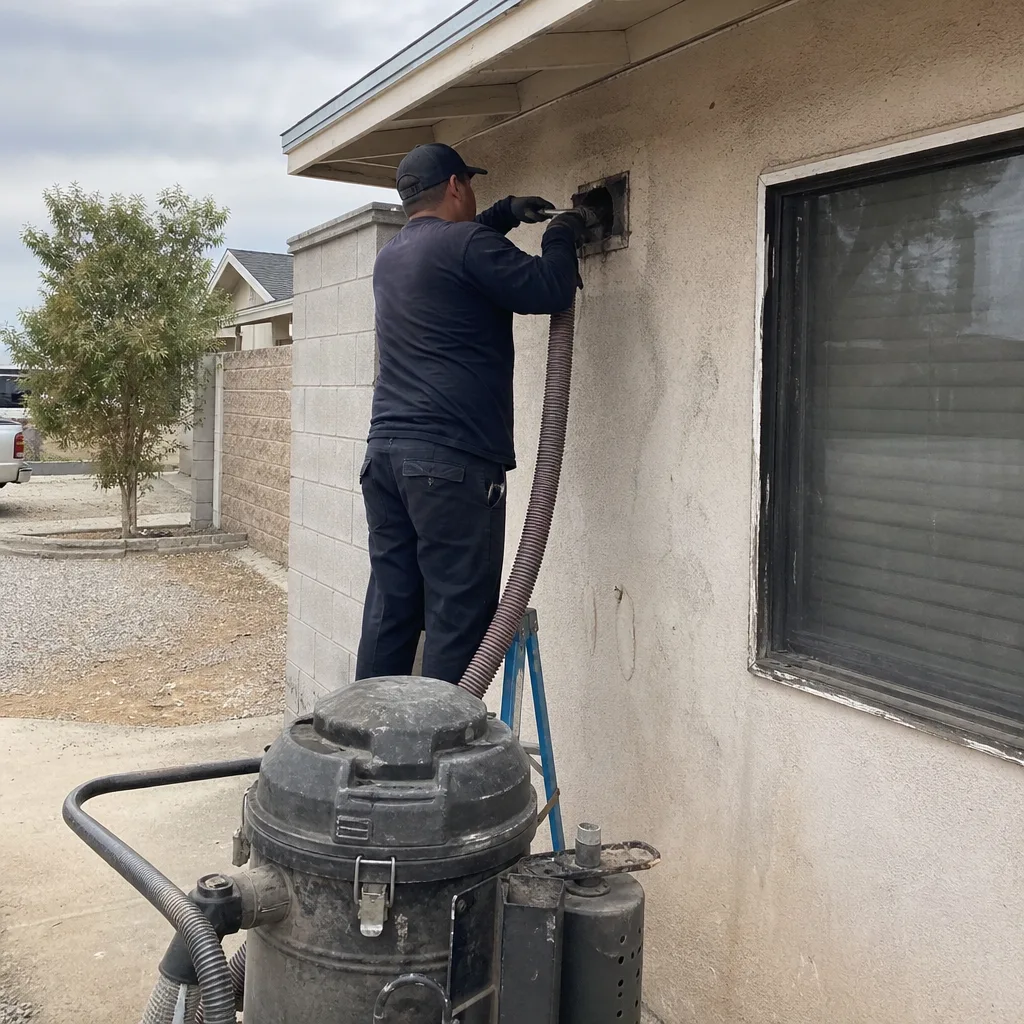 Before
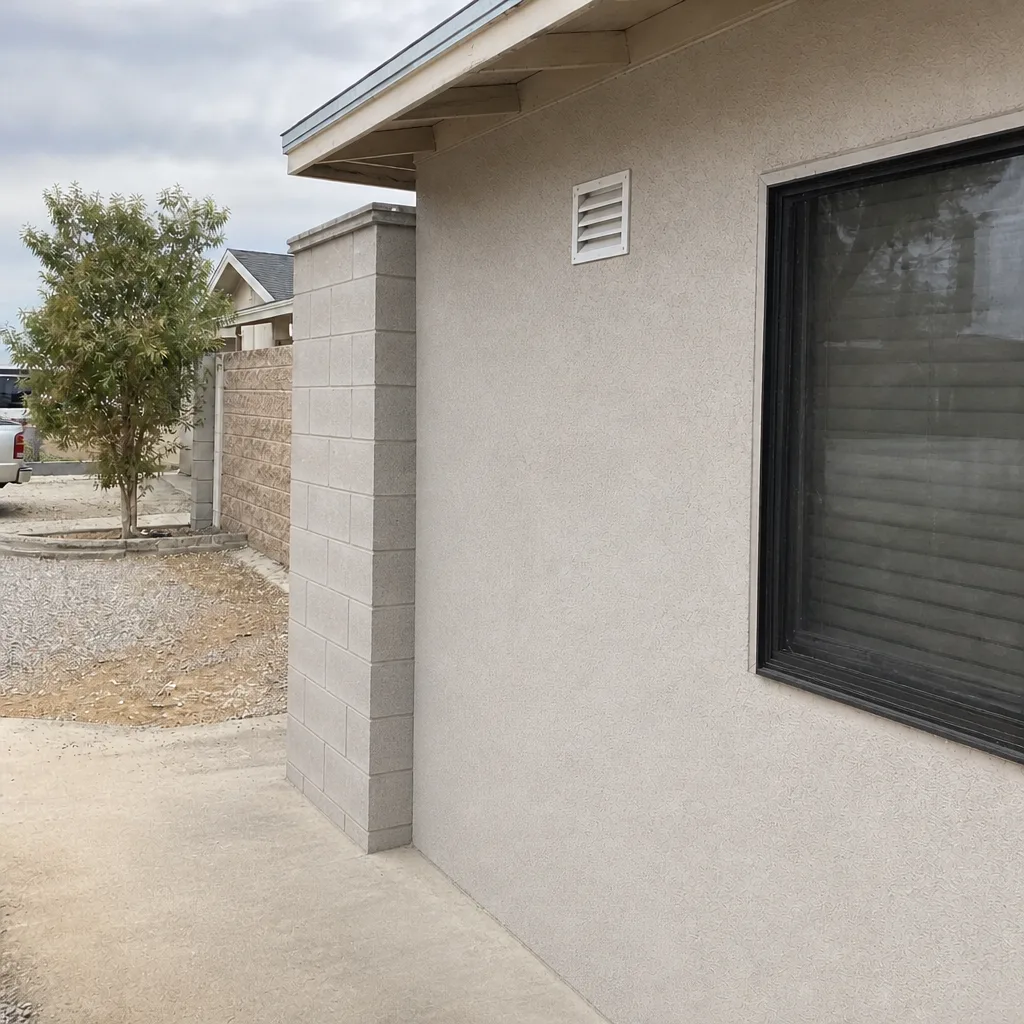 After
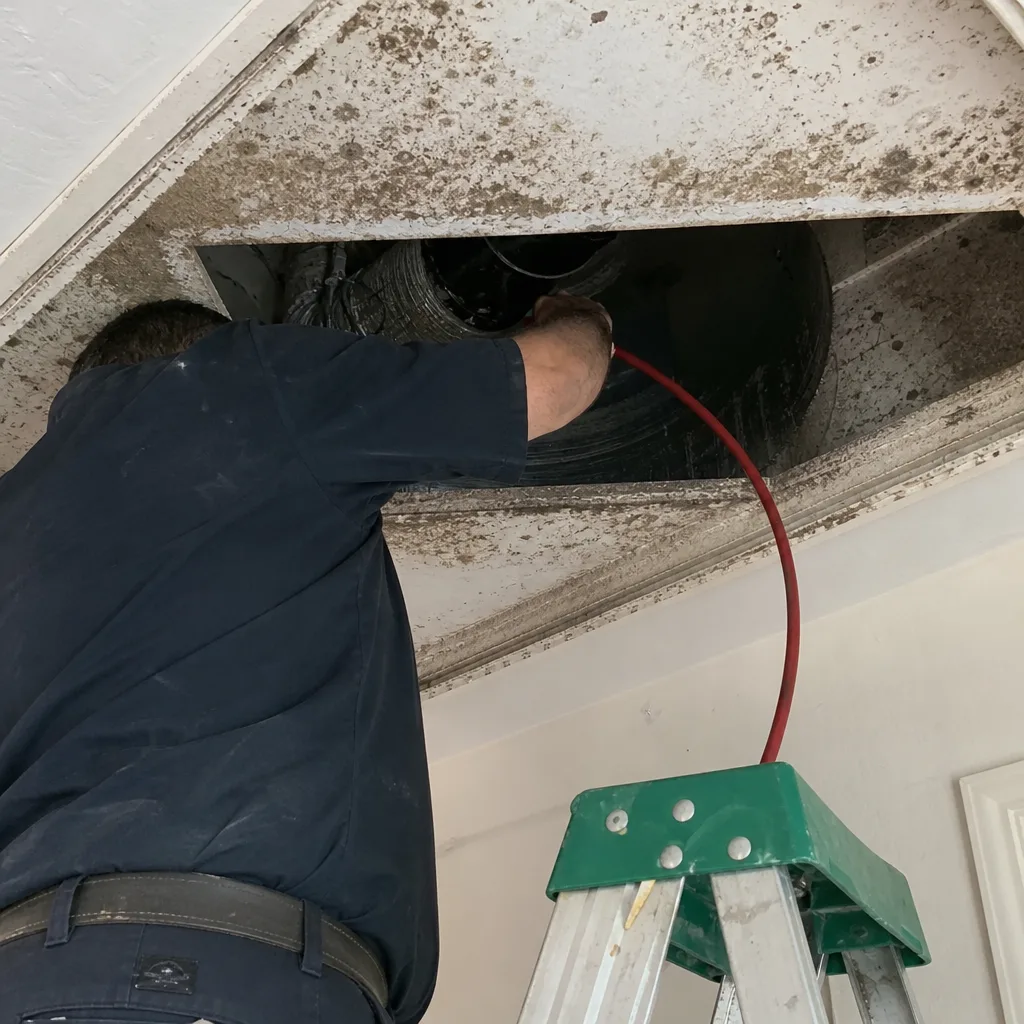 Before
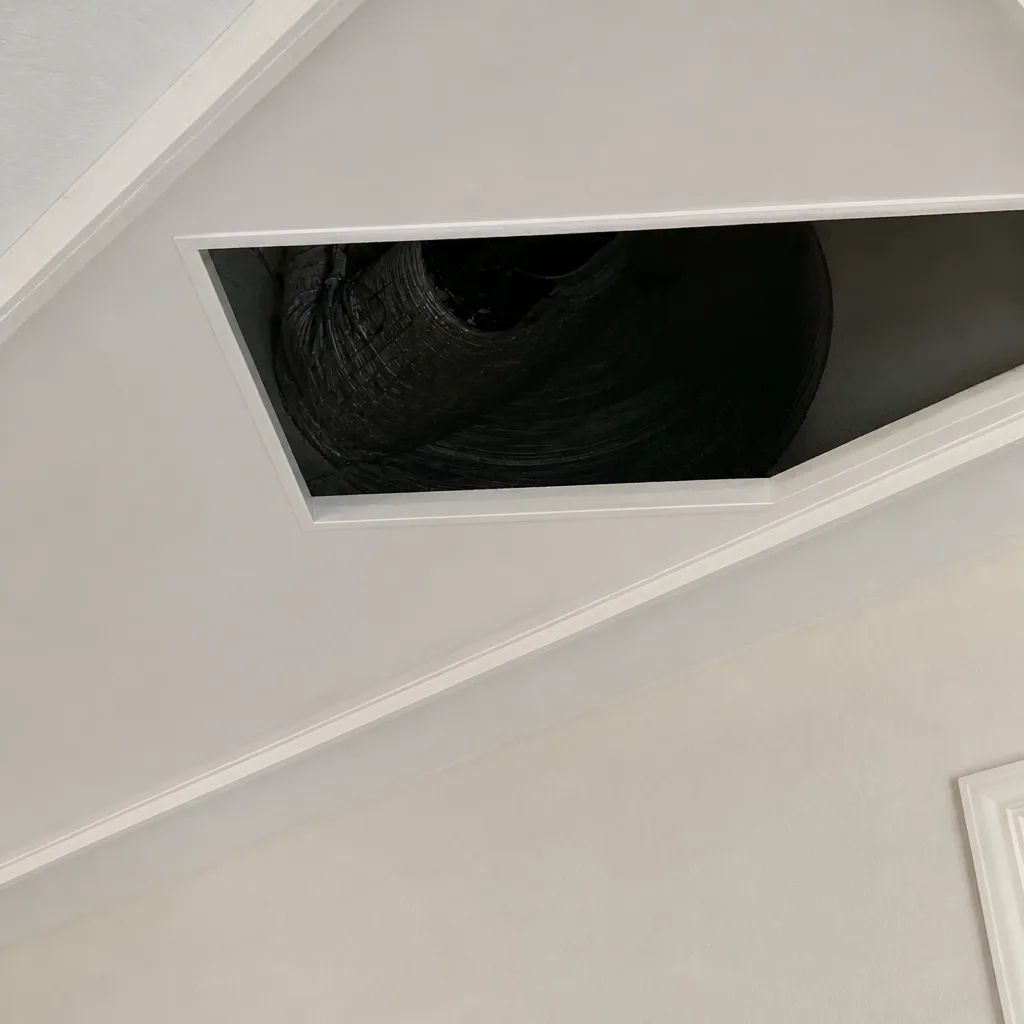 After
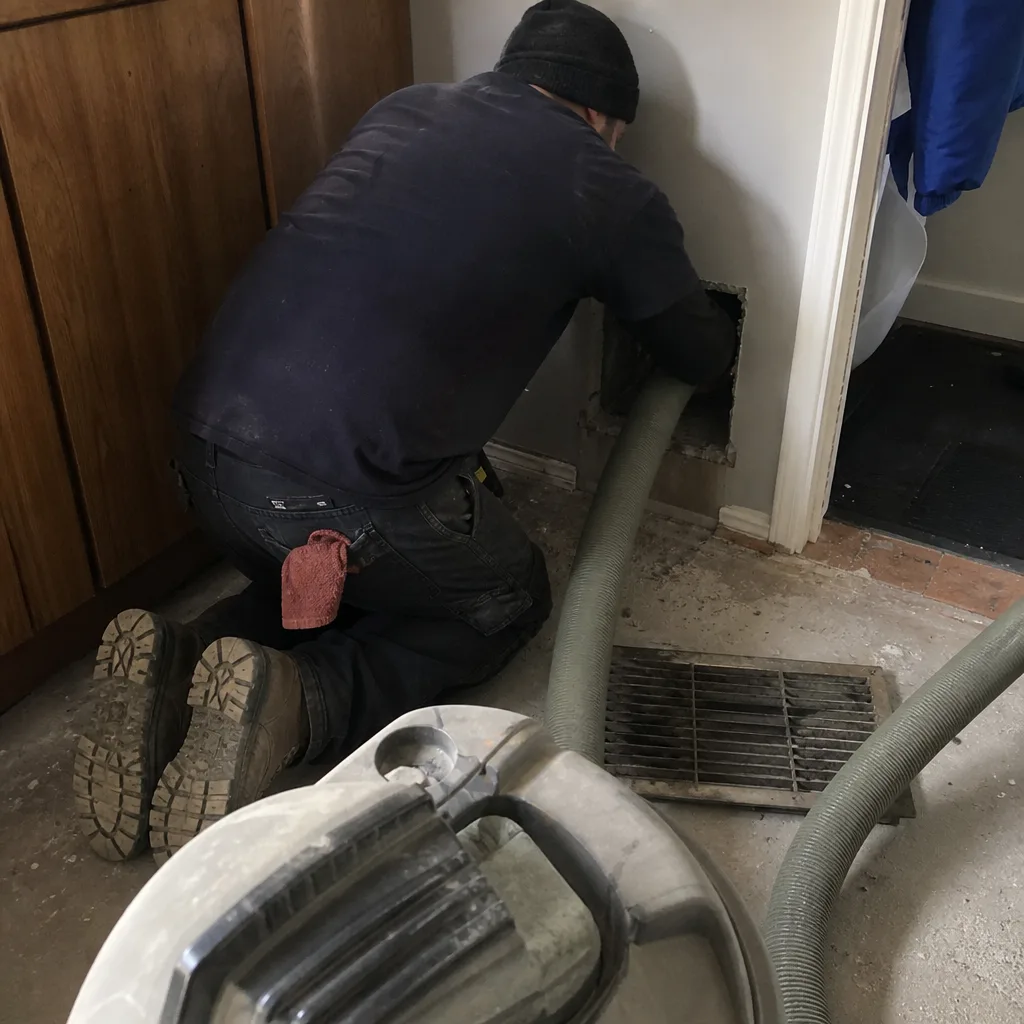 Before
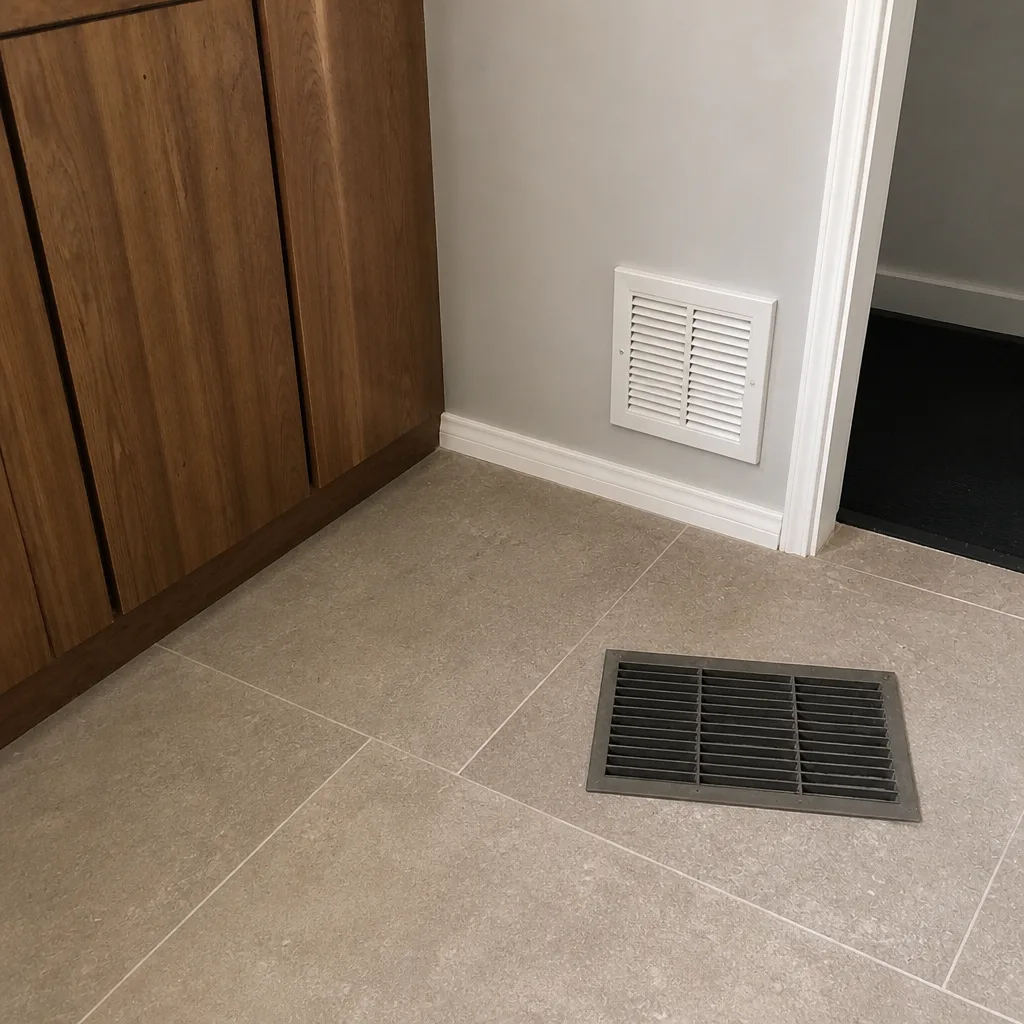 After
When to Call a Professional
Some conditions clearly belong with a professional rather than a wait-and-see. Visible dust streaming from registers shortly after a filter change. A persistent musty smell that doesn’t clear when the system runs. A dryer that takes two cycles to dry a normal load, which points to lint buildup in the vent run. A noticeable drop in airflow at certain registers, which often signals a crushed or disconnected run. Recent renovation or construction work that left dust in the returns. Or simply a system that hasn’t been cleaned in many years and now shows visible buildup at the registers. Each of these is a reason to have the system inspected and scoped. Duct Cleaning Enterprise offers free estimates in Enterprise – call (855) 684-4882 with the details of your system and we’ll walk through what the work involves and what it’s likely to cost. We answer 24/7, and fast dispatch runs 7am to 7pm.
Frequently Asked Questions
Most standard residential systems in Enterprise run $300-$800, with the midpoint around $400-$700 for a single-system home. Larger homes, concealed ductwork needing access panels, or heavier debris push the total toward the top of that range or slightly above. Call (855) 684-4882 for an exact quote – estimates are free.
Cheap quotes are cheaper because they skip steps, not because they found a better deal. A $99 offer typically means a vacuum pass over the main trunk and a few accessible registers, without containment scrubbing, rotary agitation, or work on the plenum and returns. The price difference reflects equipment and time, not margin. Ask for a written scope and compare what’s actually included.
Ask for before-and-after photos of your own ducts, and confirm that access points were opened and cleaned, not just vacuumed at the register face. A complete job includes negative air setup, an agitation pass with a rotary brush, register pulls, and cleaning of the plenum and air handler cabinet. If you can’t see the system, ask to. Call (855) 684-4882 to ask how we document the work – estimates are free.
Every 3-5 years is a reasonable baseline for most homes, but the honest answer is condition-based rather than calendar-based. Homes near ongoing construction, homes with pets, and homes that haven’t been cleaned in a decade often need it sooner. Visible buildup at the registers or persistent odors are better signals than a schedule. Call (855) 684-4882 to talk through your situation – estimates are free.
Flat-rate usually wins for homes over 12 registers because the price covers the whole system, including the trunk and returns. Per-duct pricing can be cheaper for small homes under 8 registers, provided the quote includes the trunk lines and returns rather than supply registers alone. Either way, the written scope is what protects you.
If the ducts are damaged – disconnected flex, crushed runs, deteriorated duct board – cleaning alone won’t fix the air quality or performance problem. The inspection during the cleaning pass will identify damage, and a written repair quote should follow. Cleaning it and fixing it with the same provider avoids a second contractor and a second visit. Call (855) 684-4882 to discuss – estimates are free.
The Bottom Line
The price of air duct cleaning in Enterprise reflects equipment, time, and scope, not marketing. Real work runs $300-$800 for most homes, and the difference between that and a $99 offer is containment scrubbing, rotary agitation, plenum and return cleaning, and verification with before-and-after photos. Compare written scopes, not headline numbers. Insist on professional-grade equipment and a flat rate agreed before work starts. And when damage turns up, having the same provider clean and repair keeps the job whole. Duct Cleaning Enterprise does all three – cleaning, dryer vent service, and repair – and the estimate is always in writing. Call (855) 684-4882. We answer 24/7, with fast dispatch from 7am to 7pm, Sunday through Friday. The estimate is free.
Written by the team at Duct Cleaning Enterprise.