
Last updated November 16, 2026
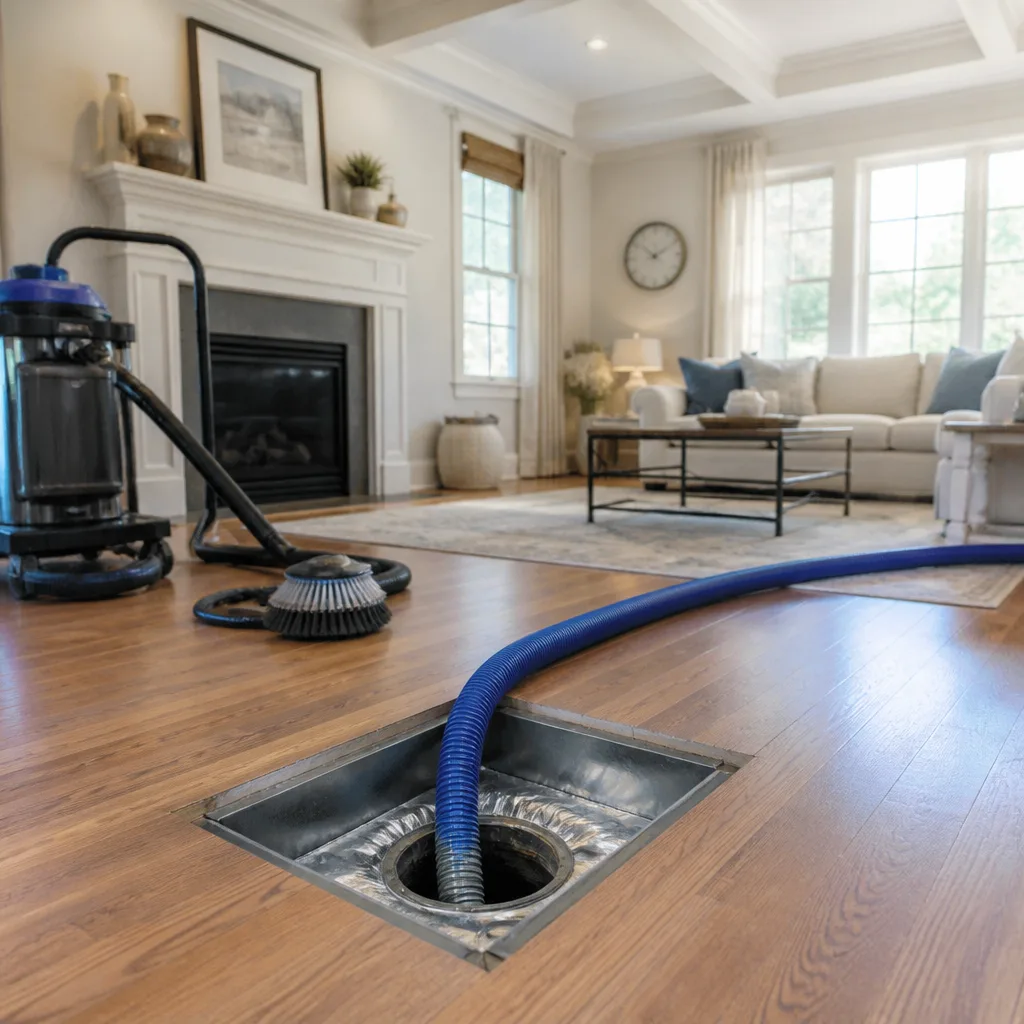 Whole-home duct cleaning
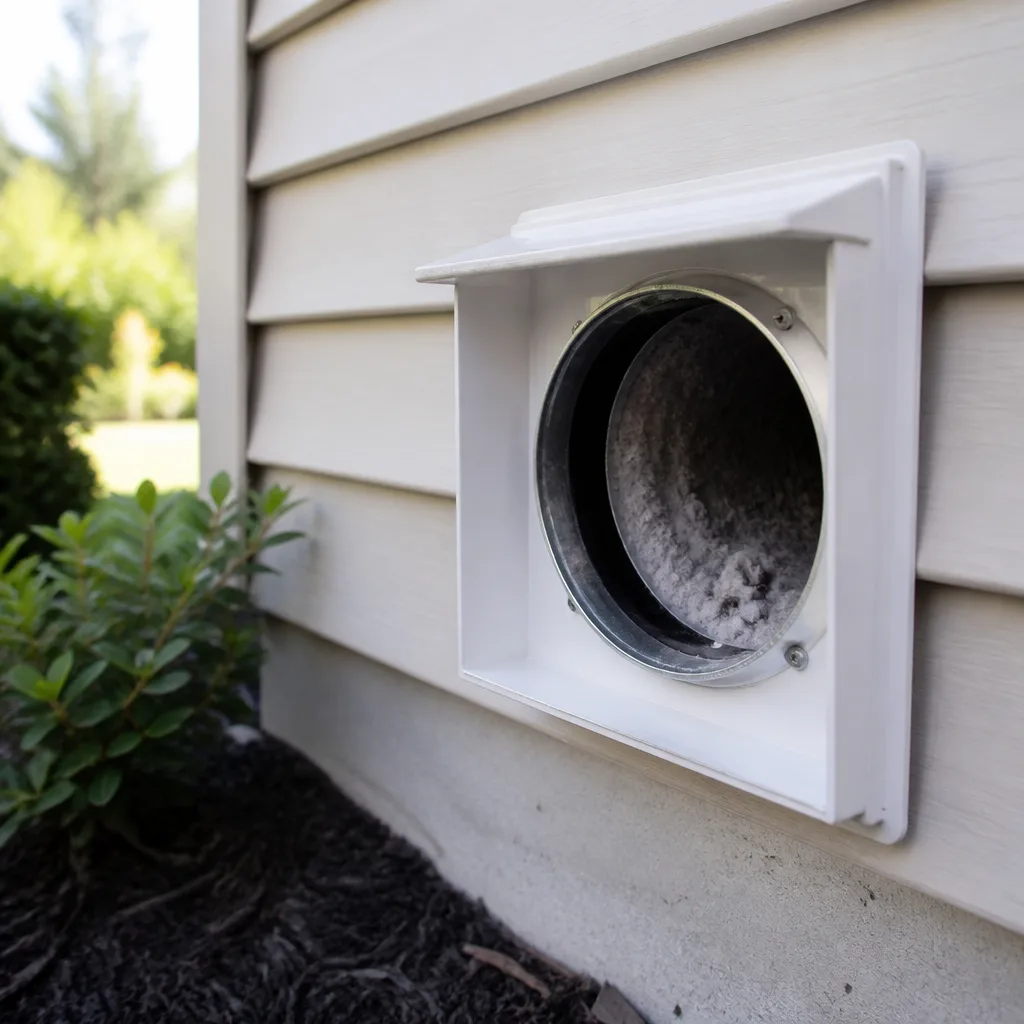 Dryer vent cleaning
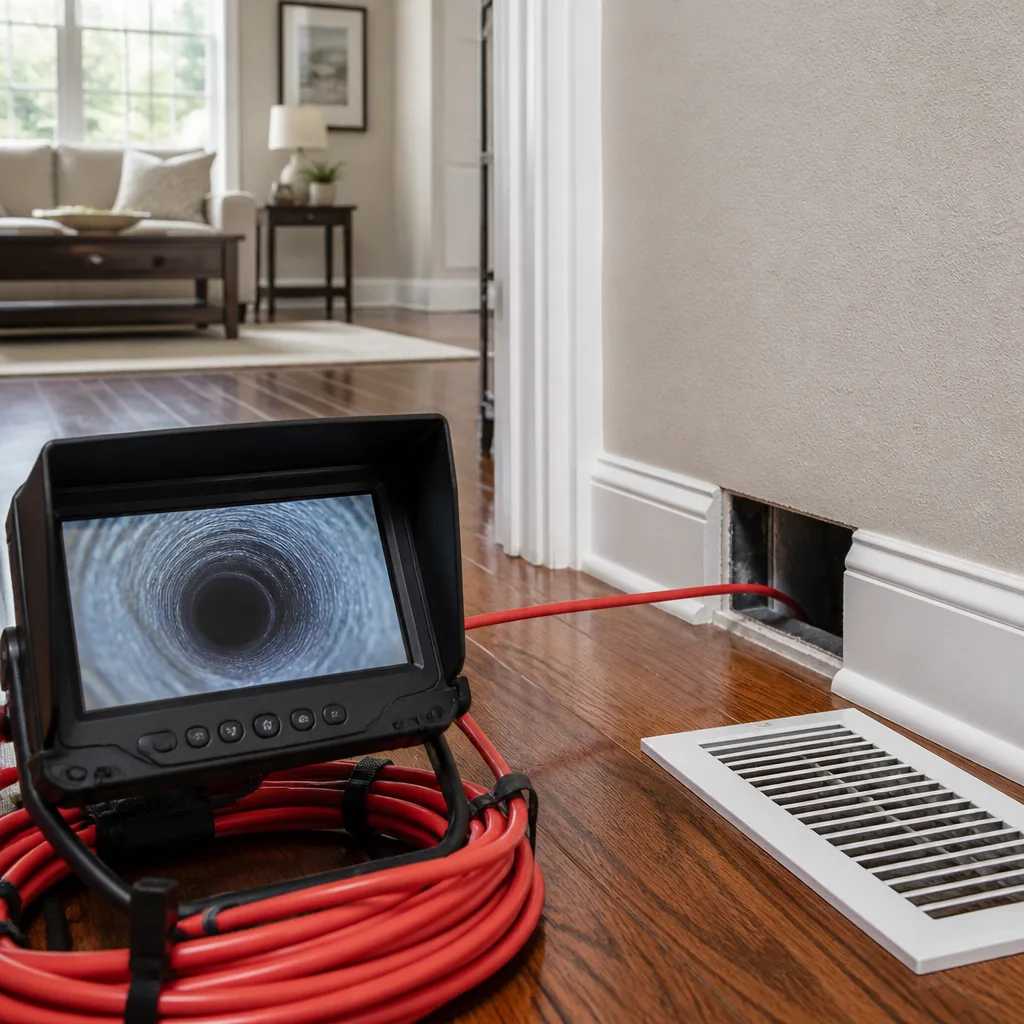 Camera inspection
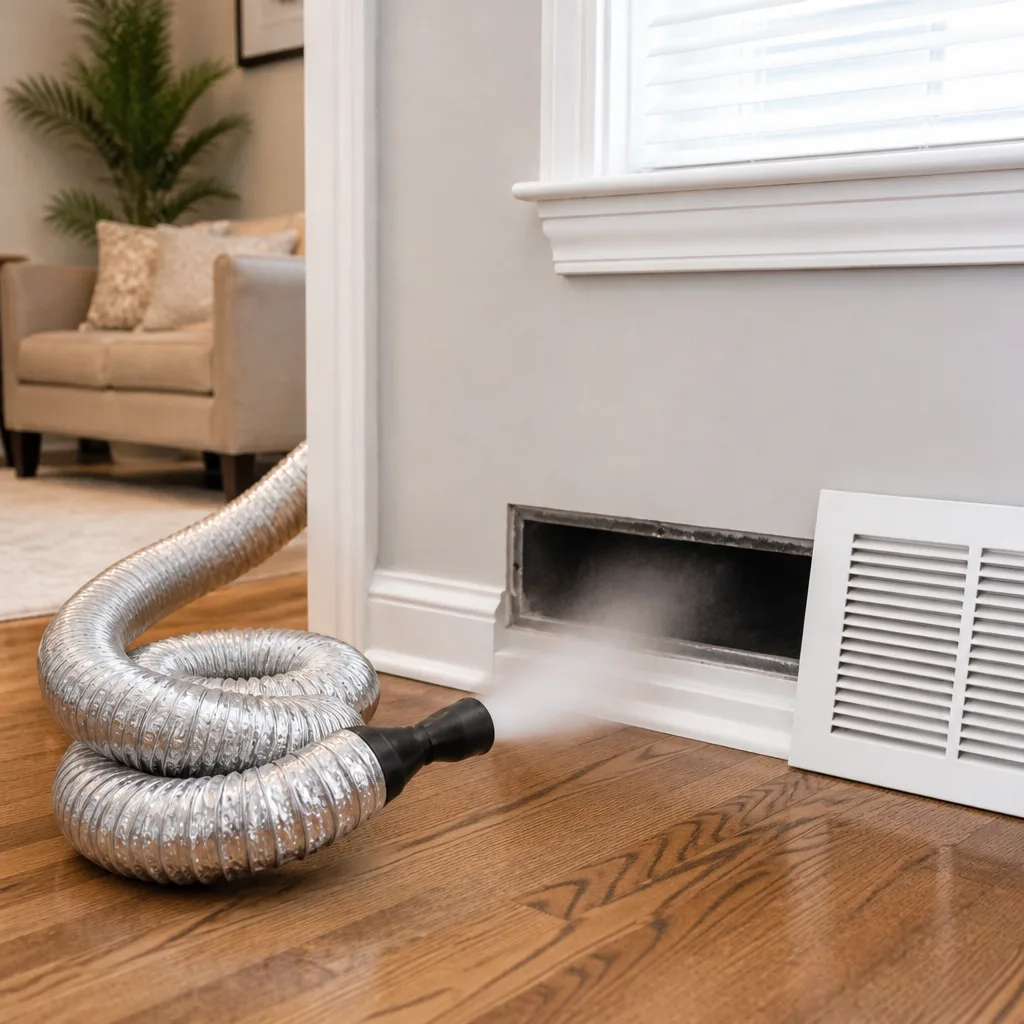 Sanitizing & deodorizing
Whole-system duct and dryer vent check with before-and-after photos - you see exactly what came out of your vents
That "$99 whole-house special" is a bait ad - the real number appears once they are in your hallway, or the "clean" is a shop-vac at the register. We photograph the inside of your ducts before and after instead.
Choosing the Right Air Duct Cleaning Brand: A Buyer’s Guide for Enterprise
Most homeowners in Enterprise compare duct cleaners by star rating, years in business, or the sticker on the truck. Those signals tell you very little about what happens once the equipment starts running. The truth is that the brand of machinery a contractor brings into your home determines what is physically possible during a cleaning. Rotobrush, Nikro, and Abatement Technologies are professional equipment lines that rarely appear on contractor websites, not because they’re secret, but because a company using a shop vacuum would rather you didn’t ask. This guide shows you the right questions, the equipment that matters, and how to read a quote for air duct cleaning in Enterprise.
Quick Answer
The right duct cleaning brand for an Enterprise home is the one whose equipment can physically remove debris and contain it. That means a rotary brush system with continuous HEPA extraction (Rotobrush or Nikro-class), an air filtration unit (Abatement Technologies class) holding negative pressure in the work area, and a company willing to name the specific models it uses. Reviews and certifications can’t verify any of those things. Equipment can.
Styles & brands we work with
- Whole-home duct cleaning
- Dryer vent cleaning
- Camera inspection
- Sanitizing & deodorizing
Table of Contents
- Why Equipment Class Matters More Than Reviews
- What Rotobrush Systems Do That Standard Brush Attachments Can’t
- Nikro Vacuum Specs: CFM, Filtration Stages, and What to Ask
- Abatement Technologies and Containment: When Filters Are the Job
- How to Ask a Contractor What Equipment They Use
- Truck-Mount vs. Portable: Why the Debate Is Settled
- Enterprise-Specific Factors That Change the Answer
- Beyond Cleaning: Duct Repair and Dryer Vents in the Same Call
Why Equipment Class Matters More Than Reviews
A review count tells you how many people left a review. It does not tell you whether the technician who arrives can dislodge drywall dust from a return chase or pull a nest out of a branch duct without blowing it into the next room. Those are equipment and process questions.
We’ve walked into plenty of Enterprise homes after a “clean” was performed with a shop vacuum and a flexible hose. The ducts looked fine from the register, and they often looked worse inside once we ran a camera through them. Consumer vacuums can’t generate the negative pressure needed to keep debris suspended and moving toward the collection point. They stir material around and pull a fraction of it out.
Here’s the framework we suggest you use, in order:
- What agitates the debris? A rotary brush or air whip designed for duct interior work. Not a shop-vac brush attachment.
- What captures the debris? A HEPA-rated vacuum running continuously while the brush works. Not a vacuum switched on for a final pass.
- What contains the debris that escapes? An air scrubber or negative-air machine in the work area. Not a tarp over the register.
- What happens to damaged ductwork? Whether the contractor can seal, patch, or replace a compromised section. If the answer is “that’s a different company,” you’re about to coordinate two jobs.
Reviews sit somewhere below all four. A company can earn fantastic reviews for a cleaning that was thorough on visible registers and ineffective on the trunk line. Reviewers can’t see inside their ducts. Equipment class determines what a technician can actually do.
One more thing worth saying plainly: professional duct cleaning in Enterprise done correctly is not fast. A proper whole-system job takes hours, and anyone promising a 45-minute visit is likely running one pass with a weakened setup. Speed in this trade is a signal of corners cut, not efficiency.
What Rotobrush Systems Do That Standard Brush Attachments Can’t
Rotobrush is a rotary brush system designed specifically for residential duct interiors. Its defining feature is continuous HEPA extraction running alongside the rotating brush, so the moment debris is broken loose it’s being pulled toward a HEPA filter instead of settling downstream.
Compare that to a sequential approach: agitate a section, stop, switch to a vacuum, run the vacuum through the same section, move to the next. Debris that resettles between passes is debris you paid for and didn’t get removed. In our experience, a return duct in a two-story Enterprise home can hold material in the corners and along seams that only comes out with simultaneous agitation and extraction. Sequential passes leave it there.
What to look for when a contractor tells you they use Rotobrush:
- Which model class. The rotary brush platform is what matters; the specific model determines how much duct length and how many branches it handles comfortably.
- Whether the HEPA extraction runs continuously or at the end.
- Whether they use whip heads, brushes, or both depending on duct type. Flexible and rigid duct need different tools.
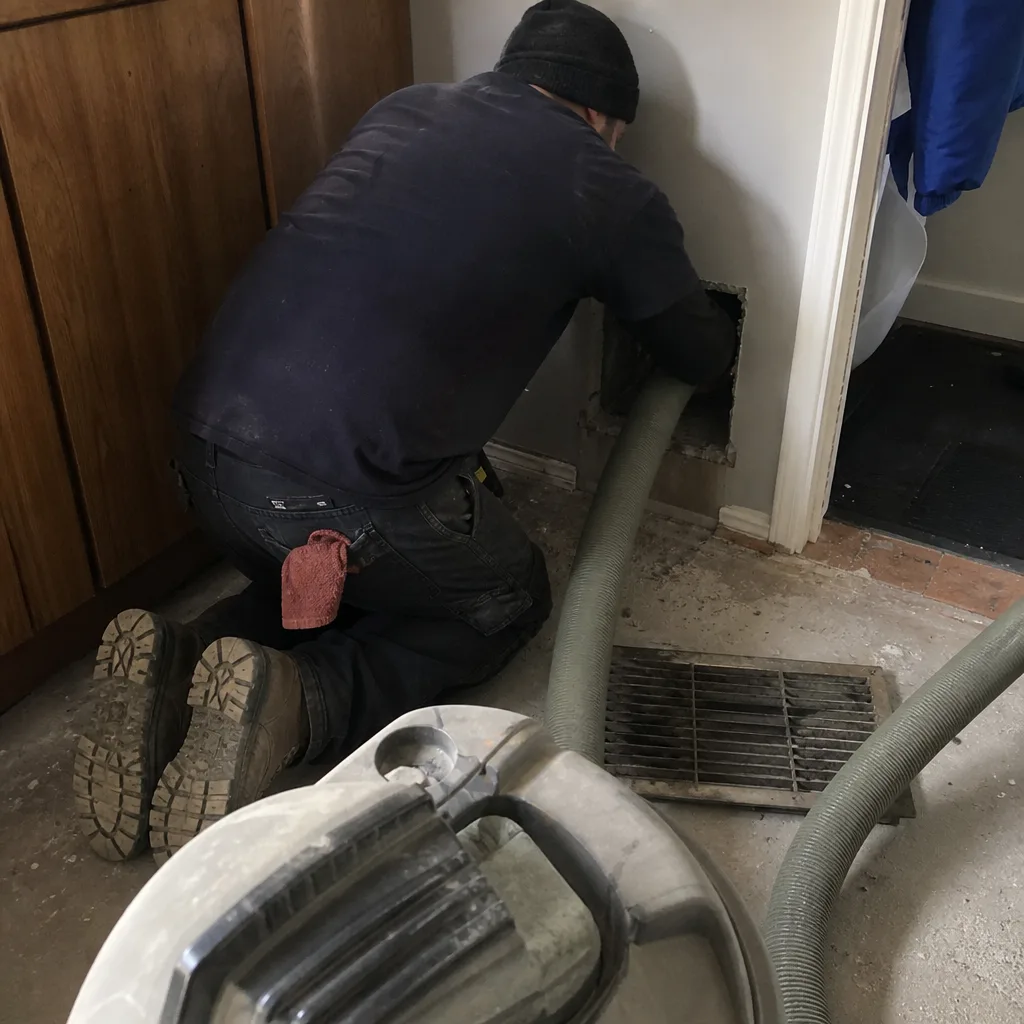
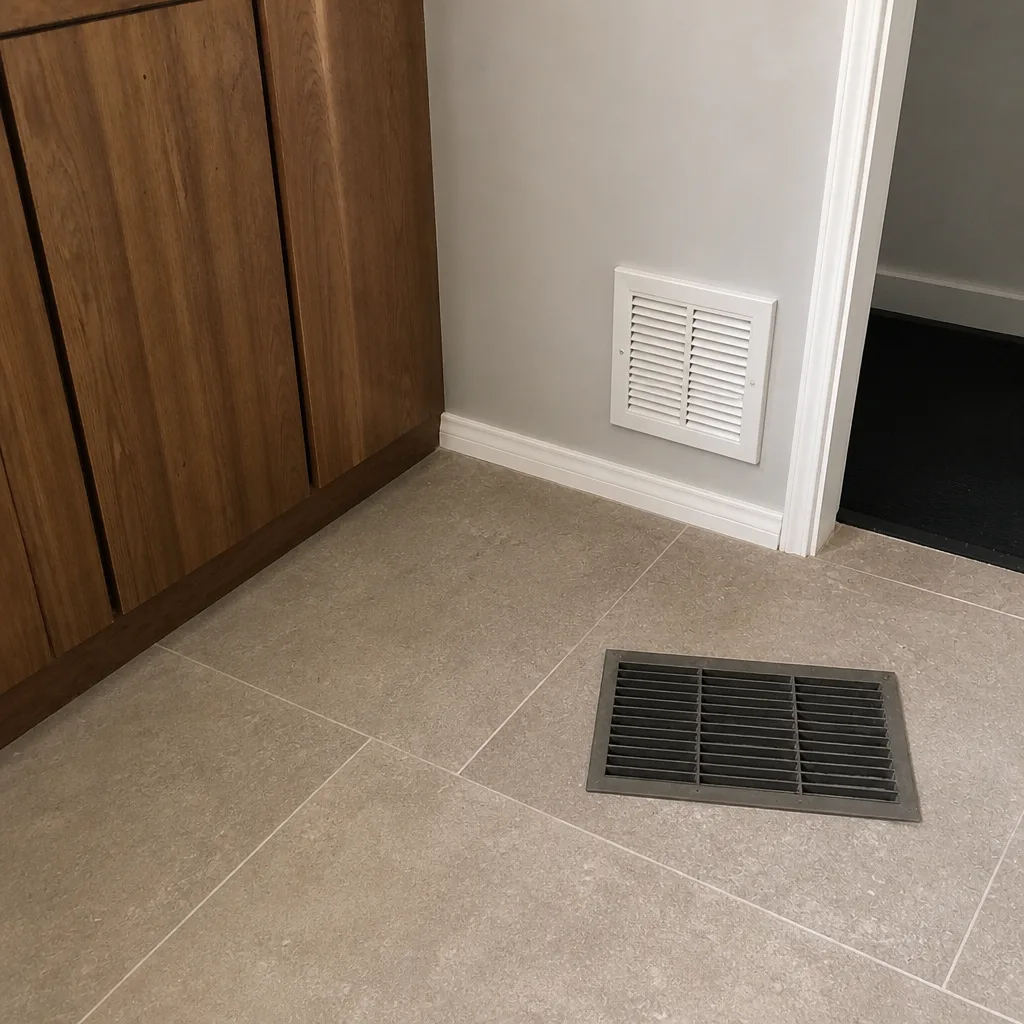
- Whether they show you before-and-after photos of your own ducts, not stock imagery.
Every air duct job at Duct Cleaning Enterprise uses a Rotobrush rotary-brush system, and we take before-and-after photos of the actual ducts we worked on. Not a brochure. Your ducts.
What a rotary brush actually reaches
Residential duct systems in Enterprise typically run as a trunk-and-branch layout in the attic or a chase through interior walls. A rotary brush can travel branch runs and the trunk. Register boots and transition collars often need a secondary hand tool to reach corners the brush can’t cover on its own. Ask the contractor whether their process includes register and boot detail work or stops at the main runs. “We brush the trunk” is not the same as “we clean every register in the house.”
Air duct repair comes up more than people expect
During a brush pass, technicians regularly find disconnected joints, crushed flex runs, gaps at the plenum, and sealed-return problems that no amount of cleaning will fix. A cleaning company without repair capability will clean around the damage and hand you an invoice. Duct Cleaning Enterprise offers air duct repair for exactly that reason – we clean it, and if it’s broken, we fix it, without a second contractor visit. If your quote includes the sentence “we’ll note the damage and you can call someone,” that’s a warning sign for a second bill coming.
Nikro Vacuum Specs: CFM, Filtration Stages, and What to Ask
Nikro makes the vacuum equipment that sits behind most professional duct cleanings, including HEPA-rated negative-air machines. When a contractor says “we use Nikro,” the useful follow-up questions are about airflow and filtration, not brand loyalty. A brand name alone could mean anything from a small portable unit to a full HEPA vacuum rated for remediation work.
The evaluation criteria that actually matter are these two, in this order:
- CFM rating. CFM, or cubic feet per minute, is the volume of air the machine moves. A cleaning vacuum needs enough airflow to keep loosened debris suspended in the airstream long enough to reach the filter. Too low and debris drops back into the duct before it’s captured. Ask for the rating.
- Filtration stages. HEPA-rated is the floor for a serious duct job. Multi-stage filtration captures additional particle sizes before the HEPA element and extends its working life across a full day.
A helpful script for the phone conversation: “What CFM is your vacuum rated at, and how many filtration stages?” If they can’t answer, they either don’t know their equipment or don’t want you to know it. Both are reasons to keep calling.
Why HEPA is non-negotiable for a home with allergen or asthma concerns
Every pass with a rotary brush throws particulate into the air. Without proper filtration, that particulate ends up in the room, not the machine. A HEPA filter catches particles that a standard filter passes through, and that difference matters in a home where someone spends hours indoors. We use Nikro HEPA-rated vacuum equipment on the homes we serve in Enterprise so the particulate ends up captured, not redistributed.
Abatement Technologies and Containment: When Filters Are the Job
Abatement Technologies equipment is what remediation contractors and industrial hygienists use when particulate escape isn’t acceptable: mold remediation, lead-safe work, hospital containment. In a residential duct cleaning context, that equipment category enters the scope when the cleaning involves visible mold, heavy rodent contamination, or a water-damaged section of ductwork where spore release is a real concern.
For a typical cleaning on a system that’s just overdue for maintenance, Abatement Technologies-class air scrubbing keeps the work area cleaner as a matter of routine, not remediation. For a system with a known contamination problem, it becomes the difference between a cleaning that keeps the rest of the house safe and one that pushes particles into living space.
Ask two questions:
- “Do you deploy an air scrubber or negative-air machine during the job?” If the answer is no, they’re releasing particulate into the room.
- “What do you do if you find mold during the cleaning?” A proper answer addresses whether they can address the duct piece (repair, replacement, containment) or whether this is a job for a remediation specialist. A confident answer is better than a vague one.
Duct Cleaning Enterprise uses Abatement Technologies air filtration during jobs. Containment is a standard step, not an optional add-on. In an old Enterprise home with an attic-installed system, that matters more than it does in new construction – attic ducting is often the first place a leak or rodent intrusion appears, and cleaning it without containment moves that material indoors.
How to Ask a Contractor What Equipment They Use
Vague brand names on a website are marketing. Specific model questions are due diligence. Here’s how to run the conversation without sounding like a quiz, and how to interpret what you hear.
- “What brand of rotary brush do you use?” A company using Rotobrush or an equivalent will say the name without hedging. “We use a professional-grade rotary system” without naming it is a soft answer.
- “What’s the CFM rating on your vacuum, and is it HEPA-rated?” Real numbers are the reply you’re looking for. A pause and a deflection tells you the equipment isn’t what they sold you on.
- “Do you run an air scrubber during the job?” If the answer is “we don’t need one, our vacuum catches everything,” ask how. Vacuum capture and work-area containment are two different problems.
- “What happens if you find damaged ductwork?” Either they repair it or they hand you a second contractor’s name. Neither answer is wrong, but you need to know which one before booking.
- “Can you show me before-and-after photos of my own ducts after the job?” Specific, not stock. If the “after” photos could belong to any house, they probably aren’t yours.
Run those five questions against three quotes for the same scope and the difference between them usually stops being about price. One company can physically do the work. The others are hoping you didn’t ask.
The quote language to watch for
Vague markdown patterns like “industry-leading equipment” without naming it, “sanitizing” as the headline service, or a scope description that’s one line long are all signals that the quote is being sold as a price, not a process. A written estimate from a serious contractor is specific about what will be done, with what equipment, and where the ducts will be inspected before and after. If the quote doesn’t say, ask for a rewrite before you book.
Why one flat price per system is the right structure
Per-vent pricing encourages rushing. One flat price per system, agreed before work starts, removes the incentive to move fast through each register so the tech can get to the next one. That’s the structure Duct Cleaning Enterprise uses, and it pairs with before-and-after photos of your ducts. You know the price before the truck arrives and you know what was done when it leaves. That’s the answer to the industry’s bait-and-switch reputation: flat pricing per system plus verification photos.
Truck-Mount vs. Portable: Why the Debate Is Settled
The truck-mount vs. portable unit debate isn’t really a debate. Both have a correct use case, and a contractor who carries only one type isn’t equipped for some of the homes they’ll walk into in Enterprise.
A truck-mount vacuum is typically driven by a large fuel- or electric-powered blower mounted in the vehicle, connected through a hose run into the home. It moves a high volume of air and works well when the system layout allows for it. A portable HEPA vacuum is self-contained and can be moved to the work area. It works better when the home doesn’t have a clean path from the vehicle to the duct system.
Why “we always use the truck-mount” is not the right answer:
- Homes with a rooftop or tightly tucked attic package unit may limit where the suction hose can safely connect.
- Homes with a long driveway or an interior chase with no exterior access force a portable setup.
- Homes with multiple zones may need the vacuum to move to different connection points.
- Homes with very long runs sometimes benefit from combining truck-mount airflow with a portable HEPA unit closer to the branch.
A company that only carries one configuration bends the job to the equipment. A serious contractor carries portable HEPA capability and reads the layout before the truck arrives. Ask which they’ll use for your home and why, and expect a specific answer tied to your attic or mechanical layout, not a script.
Enterprise-Specific Factors That Change the Answer
Enterprise is a hot, dry desert valley community south of Las Vegas, and the local climate shapes duct work in ways that midwestern buying guides miss.
- Dust load is heavy and constant. Wind-blown desert dust works its way into return intakes and settles in ducts faster than in more humid climates. Ducts in Enterprise homes can accumulate meaningful dust between cleanings without any indoor source.
- Cooling runs harder than heating. Systems in Enterprise run through long cooling seasons, which means the ducts are moving air nine or ten months of the year. More air movement means more particle capture at the filter and more deposition in the ductwork.
- Attic ducting takes UV and heat cycling. Many Enterprise homes route flex duct through the attic. Summer attic temperatures stress the flex material, and joints come apart over time. These are exactly the joints that get found during a cleaning and need repair rather than just cleaning.
- Newer neighborhoods and older ones differ. Some sections of Henderson and the surrounding Enterprise area have homes over twenty years old with original flex runs; others are recent builds with tight, efficient layouts. The equipment answer is the same, but the repair likelihood isn’t.
What that means in practice for choosing a brand in Enterprise: pick the contractor whose process includes duct repair capability and air filtration, because the desert climate produces both debris and joint failures at a higher rate than a mild-climate market.
Beyond Cleaning: Duct Repair and Dryer Vents in the Same Call
Duct cleaning, dryer vent service, and duct repair are three related but distinct jobs. A serious contractor covers all three, because finding one problem during a cleaning often exposes another.
Dryer vents deserve their own line. Lint accumulation in a dryer exhaust line is a fire risk, and the vent line is a duct. Annual service on the dryer vent keeps the airflow clear and removes lint before it builds a real hazard. We schedule dryer vent cleaning as a standalone service, and we’re often on the job because a homeowner booked a duct cleaning and asked us to look at the dryer while we were there.
Air duct repair covers disconnected joints, crushed runs, damaged flex, and gaps at the plenum. Repair work can go hand in hand with cleaning, and it can also be the reason a cleaning was underperforming in the first place: if a branch duct has been disconnected for a season, the air was going into the attic, not the room. In an Enterprise home with attic-routed ducting, a disconnected branch can go unnoticed until someone looks inside.
Whole-system air quality products – Honeywell and Aprilaire filters and equipment in particular – sit upstream and downstream of the ducts. A technician trained on those systems reads the filter-to-register chain as one system, which means they can flag when a filter mismatch or a return sizing issue is causing the problem the ducts are blamed for.
Anything that touches the filter in the unit, the air handler, and the register benefits from being handled by someone who sees the whole chain. That’s the filter-to-register standard we hold our technicians to, and it’s why we work with Honeywell and Aprilaire products.
Common Mistakes to Avoid
- Choosing on price alone. The lowest quote usually means the least capable equipment. The material that stays in the duct doesn’t come off your bill; it just comes off the sales total. Ask what equipment the low quote covers before you compare.
- Asking about certifications but not equipment. Certifications don’t clean ducts; machines do. A certified technician with a shop vacuum produces a worse result than an uncertified technician with a Rotobrush and a HEPA vacuum. Ask about both.
- Booking a cleaning without a repair option attached. In Enterprise, attic-routed flex duct comes apart. If the company you hire can’t repair a disconnected branch, you’ll be paying for a second visit from a different contractor. Ask about repair capability before you book.
- Believing “keeping it clean is easy.” A system that’s never been cleaned has likely been running on desert dust for a while. Routine maintenance matters, but a system that’s overdue needs a real cleaning first.
- Skipping the air scrubber. A cleaning without containment is a partial job. The technician loosens particulate and pulls most of it out. The rest ends up on your furniture and in the return air. Ask whether Abatement Technologies-class air filtration is standard.
- Accepting vague “after” photos. Stock photos of duct interiors on a website are not proof of anything. Demand photos of your actual ducts, taken on the day the work was done.
- Ignoring the dryer vent while the ducts are being serviced. The dryer vent is ductwork that’s more at risk than the supply ducts. If the ducts are getting cleaned, the dryer line is worth the same look.
See the difference
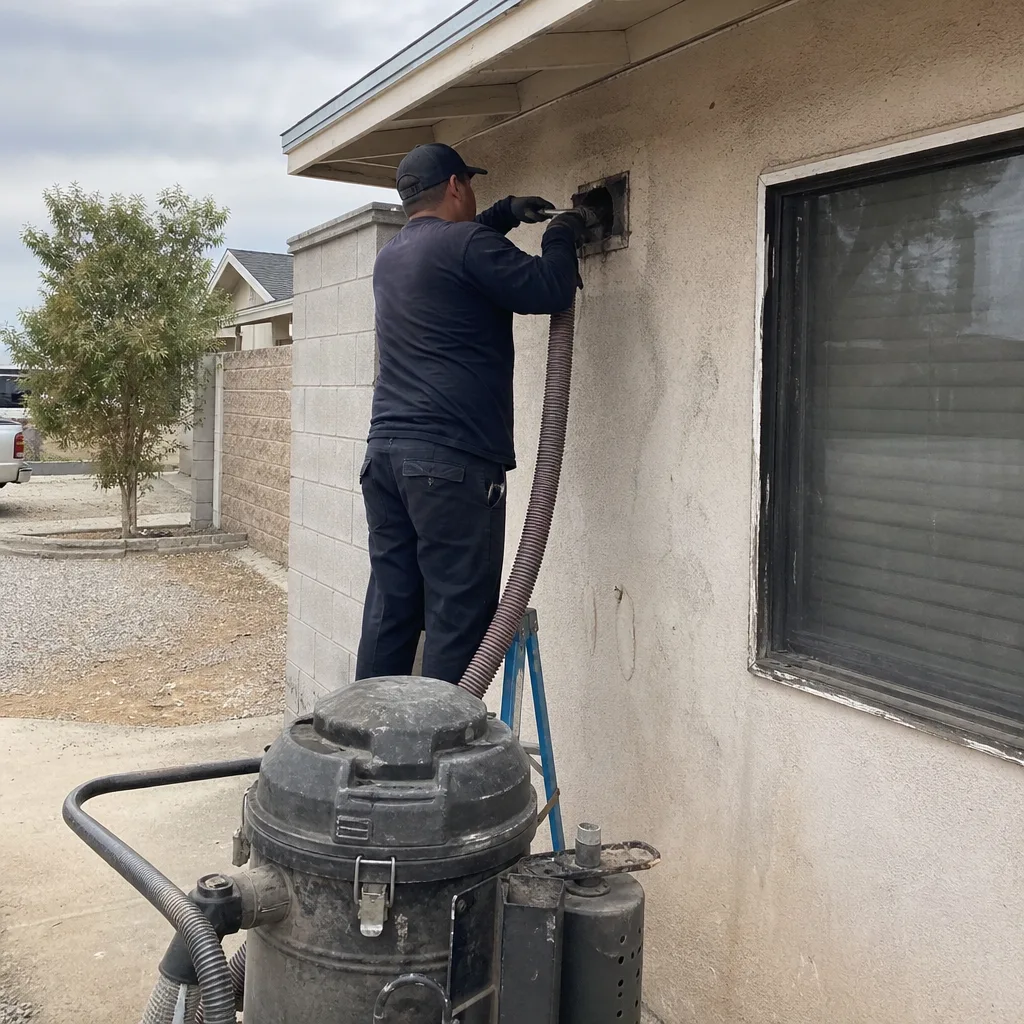 Before
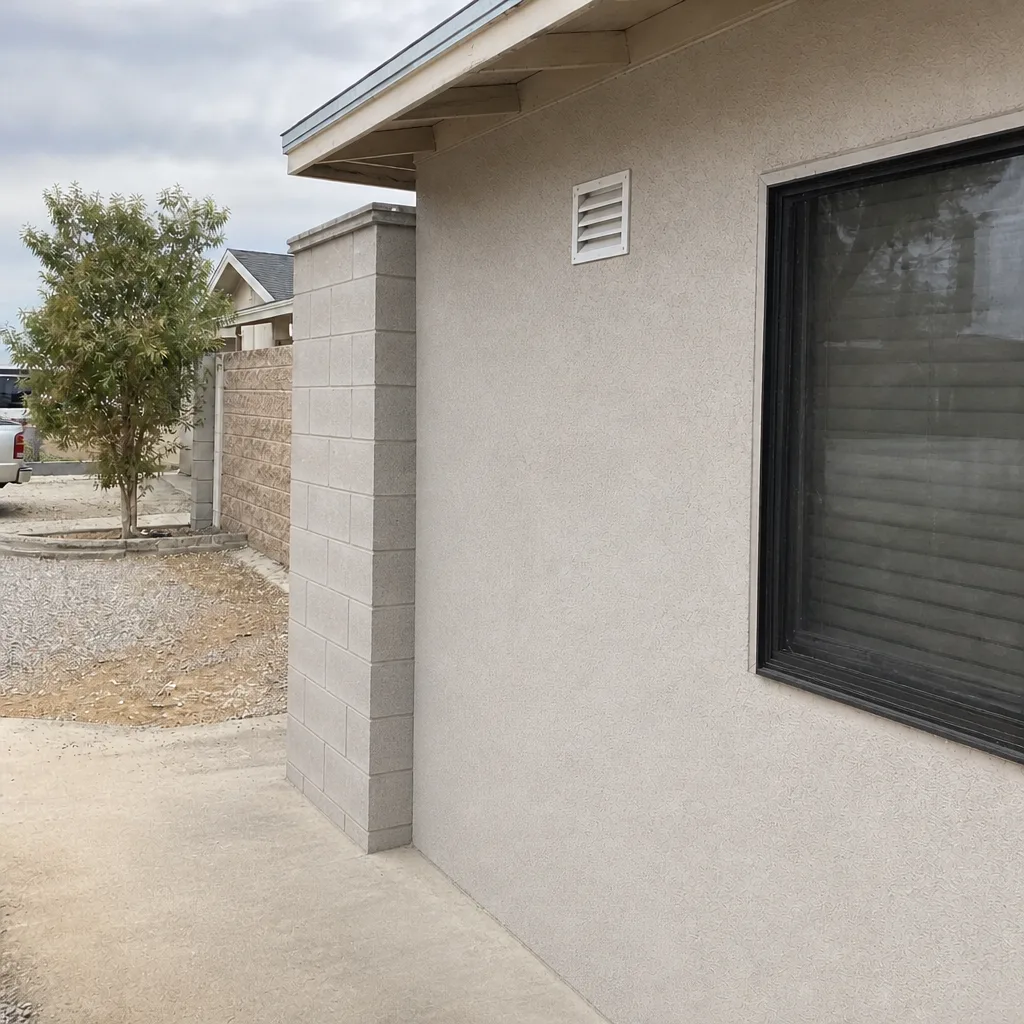 After
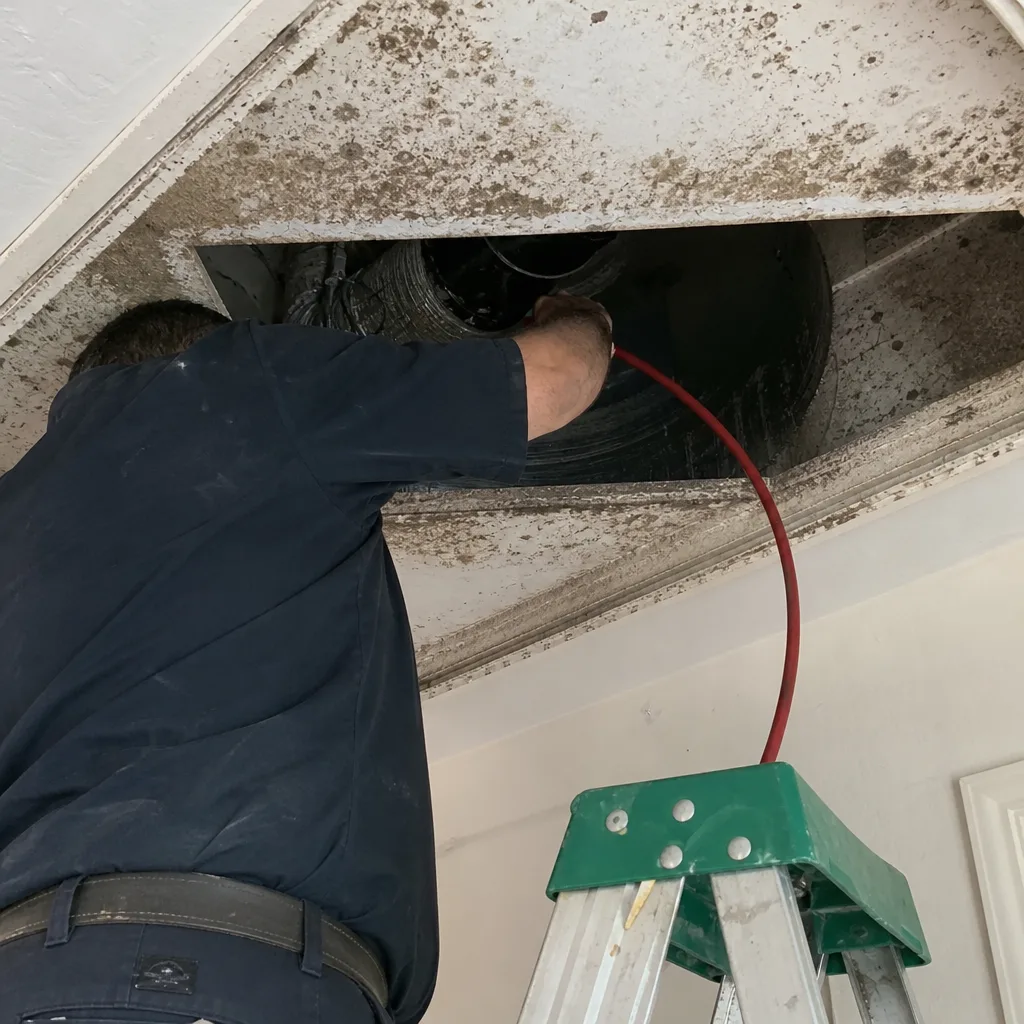 Before
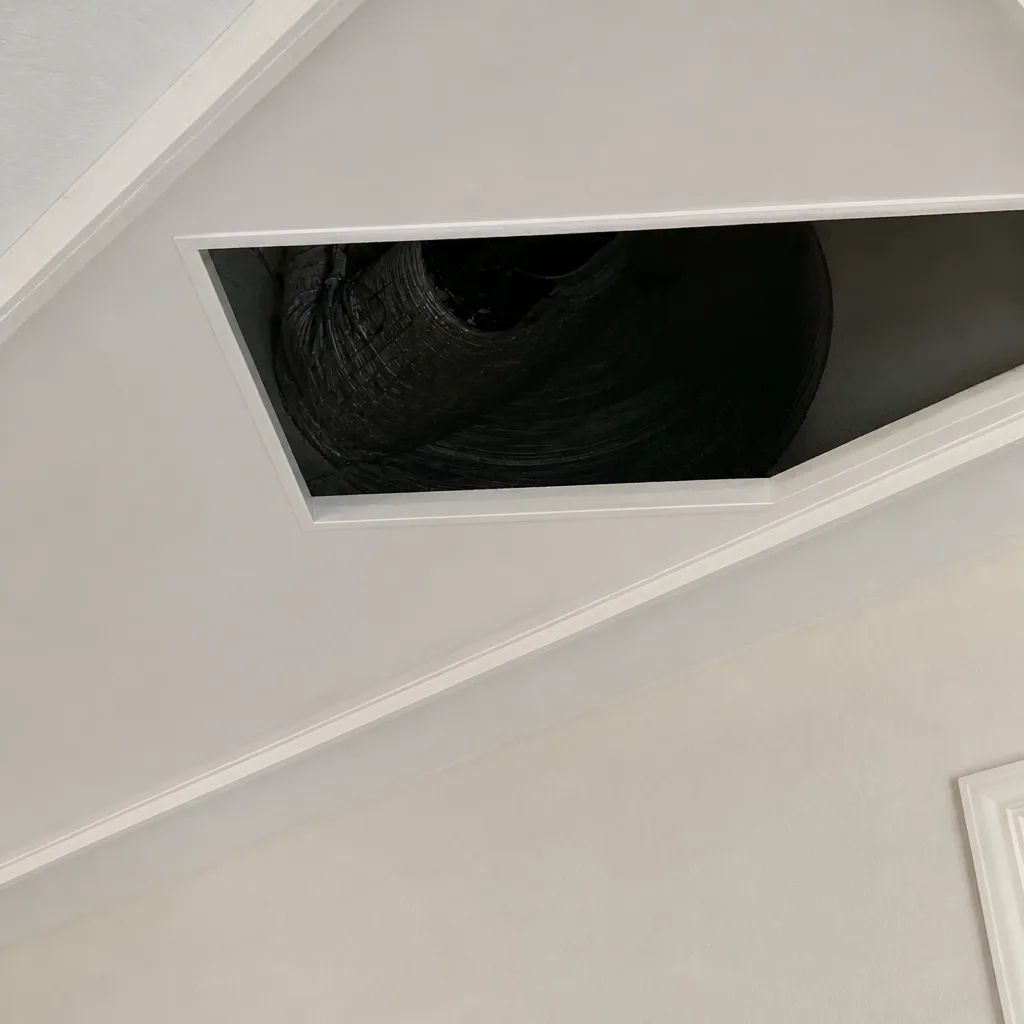 After
 Before
 After
When to Call a Professional
Some duct work is elective and some is not. Call for a professional inspection in Enterprise when you notice visible dust blowing out of registers right after the HVAC cycles on, when the return filter is loading faster than it used to, when you hear a rattle or hiss in a duct run, when you find a disconnected run in the attic, when someone in the home has seasonal or year-round respiratory complaints that worsen indoors, or when the dryer takes noticeably longer to dry a load of laundry. All of those point to duct issues that a professional needs to look at rather than clean around.
The best move is a specific conversation, not a brochure. Duct Cleaning Enterprise offers free estimates in Enterprise – call (855) 684-4882. We answer 24/7. Fast dispatch from 7am to 7pm, Sunday through Friday.
Frequently Asked Questions
It varies with system size, duct layout, and whether damaged sections need repair, so the honest answer is that a written estimate is the only real number. Discount quotes with coupon figures are usually priced for a partial job, and the invoice grows once the tech is on site. Duct Cleaning Enterprise prices per system, not per vent, with one flat price agreed before work starts. Call (855) 684-4882 for an exact quote – estimates are free.
Because they cover a different scope of work. A cheap quote usually reflects a shop vacuum, no HEPA filtration, no air scrubber, no photo verification, and no repair capability. That’s a different job. Compare equipment brand names, CFM, filtration stages, containment, and repair coverage, and the quotes that looked far apart start looking like different products. Call (855) 684-4882 and we’ll walk through what our scope includes.
Before-and-after photos of your own ducts, taken on the day of the job. Not stock imagery, not a website gallery. Every air duct job we do includes before-and-after photos of your ducts, and the photos exist so you can verify the work rather than take it on faith. Call (855) 684-4882 if you’d like to see what those look like before booking.
It depends on the home and the climate. In the dry desert conditions around Enterprise, dust loads are heavy and systems run long cooling seasons, so homes here often benefit from more frequent service than a humid-climate guide would suggest. A practical rule is to have the system inspected, and the ducts cleaned if the inspection finds accumulation worth addressing. Call (855) 684-4882 for a look at your specific system.
Rotobrush is one brand in a category, but the category itself is what matters. The critical features are a rotating brush that reaches the duct interior and continuous HEPA extraction running alongside it. Rotobrush is a well-established platform for that combination, and it’s what we use on every duct job. Call (855) 684-4882 to talk through your setup.
We repair it. Duct Cleaning Enterprise offers air duct repair alongside cleaning and dryer vent service, so damaged joints, crushed flex, and disconnected branches get handled in the same visit rather than as a handoff to a second company. If you’ve been told your ducts need repair before a cleaning can be effective, call (855) 684-4882 and we’ll quote both together.
We inspect before we begin and tell you what we find. If a run is disconnected or damaged badly enough that cleaning alone won’t help, we’ll flag it and quote repair, and you decide before any work starts. No surprises on the invoice. Call (855) 684-4882. For more on our approach, see Duct Cleaning Enterprise.
The Bottom Line
The brand on the equipment tells you what’s physically possible during your duct cleaning. Reviews tell you how the company communicated. Both matter, but only one determines whether your ducts come out clean. Ask for equipment brand names, CFM ratings, filtration stages, containment practices, and repair capability. In Enterprise, where dust loads are heavy and attic ducting ages under real heat cycling, that set of questions is worth more than any star rating. Our technicians have up to 8 years of experience, and we’re happy to answer every one of those questions before you book.
Ready to get it right the first time? Call Duct Cleaning Enterprise at (855) 684-4882 for a free estimate on air duct cleaning, dryer vent cleaning, or air duct repair in Enterprise. We answer 24/7. Fast dispatch from 7am to 7pm, Sunday through Friday.
Written by the team at Duct Cleaning Enterprise.