
Last updated November 16, 2026
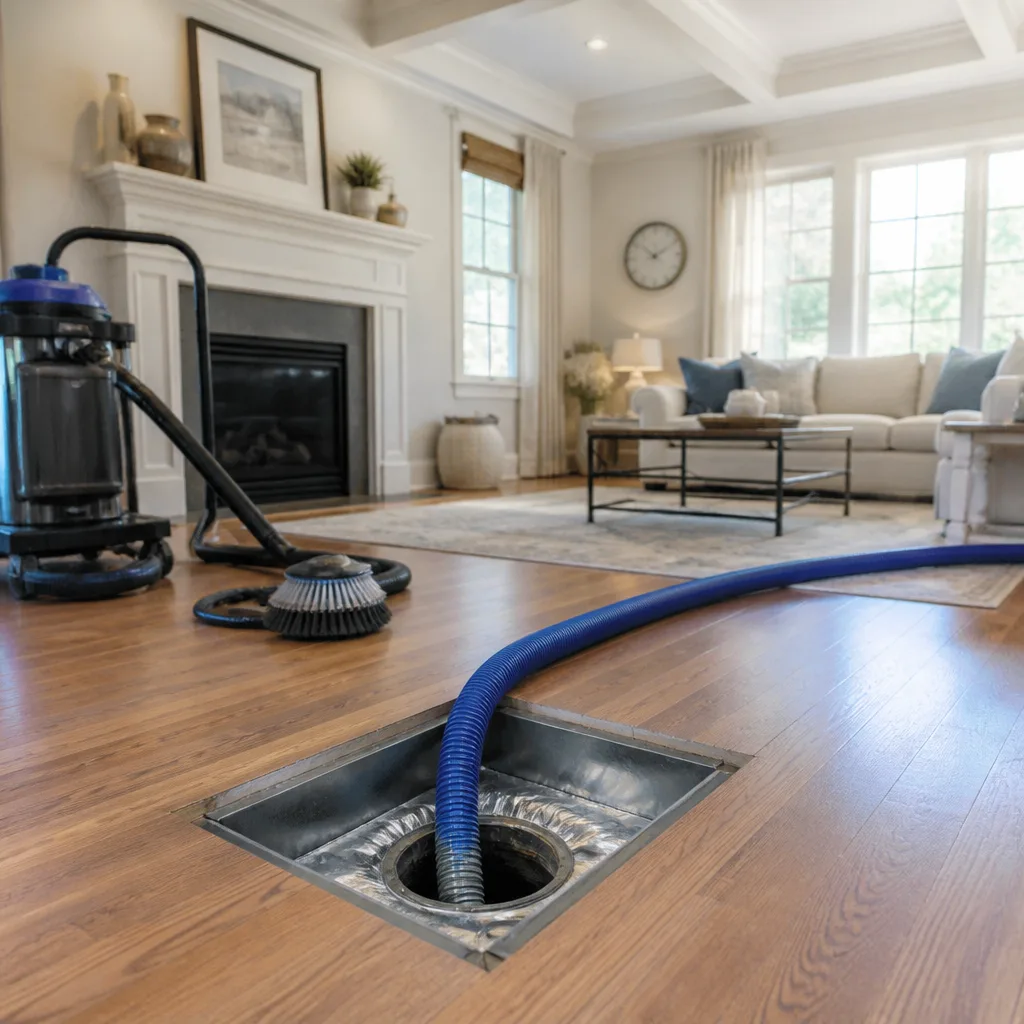 Whole-home duct cleaning
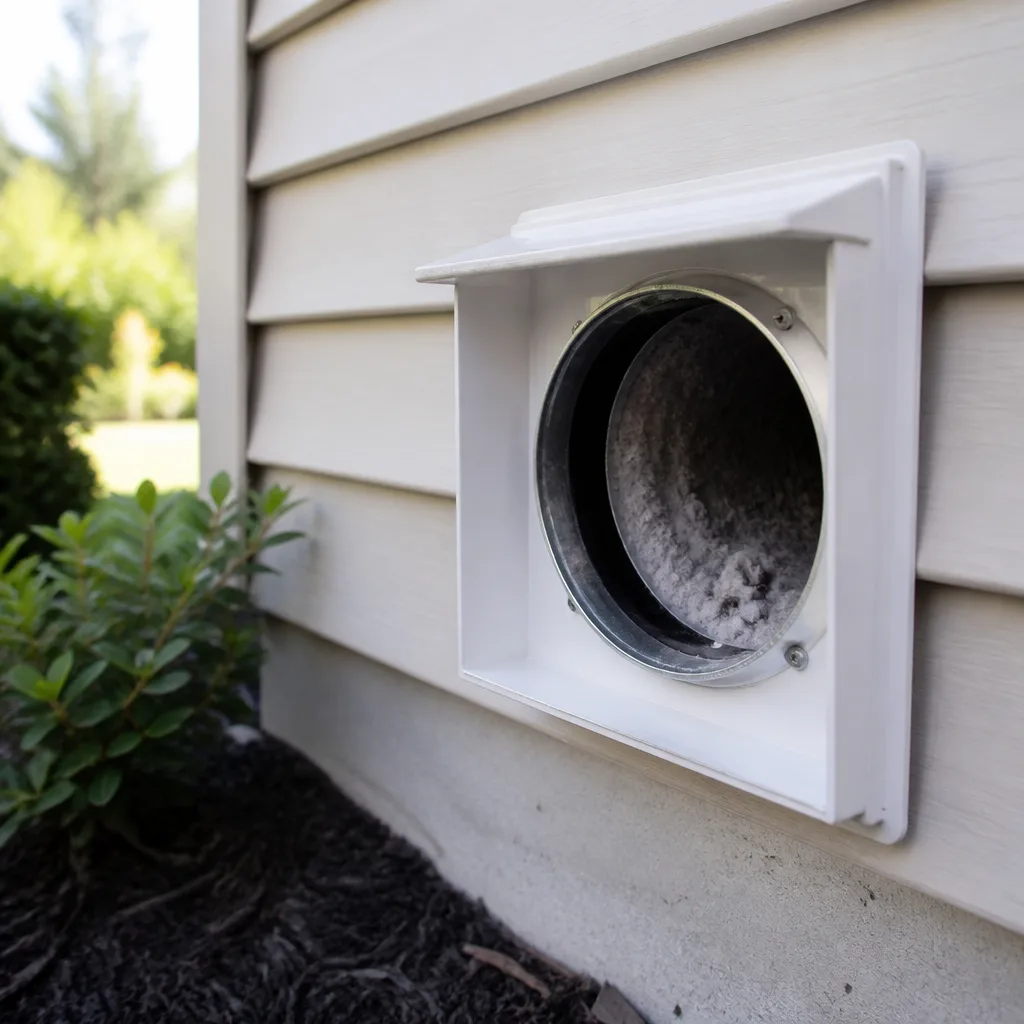 Dryer vent cleaning
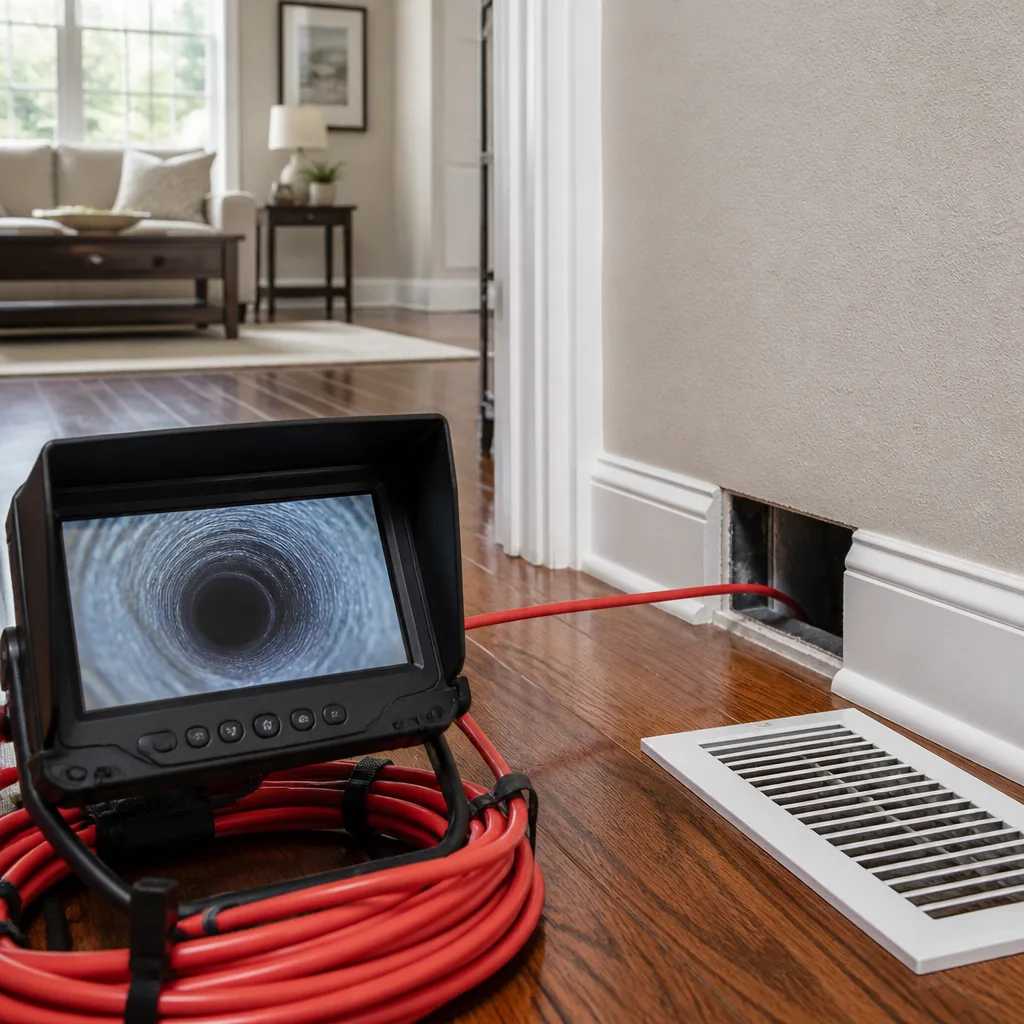 Camera inspection
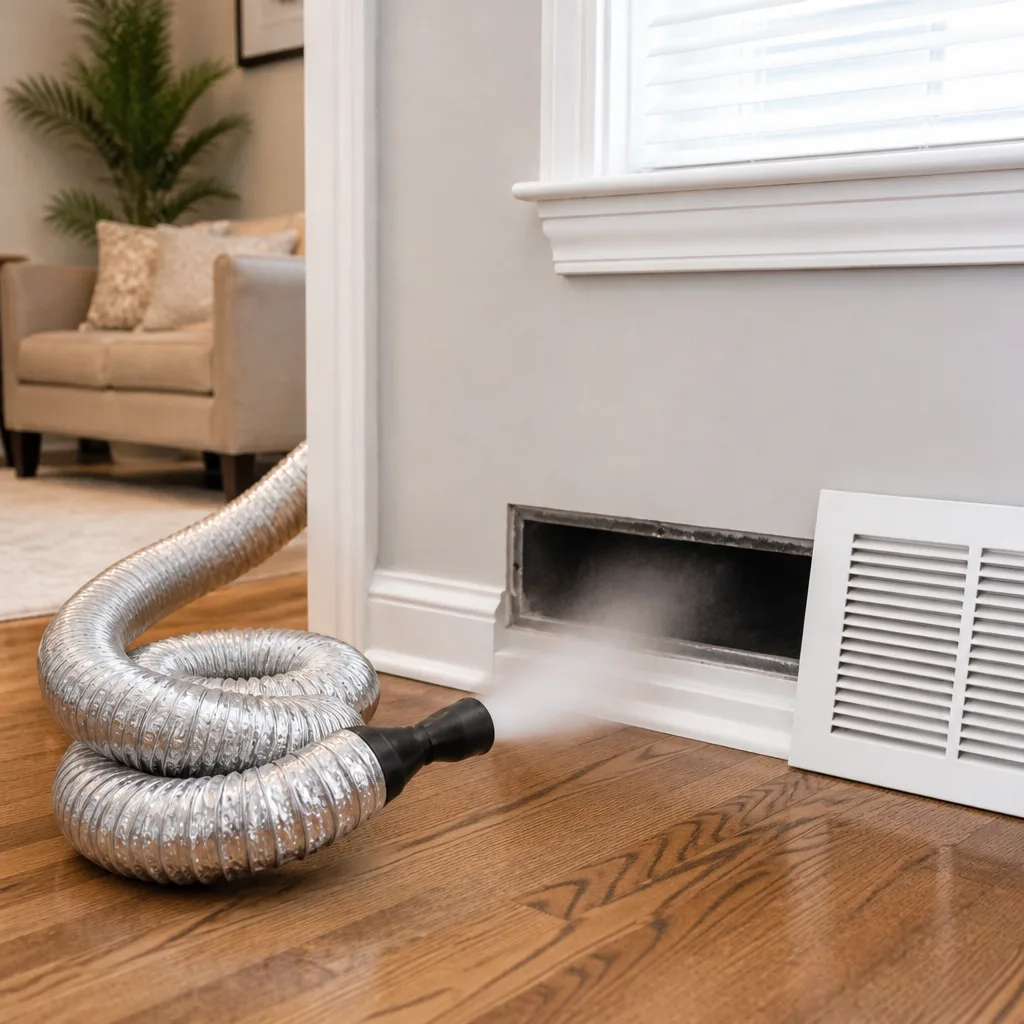 Sanitizing & deodorizing
Whole-system duct and dryer vent check with before-and-after photos - you see exactly what came out of your vents
That "$99 whole-house special" is a bait ad - the real number appears once they are in your hallway, or the "clean" is a shop-vac at the register. We photograph the inside of your ducts before and after instead.
How to Hire an Air Duct Cleaning Contractor in Enterprise: A Step-by-Step Guide
Most homeowners in Enterprise hire a duct cleaner the way they hire a landscaper: get three quotes, take the middle one, hope for the best. That approach works fine for yard work. It fails badly for ductwork. The wrong contractor can crush flex duct runs, snap insulation seams, spray debris through your supply registers, and stir up years of settled dust that settles right back within a week. And the entire job often comes with no before-and-after evidence, no completion report, and no way for you to verify anything happened at all. This guide walks you through the vetting process we’d use if we were hiring a duct cleaner for our own homes in Enterprise – equipment verification first, reviews second. By the end, you’ll know exactly what questions to ask, what a proper scope of work looks like, and how to tell a real professional from a coupon.
Quick Answer
To hire an air duct cleaning contractor in Enterprise, ask five equipment questions before you book: what negative air machine they use, its CFM rating, the agitation method, whether HEPA filtration is on the exhaust, and whether they deploy containment air scrubbing. Then verify NADCA membership, insist on a written scope of work, and refuse any quote that doesn’t follow a pre-job walkthrough. Hire the contractor whose answers you can verify, not the one with the lowest coupon.
Styles & brands we work with
- Whole-home duct cleaning
- Dryer vent cleaning
- Camera inspection
- Sanitizing & deodorizing
Table of Contents
- Why the FTC Warned Consumers About Duct Cleaning
- The Five Equipment Questions to Ask Before Booking
- How to Verify NADCA Membership (and What It Doesn’t Guarantee)
- Red Flags in Duct Cleaning Quotes
- What a Legitimate Scope of Work Document Looks Like
- How to Evaluate Post-Job Documentation
- Hiring in the Enterprise Market Specifically
- Common Mistakes to Avoid
- When to Call a Professional
- Frequently Asked Questions
Why the FTC Warned Consumers About Duct Cleaning
The Federal Trade Commission issued a consumer alert specifically about duct cleaning scams – $49 advertised coupons that turn into $500 upsell sessions once the technician is inside your home. That warning has been on the books for a long time, and the tactic it describes is still the single most common complaint in this category. It’s worth understanding why the scam works, because the reason relates directly to how you should filter contractors in Enterprise.
The scam relies on a specific trick: the technician arrives with a shop vacuum or a small portable unit, makes one pass over a few visible registers, then tells you the ducts are “much worse than expected” and quotes an emergency remediation price on the spot. The customer has no way to verify what was cleaned, no photos of the before state, and no written scope to compare against. The $49 became $500 because there was no fixed price and no documentation.
The legitimate version of this job looks different in three ways:
- One flat price per system, agreed before work starts. Not a per-vent price. Not a teaser coupon that grows on-site. A written estimate that reflects the size of your home, the number of supply and return runs, and the system’s configuration.
- Professional-grade equipment, verifiable by name. A real duct cleaning truck or van carries a rotary brush system (Rotobrush is the industry standard) and a HEPA-rated negative air machine (Nikro is common). Not a shop vacuum.
- Before-and-after photos of your ducts. Not generic stock photos. Photos taken inside your specific system, showing what came out and what the interior looked like before and after.
If a Duct Cleaning Enterprise quote doesn’t check all three of those boxes, walk away. Any duct cleaning quote in Enterprise that doesn’t check them is priced on a model where the clean is a loss leader and the upsell is the profit.
The Five Equipment Questions to Ask Before Booking
Equipment is the single most reliable filter for duct cleaning contractors, because it’s hard to fake over the phone. A scam operator will talk about “truck-mounted power” in vague terms. A real one will name their machine, state its CFM rating, and describe the agitation method without hesitation. Ask these five questions before you book, and pay attention to how the person on the other end answers.
- What negative air machine do you use? The correct answer names a real brand. Rotobrush and Nikro are the two most common professional-grade systems. “Industrial vacuum” or “truck-mounted system” without a brand name is a red flag. The machine matters because the vacuum is what pulls dislodged debris out of the system instead of letting it settle back into the supply runs.
- What’s the CFM rating of the vacuum? CFM (cubic feet per minute) measures airflow – the raw suction power the machine can sustain. Consumer shop vacuums generally top out under 200 CFM with a narrow hose. Professional negatives run substantially higher. If the contractor can’t or won’t state a CFM number, they either don’t know their equipment or they’re working with a shop vacuum.
- What’s the agitation method? Agitation is how the contractor loosens debris from duct walls. The professional standard is a rotary brush system – a spinning brush head that physically scrubs the interior of the duct. Whip lines (a spinning rope with a blower) are the budget alternative and are less effective on caked-on dust. Ask which one they run, and ask if the brush head is sized per duct depth.
- Is there HEPA filtration on the exhaust? This is where most contractors get exposed. A vacuum without HEPA filtration pulls dust out of your ducts and blows a fine particulate cloud into the room where the machine exhausts. HEPA-rated exhaust traps particulate at the filter, keeping it out of your living space. Nikro systems are commonly HEPA-rated – ask if theirs is.
- Do you deploy containment air scrubbing during the job? This is the question that separates equipment-serious contractors from everyone else. An air scrubber (Abatement Technologies is the professional-grade name) runs continuously during the job to keep particulate and contaminant from escaping the work area. It’s a containment step most contractors skip because it costs them equipment and setup time. Ask.
A contractor who answers all five of those questions clearly and specifically – and can name their equipment – is very likely running a real shop. A contractor who dodges even one of them is either working with consumer-grade equipment or hasn’t thought about particulate containment at all. Neither is a contractor you want cleaning the air you breathe in Enterprise.
How to Verify NADCA Membership (and What It Doesn’t Guarantee)
NADCA – the National Air Duct Cleaners Association – is the industry’s primary trade body, and its membership directory is a legitimate verification tool. But it’s also widely misunderstood. Being a NADCA member says something specific about a contractor, and it doesn’t say everything. Knowing the difference is the whole point of verifying rather than trusting the logo on a truck.
What NADCA membership actually obligates a contractor to:
- Adherence to the ACR (Assessment, Cleaning, Restoration) standard. This is NADCA’s published best-practices document for how duct cleaning should be performed. Membership implies the contractor operates within it, including the pre-assessment, cleaning, and post-job verification phases.
- Source removal as the standard method. NADCA rejects “blow-and-go” cleaning (stirring debris with a blower) in favor of physically removing contaminants from the source with agitation and negative pressure.
- Ongoing training and code-of-ethics acceptance. Members accept a published code of ethics and are expected to keep current with industry practice.
What NADCA membership does not guarantee:
- It’s not a license. NADCA is a trade association, not a government body. Membership is voluntary, and non-members can operate perfectly legally in most states. Verification is one input, not a legal requirement.
- It doesn’t mean every technician is trained to the same level. Membership is at the company level. Ask whether individual technicians hold NADCA certifications (ASCS or similar) – not just whether the company’s name is in the directory.
- It doesn’t guarantee equipment quality. A member can still use entry-level equipment. NADCA membership speaks to process discipline, not to the CFM of the negative air machine in the van.
To verify membership in Enterprise, look up the company name directly in the NADCA online directory – don’t rely on a logo on a website or a truck. If the name doesn’t come up, ask the contractor when they were last a member. Membership lapses happen, and a contractor who dropped out three years ago may still be advertising it. Pair the directory check with the equipment questions above; the two together tell you almost everything about a contractor’s seriousness.
Red Flags in Duct Cleaning Quotes
Most bad duct cleaning hires are visible in the quote itself, if you know what to look for. In our experience, the biggest warning signs cluster around pricing structure and the contractor’s willingness to show you what they intend to do. Here are the red flags we’d walk away from every time.
- Flat-rate pricing that ignores the size of your home. A three-bedroom ranch and a two-story with dual HVAC systems are not the same job. A quote that is exactly the same regardless of square footage, duct count, or number of systems is a quote that was never calculated for your specific house. It’s designed to be the lowest number on the comparison screen so the technician can upsell on-site.
- Per-vent pricing. Per-vent pricing ($X per register) is a teaser structure. It works because homeowners count seventeen registers, multiply by $X, and assume that’s the total. It never is – the upsell for “deep cleaning,” “sanitizing,” “encapsulation,” or “duct sealing” is where the real revenue is. Legitimate contractors price the whole system, not the vents.
- No pre-job walkthrough. A serious contractor walks your system before quoting – inspecting the air handler, checking the trunk line, looking at flex duct condition, and confirming accessibility. A contractor who quotes without ever looking at your ducts is quoting a template, not your actual system.
- Refusal to show equipment. Ask to see the negative air machine, the rotary brush head, and the HEPA filter before work starts. A real contractor will happily show you. A scam operator will change the subject or claim it’s “all inside the truck.” If they won’t show you the vacuum, they don’t have one worth showing.
- No written estimate, only a verbal price. The price on the phone doesn’t count. The written estimate sets the final price. If you can’t get a written estimate, you can’t hold anyone to anything, and the on-site quote is guaranteed to be higher.
- Claims of “chemical sanitizing” without saying what chemical. Vague sanitizer claims are a common upsell. If a contractor wants to add a chemical treatment, ask for the product name and its EPA registration. “Sanitizer” isn’t a product; it’s a marketing word.
None of those red flags are subtle once you’ve seen them. A two-minute phone call screening the quote for pricing structure and equipment names will filter out most of the operators who shouldn’t be touching your ductwork in Enterprise.
What a Legitimate Scope of Work Document Looks Like
Before any technician puts a brush inside your ductwork, you should have a written scope of work in hand. The scope is the document that says exactly what will be done, with what equipment, in what rooms, and what evidence you’ll receive when it’s finished. It’s what you compare the completed job against, and it’s how you hold a contractor to the price they quoted. Here’s what a real scope of work should contain.
- System description. Number of HVAC systems, number of supply runs, number of return runs, approximate total duct length or description of trunk and branch layout. Not “everything,” which means nothing.
- Access points identified by room. The technician will need to cut small access panels in some cases (typically in the trunk line and at flex duct ends where no existing access exists). The scope should identify roughly where panels will go by room and how they’ll be sealed afterward.
- Equipment named. Rotobrush rotary brush, Nikro negative air machine, HEPA exhaust filter, Abatement Technologies air scrubber deployed for containment. Named equipment is verifiable. “Truck-mounted system” is not.
- Pre-cleaning assessment. A walkthrough of the system before cleaning begins, with photos of the interior of several register boots and one trunk line – the before state.
- Cleaning sequence. Usually: cover and protect flooring, deploy containment, source-remove debris with agitation plus negative pressure, brush the trunk and each branch, clean the air handler interior (note: not the motor, coil, or furnace components – that’s a separate service), and clean each register boot and return grille.
- Post-cleaning verification. Before-and-after photos of the same access points, a written completion report listing what was cleaned, and a final walkthrough with the homeowner.
- Price and scope lock. One flat price for the scope described. If the technician finds a broken flex duct or disconnected run during the cleaning, that’s a repair item that gets quoted separately and added to the scope in writing – never billed as a surprise.
The scope is the difference between a job that’s priced per system and a job that’s priced per surprise. If the document doesn’t cover all seven of those items, you’re missing something that will show up as a line on the final invoice.
How to Evaluate Post-Job Documentation
The job is not done when the technician packs up the vacuum. It’s done when you’ve reviewed the before-and-after documentation and confirmed that what was cleaned is what got cleaned. Any duct cleaning in Enterprise worth paying for comes with a completion package. Here’s what to check before you sign off.
- Before-and-after photos of the same access points. The photos must be of your ducts – not stock images, not a portfolio from a different job. Ask to see the photos taken before work started, and compare the same access location to the after photo. The inside of a duct should look measurably brighter after cleaning. If the “after” photo shows the same dust, you’re being handed a portfolio shot.
- Access panel locations documented. The completion report should list every access panel cut, by room, so you know what’s been modified and why. Access panels are a normal part of the job, but you should never discover one weeks later during a renovation.
- Written completion report. A real report includes: system cleaned, number of runs serviced, equipment used, any access panels cut and sealed, any flex duct damage or disconnect found, and the technician’s signature. If they don’t hand you a report, ask for one. A contractor who can’t produce a completion report after a duct cleaning job is a contractor who isn’t documenting their work.
- Photographic evidence of debris collected. The negative air machine’s collection canister should have visible contents. A technician should be willing to show you what came out.
- Final walkthrough. The technician walks the system with you, register by register, and confirms that each register has airflow and no register was left unsealed. This takes five minutes and catches most problems on the spot.
If a contractor finishes a job and can’t produce any of those five items, the “clean” wasn’t a clean. It was a vacuum pass. The documentation package is the difference between buying a service and buying a coupon.
Hiring in the Enterprise Market Specifically
Duct cleaning is a national industry, but the hiring decision in Enterprise has some local specifics worth talking through. The first is climate. Enterprise sits in the Mojave-influenced climate of the Las Vegas valley – dry, hot, with significant seasonal dust. That means the duct system in a typical Enterprise home accumulates dust at a faster rate than in more humid climates, and the filtration side of the system (the return grille, the air handler filter, and the duct interior closest to the return) is the first place that shows it. A contractor who examines those areas first and can speak to the airflow path from the return to the supply registers is the contractor you want.
The second is housing stock. Much of Enterprise is newer construction – stucco homes built over the last few decades, many with flex duct in the attic runs and rigid metal trunk lines. Flex duct is easier to damage during cleaning than the rigid metal of older systems, and a contractor using a rotary brush at the wrong speed or pressure can separate the inner liner from the outer sleeve. That’s a repair, and it’s expensive. If the contractor can’t speak to flex duct handling – specifically how they size the brush head and manage brush speed – ask them to explain it before they book you.
The third is equipment availability. Duct cleaning in Enterprise, like most suburban markets, is served by two kinds of contractors: companies running professional truck or van setups with rotary brush systems and negative air, and box-truck operators who show up with a shop vacuum, a blower, and a coupon. The gap in the market is real, and the two are priced to look similar on the front end. The equipment questions in this guide exist specifically to tell them apart before you’ve paid either of them.
We work in Enterprise with professional-grade equipment – Rotobrush rotary brush, Nikro HEPA vacuum, Abatement Technologies containment scrubbing – because the other version of this job isn’t one worth doing. We also offer duct cleaning services that include repair, so a broken flex duct found mid-job gets fixed in the same visit rather than becoming a second contractor’s problem. If you’re hiring a third party, ask the equipment questions first. If the answers are vague, call us and we’ll answer them.
Common Mistakes to Avoid
- Booking the cheapest coupon without screening equipment. Duct cleaning coupon pricing is designed to get a technician inside the door. The screening questions in this guide exist because a $49 quote doesn’t tell you anything about the vacuum, the filter, or the containment setup. Ask before you book.
- Assuming NADCA membership means the technician is NADCA-certified. Membership is at the company level, and certification is at the individual level. Ask which one you’re actually getting.
- Accepting a phone quote without a walkthrough. Your system configuration determines the price. A quote given without seeing the ducts is a template quote, and it will change once the technician arrives.
- Not asking where the negative air machine exhausts. If the exhaust isn’t HEPA-filtered and isn’t vented to an exterior door or window, the particulate comes back into the room where the machine is sitting. Ask about exhaust routing before the job starts.
- Skipping the before-and-after verification. Photos are the completion proof. If a contractor doesn’t take before-and-after images of your specific ducts, you have no way to verify the work, and no way to know whether a “clean” was actually a clean.
- Not asking about flex duct handling in Enterprise homes. Newer construction with flex runs requires brush-speed discipline. A contractor who can’t describe how they manage flex will damage it eventually.
- Assuming “we clean your ducts” includes repair. Cleaning and repair are different scopes. Ask whether the contractor can fix a damaged run or disconnected flex joint, or whether that becomes your second phone call.
When to Call a Professional
Duct cleaning isn’t an automatic annual expense. It’s a job that’s worth doing when there’s a specific reason to do it. Call a professional when you notice visible dust plumes blowing from a supply register when the system kicks on, when family members have consistent respiratory irritation that clears when they leave the house, when the system was installed or renovated in the last few years and construction dust may have entered the return, or when a dryer vent has never been cleaned and a load takes longer than it used to. Dryer vent cleaning is a separate service from duct cleaning, and it’s a fire-safety item – a clogged vent is a lint fire waiting to be cleared, and it’s the one part of this checklist we’d never defer. The same applies to any ductwork that’s visibly damaged, crushed, or disconnected: cleaning a broken run doesn’t help, and it needs repair first. Duct Cleaning Enterprise offers free estimates in Enterprise – call (855) 684-4882. We answer 24/7. Fast dispatch from 7am to 7pm, Sunday through Friday. Our technicians have up to 8 years of experience with Rotobrush, Nikro, and Abatement Technologies equipment, and we can quote cleaning and repair in the same visit so you’re not coordinating a second contractor.
Frequently Asked Questions
Air duct cleaning in Enterprise is priced per system, not per vent, and the final price is set by the written estimate after a walkthrough of your specific system. Typical jobs vary based on square footage, number of HVAC systems, and the condition of the ductwork. Ask for a written estimate that lists the equipment, the access points, and the documentation package – that’s the number you compare, not the coupon. Call (855) 684-4882 for a free estimate.
Because the cheap quote is a teaser price for a smaller job. A $49 or $99 quote typically assumes a shop vacuum pass on a handful of registers with no HEPA filtration, no containment, and no before-and-after documentation – the on-site upsell covers the difference. A whole-system clean with a rotary brush, a HEPA negative air machine, and containment scrubbing costs more because it does more. Compare the scope of work, not the sticker. Call (855) 684-4882 if you want a like-for-like quote to compare.
By requesting before-and-after photos of your specific ducts, a written completion report listing every access point and every run serviced, and a final walkthrough of the registers with the technician. A professional contractor provides all three without being asked. A coupon operator provides none. If you can’t verify the work, ask whether it was actually done. Duct Cleaning Enterprise documents every job with before-and-after photos of the customer’s own system – call (855) 684-4882 to book an estimate.
There’s no universal rule. Most homes don’t need duct cleaning on a fixed schedule. It’s worth doing when there’s a specific reason – visible dust discharge, recent renovation, a new system install, or a homeowner with environmental sensitivities. In Enterprise’s dry climate, dust accumulation is faster than in more humid regions, so a visual inspection every few years is a reasonable habit. If the ducts look clean inside the register boots and the return, cleaning is a want, not a need. Call (855) 684-4882 for a free assessment if you’re unsure.
Yes, and it’s the main risk of hiring an unqualified operator. Flex duct has an inner liner that can separate from the outer sleeve if a rotary brush is run at the wrong pressure or if the brush head is oversized for the duct dimension. A contractor who can describe their flex duct handling – brush size selection, brush speed, feed rate – is a contractor who won’t damage it. Insist on that answer before you book. Call (855) 684-4882 if you have flex runs and want a contractor who handles them properly.
Duct Cleaning Enterprise provides three services: air duct cleaning, dryer vent cleaning, and air duct repair. That matters for the hiring decision because a damaged flex run found mid-clean can be repaired in the same visit rather than becoming your second contractor call. Dryer vent cleaning is a fire-safety service and worth scheduling separately if the vent has never been done. The same equipment platform runs all three services, so you’re not coordinating multiple vendors. Call (855) 684-4882 for a free estimate covering any or all three.
The Bottom Line
Hiring a duct cleaning contractor in Enterprise comes down to equipment verification. Ask the five questions – negative air machine, CFM rating, agitation method, HEPA exhaust filtration, and containment scrubbing – and you’ll separate the professional-grade operations from the coupon operators in a single phone call. Verify NADCA membership in the directory, insist on a written scope of work before the technician starts, and refuse to sign off on a job without before-and-after photos of your own system. Reviews and ratings are secondary; equipment and documentation are the fundamentals. If the answers are vague, the equipment isn’t professional-grade, or the documentation package doesn’t exist, that’s your filter. If you want a quote built on the equipment and process in this guide, call Duct Cleaning Enterprise at (855) 684-4882. Free estimates. We answer 24/7. Fast dispatch from 7am to 7pm, Sunday through Friday.
Written by the team at Duct Cleaning Enterprise.
See the difference
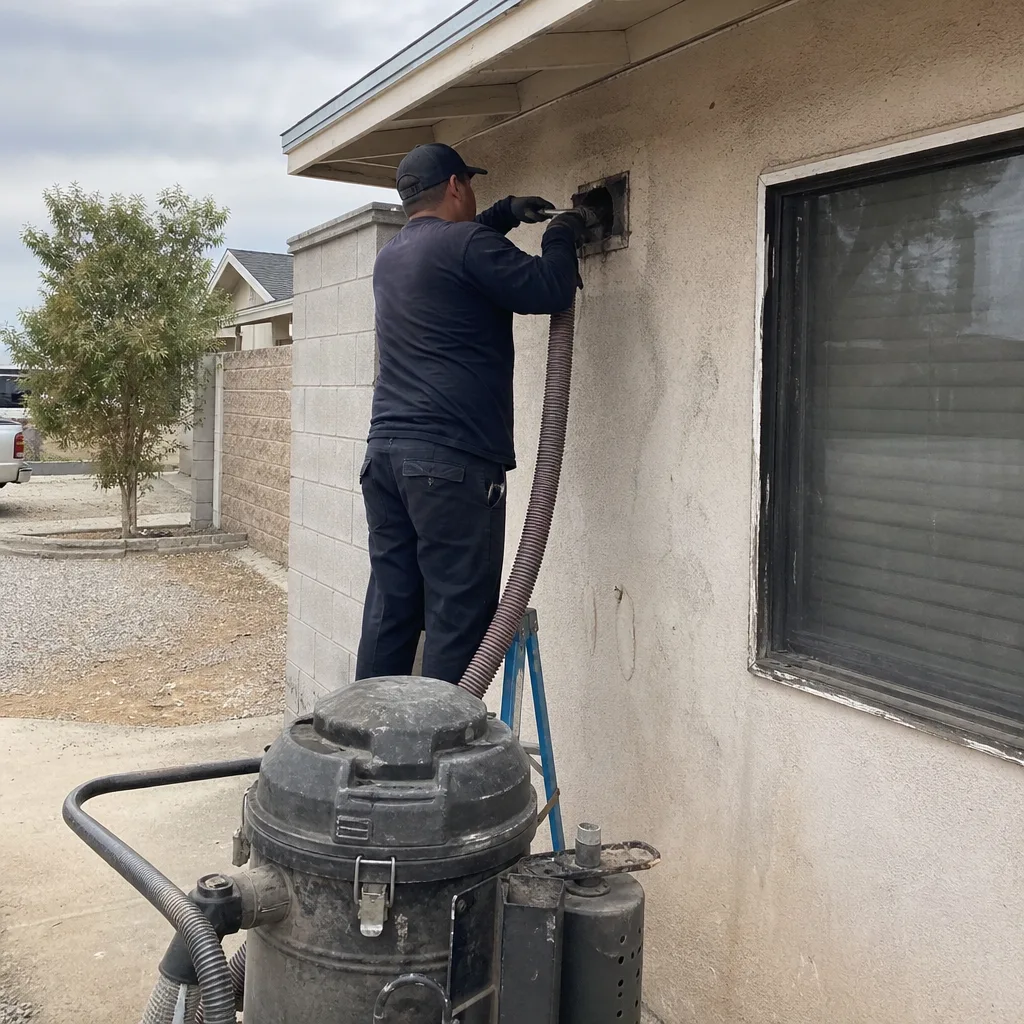 Before
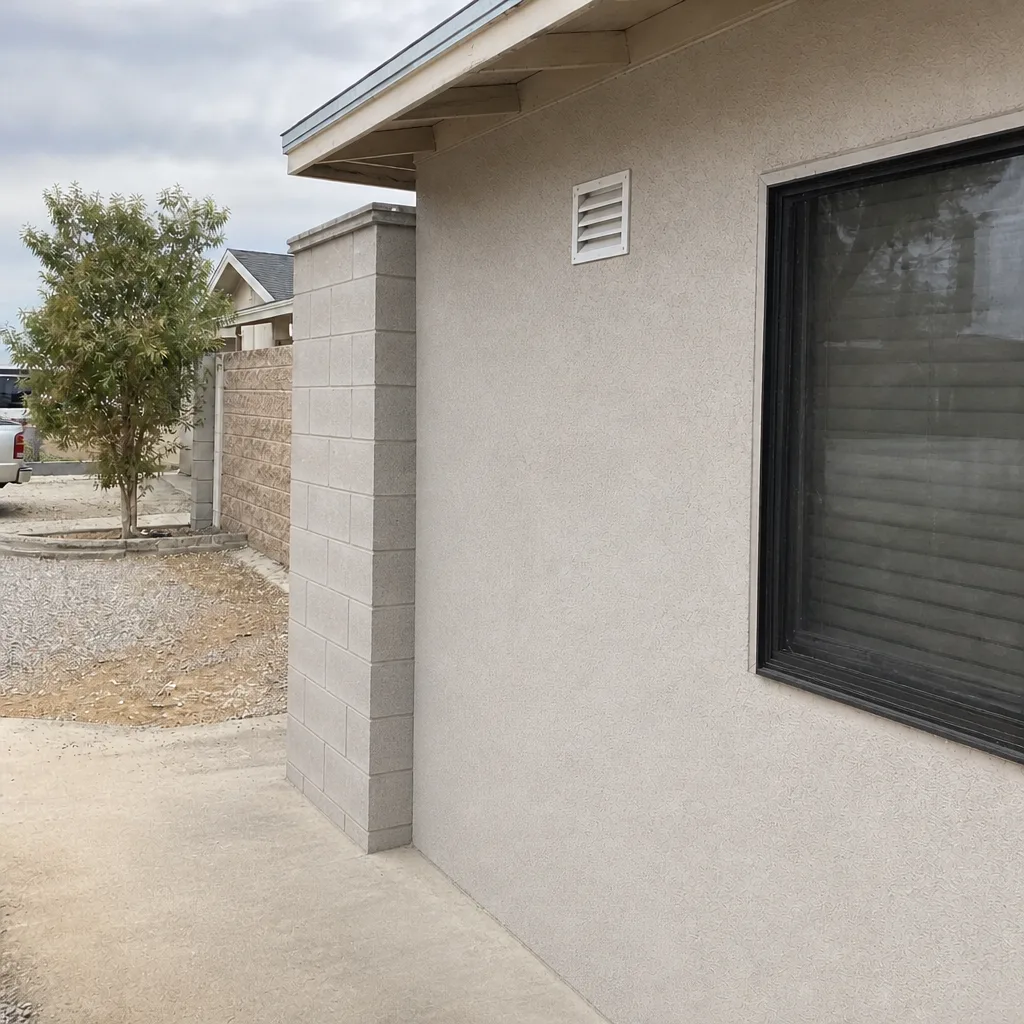 After
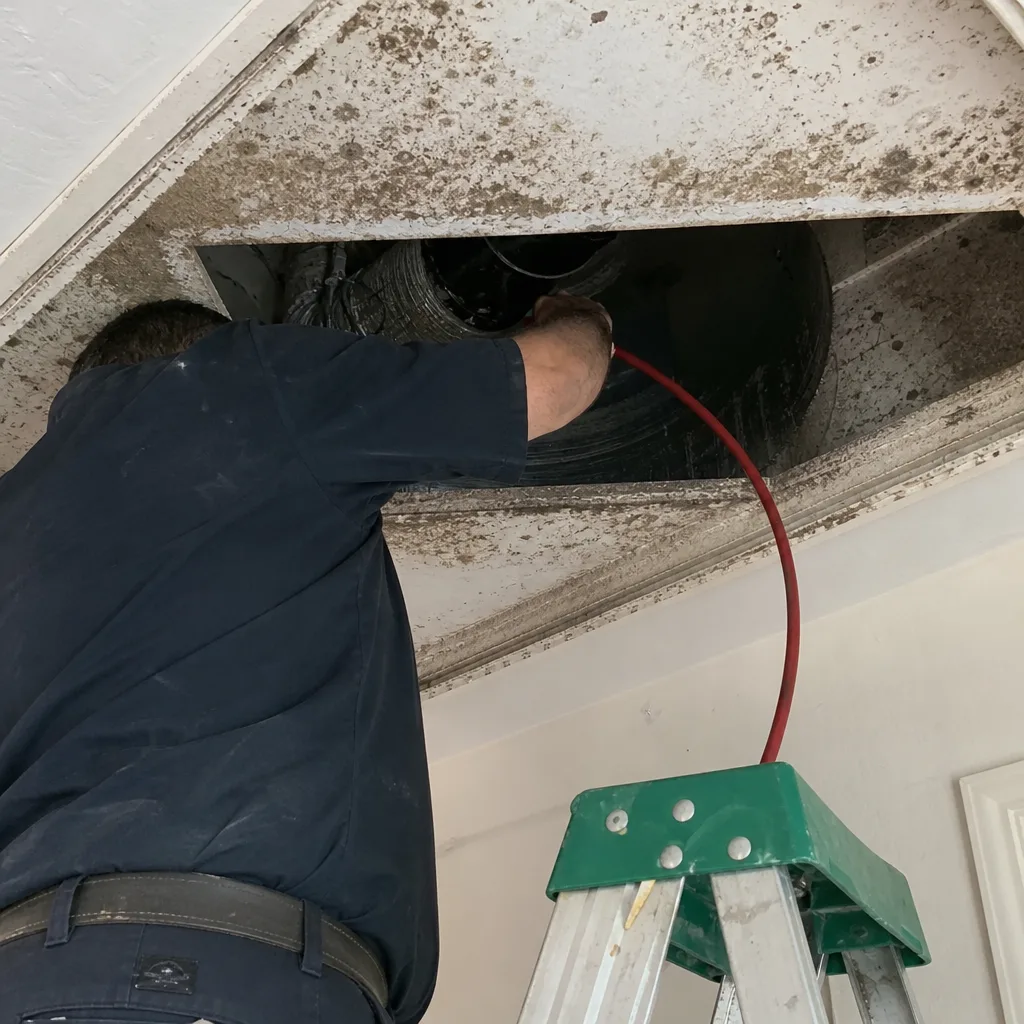 Before
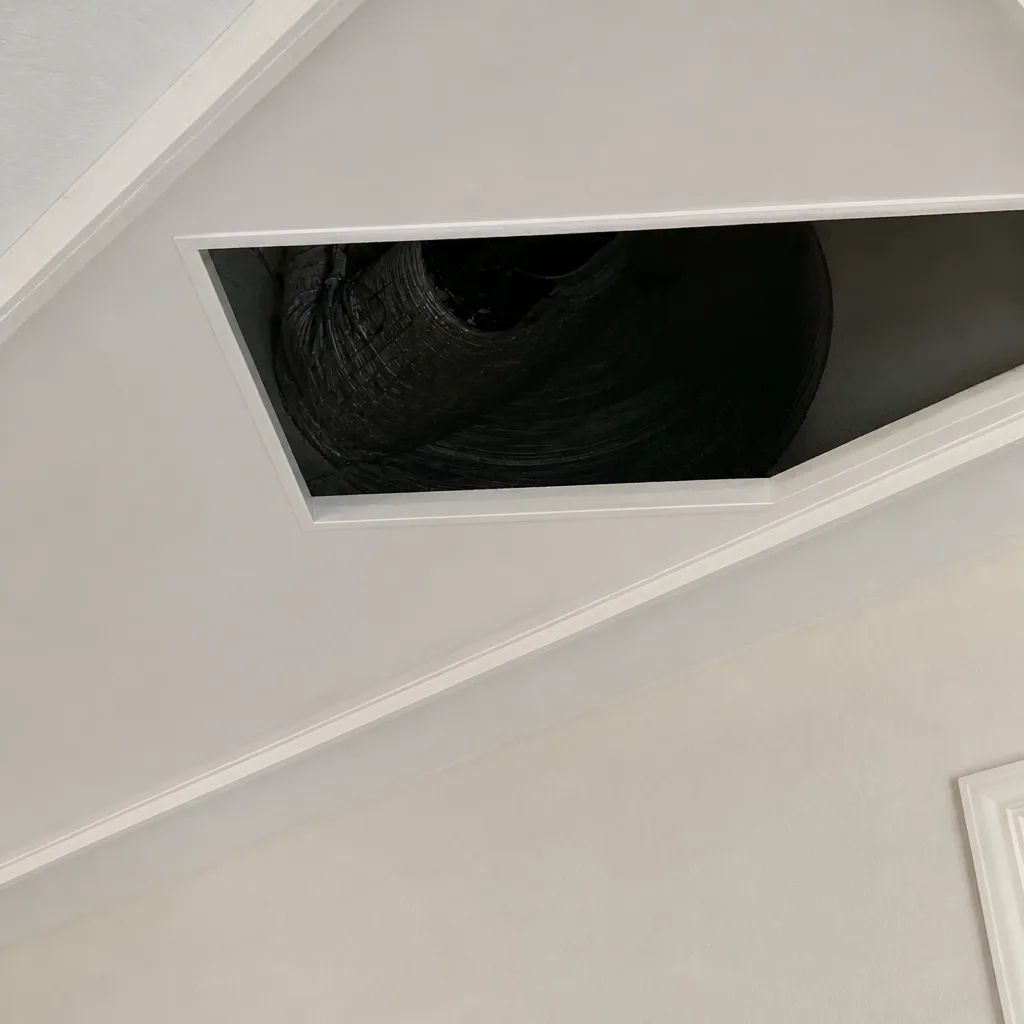 After
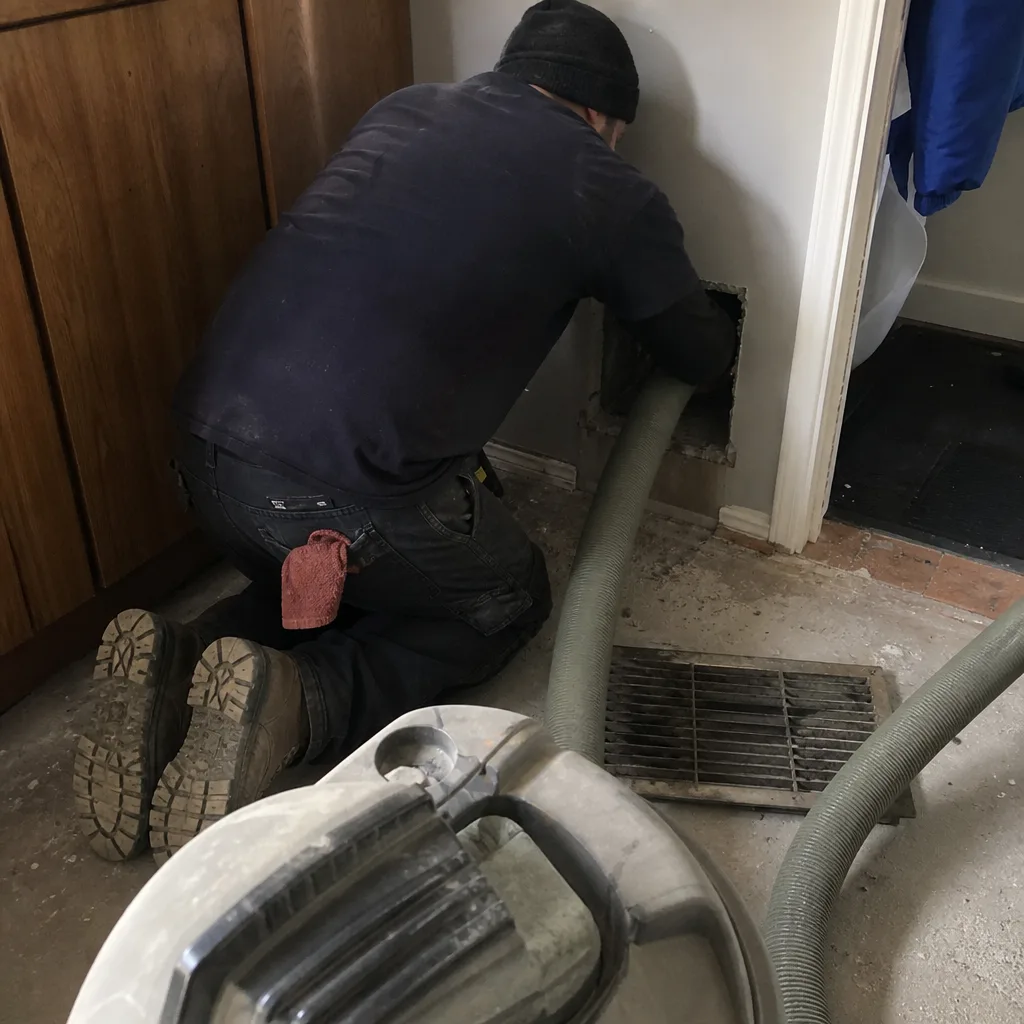 Before
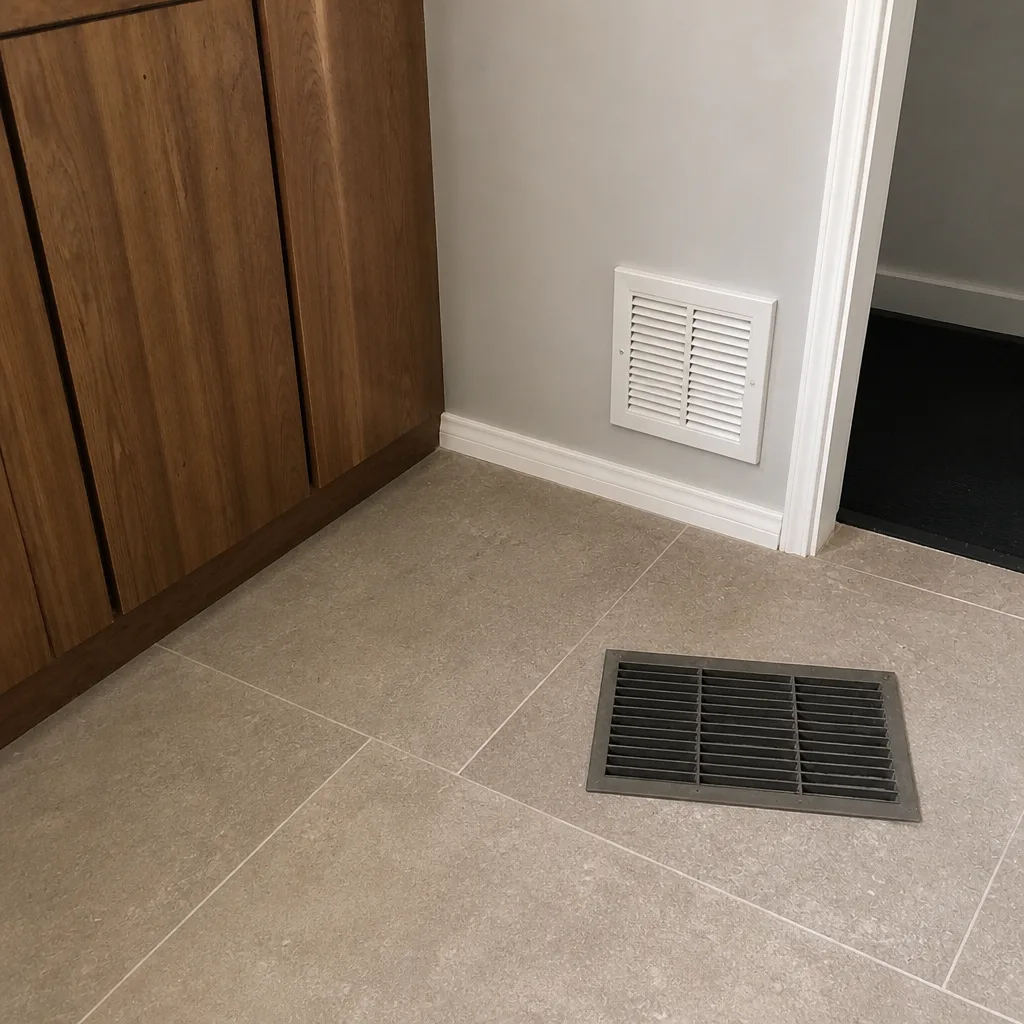 After